People who want to leave the cooking to the appliance
You want to start a suitable programme and then get on with something else. Check the timer, keep-warm function and delayed start separately, as these vary by model.


Choose according to the dishes you make and the tasks you want to leave to the appliance. A pressure multicooker combines several cooking modes, a slow cooker suits meals planned to cook over a longer period, while a rice cooker is designed for more specific uses. A cooking food processor is most worthwhile if you’ll also use its food-preparation functions. In every case, check the model’s programmes, how much you can actually cook in it and any precautions for delayed starts.
The value of a programmable appliance depends less on how many functions it claims to offer and more on which stages of cooking you want to leave to it without constant supervision.
You want to start a suitable programme and then get on with something else. Check the timer, keep-warm function and delayed start separately, as these vary by model.
You often cook one dish for several people. Choose the capacity based on your recipes and the maximum fill level, rather than the advertised capacity alone.
If you mainly cook rice, grains, soups or side dishes, an appliance dedicated to these dishes may meet your needs without adding functions you won’t use.
If you want to start a meal and then get on with something else, first choose the type of cooking that suits the dishes you usually make. Then compare the programming options, usable capacity and any steps you’ll still need to handle yourself.
Worth considering: if you make a range of different dishes and want several cooking modes in one appliance.
Bear in mind: programmes don’t necessarily mix ingredients, and you must follow the model’s instructions when pressure cooking.
Worth considering: for dishes that need a long, slow cook and can be planned in advance.
Bear in mind: a dedicated slow cooker doesn’t replace pressure-cooking modes.
Worth considering: if rice, grains and simple dishes make up most of the meals you programme.
Bear in mind: check the programmes on the specific model before relying on it to cook other dishes.
Worth considering: if you’ll also use functions such as weighing, mixing or guided recipes, depending on the model.
Bear in mind: these food-preparation functions take up space and aren’t essential if you only need an appliance to cook.
Stick with them: if your cookware already covers your recipes and you can manage the cooking time and temperature yourself.
Bear in mind: on their own, they don’t offer the programmes and keep-warm function available on appliances equipped with them.
| Criterion | What to check | What matters to consumers |
|---|---|---|
| Programming and end of cooking | Modes suited to your dishes, timer settings and what happens at the end of the cycle; check delayed start separately. | I want to be able to get on with something else once cooking has started, without having to step in as soon as the programme ends. Around 37% of consumers rank this level of control over cooking as their top priority. |
| Usable capacity | The maximum fill level in the instructions and whether the portions suit your recipes, rather than the stated capacity alone. | When I cook a dish for several people, everything needs to fit in the bowl without exceeding its fill limit. For around 27% of consumers, usable capacity is their main priority. |
| Functions you’ll actually use | Which steps in your usual recipes the appliance can handle, and which accessories are needed for each one. | If my oven and pans already cover some types of cooking, I want to know which extra tasks the appliance can take on. Around 18% of consumers prioritise useful versatility. |
| Cleaning and spare parts | Which parts are dishwasher-safe and which parts are available for the exact model. | After a meal, I don’t want cleaning to cancel out the time saved during cooking. I also want to be able to find a part that fits my model. Around 18% of consumers prioritise long-term usability. |
You can’t necessarily fill a bowl to its stated capacity. UFC-Que Choisir cites a Cookeo with a 6 L bowl that can hold a maximum of 4 L of food; the limit also depends on the recipe.
Check the maximum fill mark in the instructions for the model you’re considering, especially when cooking grains and ingredients that swell.
A cooking programme doesn’t guarantee that the appliance will mix or weigh ingredients. UFC-Que Choisir notes that multicookers generally don’t mix food; these tasks depend on the functions of each individual appliance.
Go through your usual recipes step by step and distinguish between built-in functions and accessories you’ll need to buy separately.
A delayed start lets you schedule cooking, but it doesn’t remove the need to store food safely. Anses recommends limiting the time that perishable foods are left at room temperature, particularly meat, fish and prepared dishes.
Before using this function, check the recipe and instructions. Don’t leave perishable ingredients out of the fridge while waiting.
Search for parts and accessories by model number. The Moulinex page for the Cookeo Touch Wifi CE902800 applies to that model, not automatically to other Cookeo models.
Make a note of the full model number of the appliance you’re considering, then look for the parts that matter for your needs, such as the bowl, sealing ring or basket.
These ranges are designed for different uses. Check the features of the specific model you’re considering.
The Cookeo range includes pressure multicookers focused on cooking programmes and, depending on the model, guided recipes.
Its slow cookers are designed for planned, slow cooking rather than pressure cooking.
The Pop rice cooker is designed for rice, grains and simple dishes.
The Cookit cooking food processor combines cooking with food-preparation steps and guided recipes.
These appliances offer two ways to prepare a meal without staying by the hob: pressure multicookers for a variety of cooking methods, and a rice cooker for more specific dishes. Compare the programming features on the exact model before choosing.
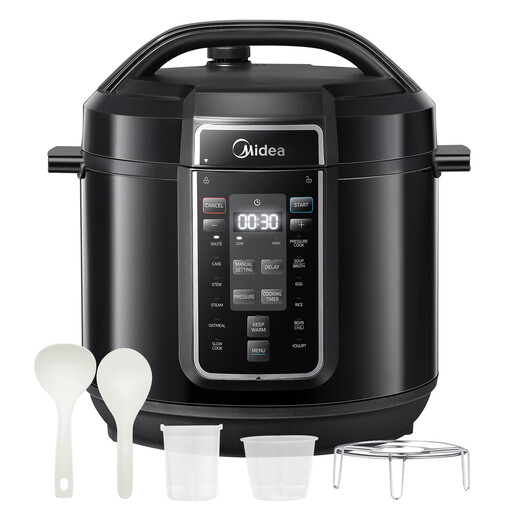 Image unavailable
Worth considering if you want several cooking modes in one appliance. The product name states a rated capacity of 8 L, a power output of 1,200 W and 12 preset menus; check the fill limit for the recipes you plan to make.
If you plan to prepare ingredients in advance, check the instructions for delayed start and avoid leaving perishable foods at room temperature while you wait.
 Image unavailable
Worth considering if you mainly cook rice, porridge or side dishes and want to programme the start of cooking. The product name lists a 4 L capacity, delayed start, keep-warm function and steam basket.
For the usual portion sizes in your household, check the fill markings for different dishes and the instructions for cleaning the bowl.
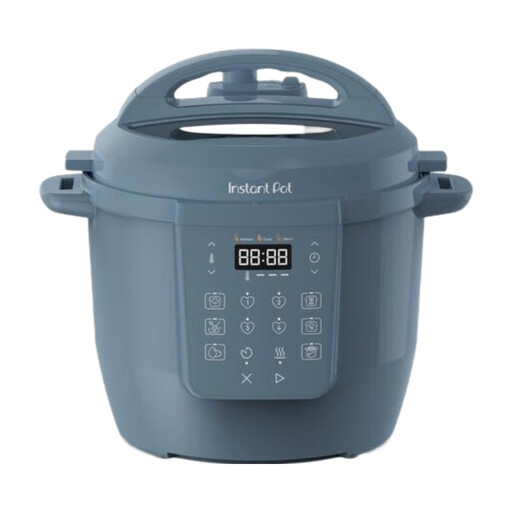 Image unavailable
Worth considering if you want to combine pressure cooking, slow cooking and steaming. The model name describes a 5.7 L 7-in-1 multicooker with four customisable presets.
If you need to start cooking later, confirm that this model has a delayed-start function. Follow the fill limits and steam-release instructions.
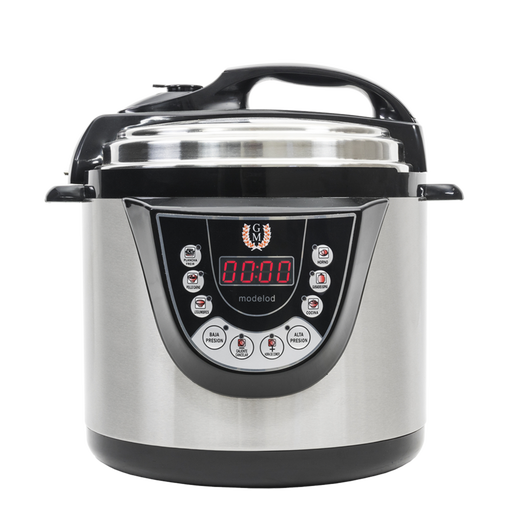 Image unavailable
Worth considering for pressure cooking with a choice of two pressure levels. The product name lists a 6 L bowl, nine cooking menus and a 24 h timer.
Check exactly how the timer works and what happens when the cycle ends: a stated duration alone doesn’t confirm delayed start or a keep-warm function. Follow the fill limits in the instructions.
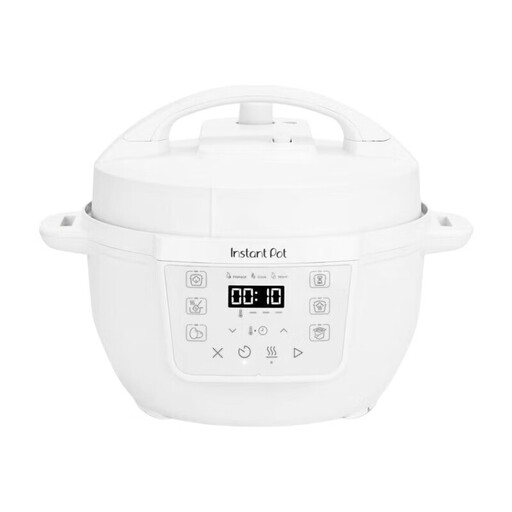 Image unavailable
Worth considering if you want a smaller pressure multicooker for modestly sized meals. The product name lists a 3.8 L capacity, seven functions and enough food for up to four portions.
Compare the stated number of portions with your recipes and the fill markings. If you want to delay the start of cooking, check that this exact model has the function before you buy.
Yes, for cycles the model manages automatically, but that doesn’t mean you can ignore safety precautions. Follow the instructions and check what you need to do before, during and after the cycle. For example, Moulinex lists automatic pressure release for the Cookeo Wifi 10-en-1, while Crock-Pot lists programming and a keep-warm function for the CSC052X.
Don’t leave perishable food at room temperature while waiting for cooking to start. Anses recommends limiting this exposure, particularly for meat, fish and prepared dishes. Choose a preparation method that follows food-safety guidance and the appliance instructions.
Not necessarily: the stated capacity isn’t always the maximum amount you can cook. UFC-Que Choisir gives the example of a 6 L Cookeo with a maximum fill of 4 L; check the limit for your model and recipe.
For products covered by the relevant European regulations, the DGCCRF states that CE marking is compulsory and indicates the manufacturer’s commitment to meeting the applicable requirements. It is neither a certification mark nor an indication that the appliance’s functions are right for your recipes.
Search for parts using the model’s full reference, then check that the parts you need are available. For example, Moulinex has a page dedicated to parts and accessories for the Cookeo Touch Wifi CE902800; a page for this model doesn’t provide information about other versions.