If you cook a variety of dishes and want to spend less time keeping an eye on them, compare the cooking modes available on a multicooker. For slow-cooked dishes you can start well in advance, consider a slow cooker. If you mainly cook rice, a rice cooker may be all you need. In every case, check what you’ll still need to do, the permitted quantities and the difference between a delayed start and keep warm: these functions don’t replace safe food-storage practices.
Who are these appliances for?
Households with varied meals
You prepare the ingredients, then want to leave a programme to cook a range of dishes, while checking which steps still need your attention. UFC-Que Choisir describes the benefit of programming cooking without having to stay by the hob.
Fans of slow-cooked dishes
You cook soups or stews that suit slow cooking and want to plan mealtimes more easily. Programming a slow cooker doesn’t remove the need to check how ingredients should be stored while they wait.
Households that mainly cook rice
You want to cook rice without keeping a constant eye on it and find out whether keep warm or other programmes would be useful. Features vary by model: Tefal, for example, lists different features for its Classic 2 and Pop rice cookers.
Which features matter most?
Programmable multicooker
Choose this if: you prepare ingredients in advance and want to switch between cooking methods to suit different dishes and the model.
Bear in mind: preparation and some steps still need to be done by hand. When pressure cooking, follow the instructions and fill-level guides.
Programmable slow cooker
Choose this if: your menus mainly feature dishes suited to slow cooking, which you can start early enough.
Bear in mind: it isn’t designed for quick cooking, and a delayed start doesn’t make it safe to leave perishable ingredients at room temperature.
Rice cooker
Choose this if: rice is what you cook most and you’re looking for an appliance that needs little supervision.
Bear in mind: extra features vary by model. Check keep warm, the programmes and delayed start separately.
| Feature |
What to check before you buy |
Who cares most |
| Less time keeping an eye on cooking |
Check the programmes for your usual recipes and see which steps still need your attention. |
If I want to start cooking once I’ve prepared the ingredients and step away from the hob, consumers who prioritise less supervision account for around 31%. |
| Planning mealtimes |
Check delayed start, cooking-time programming and keep warm separately, as well as how long ingredients can safely wait. |
If my schedule varies and I want to plan mealtimes more easily, consumers who prioritise serving time account for around 25%. |
| Quantity per cooking cycle |
Compare the portions in your recipes with the fill-level guides for the specific mode and model. |
If I cook for several people and want to avoid making multiple batches, consumers who prioritise the quantity cooked at once account for around 19%. |
| Modes suited to your dishes |
Make a list of the dishes you cook often and compare them with the modes available on the exact model. |
If my menus include different dishes and I want programmes that are genuinely suited to them, consumers who prioritise recipe suitability account for around 19%. |
| Cleaning |
Check the manual to see which parts — the pot, lid and accessories — are dishwasher-safe. |
If I want to cut down on hand-washing after a meal, consumers who prioritise cleaning account for around 6%. |
Mistakes to avoid
-
Assuming the stated capacity is suitable for every recipe
The permitted quantity depends on the mode and the ingredients. With pressure cooking, some ingredients expand and have a lower fill limit.
Compare your recipes with the fill-level guides and the manual for the model you’re considering.
If the mode’s limit is lower than the quantity you planned, you may need to cook in batches.
-
Confusing delayed start with keep warm
Delayed start postpones the beginning of cooking; keep warm comes into effect afterwards. Waiting before cooking doesn’t keep perishable food chilled.
Check how long the ingredients for each recipe can safely wait and follow food hygiene advice, even if the appliance has a timer.
-
Assuming a programme removes the need for all hands-on preparation
Automatic cooking starts once you’ve added the ingredients, and some recipes still need you to take action during preparation.
Check the steps involved in your usual dishes before comparing programmes.
As well as cooking time, consider how long preparation takes and which steps you’ll still need to do.
-
Comparing appliances by programme count alone
A slow cooker, multicooker and rice cooker suit different menus and schedules.
Start with the dishes you usually cook and when you can start cooking, then check the features of the specific model.
Brands to know
Moulinex
According to Moulinex, the Cookeo Wifi 9-en-1 is a multicooker with several modes, delayed start and keep warm.
- For this model, Moulinex lists a 6 L pot and a steam basket.
- The Extra Crisp accessory is sold separately. Don’t assume every Cookeo model has the same features.
Crock-Pot
The TimeSelect CSC066X programmable slow cooker is designed for dishes suited to slow cooking.
- Crock-Pot lists a 5,6 L pot, a manual mode and automatic keep warm for this model.
- Slow cooking isn’t suitable for a dish you need to prepare just before eating. Programming the appliance doesn’t tell you whether ingredients can safely wait in the conditions provided.
Tefal
The Classic 2 and Pop rice cookers show how features can differ between models designed for rice-based meals.
- Tefal lists a steam basket and keep warm for the Classic 2; the Pop RK5352E0 has a 2 L pot, eight programmes and delayed start.
- Check the model number: one model’s features don’t automatically apply to another.
Instant Pot
According to Instant Pot, the Duo 5,7 L is a multicooker that combines several cooking modes.
- Instant Pot lists pressure cooking, slow cooking, sautéing and rice cooking programmes among the features of this model.
- Follow the fill-level guides and instructions for handling hot steam in the manual for the model you’re using.
Appliances for these needs
This selection includes programmable multicookers for a variety of dishes and rice cookers for meals centred around rice. Compare each model’s features, stated capacity and specific limitations.
 No image available
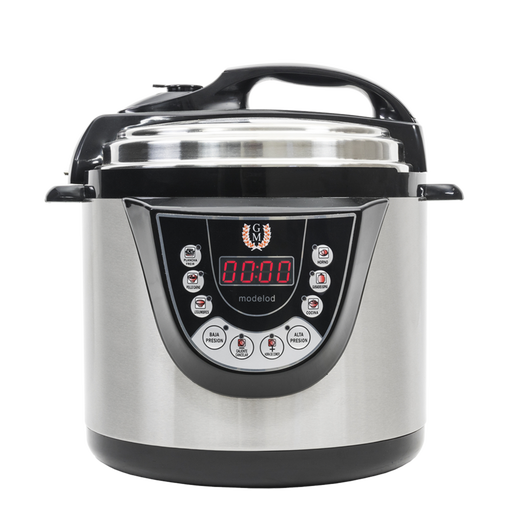
Cecotec Model D programmable pressure cooker with frying functions and voice control
Worth considering if you’re looking for a programmable appliance for a variety of dishes.
24-hour timer, 9 menus, 2 pressure settings and a stated pot capacity of 6 L; usable capacity is listed as 5 L.
View on Joybuy
 No image available
ochama rice cooker, 4 L, 860 W
Worth considering if rice or porridge is a regular part of your menu and you want to plan mealtimes more easily.
Stated capacity for 3 to 4 people, timer, keep warm and steam basket; the inner pot is listed as 1,7 mm thick.
View on Joybuy
 No image available
ochama rice cooker, 2 L, 500 W, 7 functions
Worth considering for a household of 2 to 3 people looking for a rice-focused appliance with several cooking functions.
Timer, keep warm, steam basket and rice spoon included.
View on Joybuy
 No image available
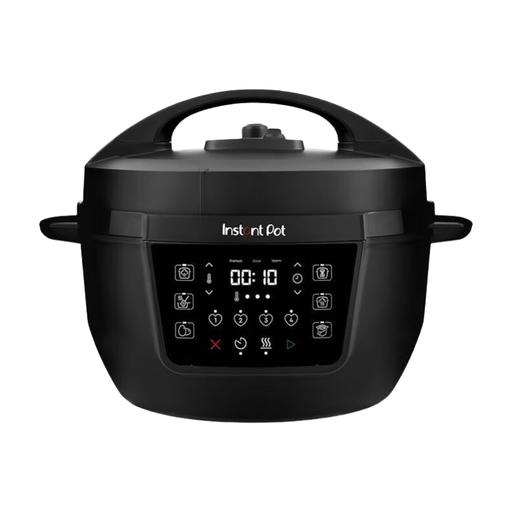
Instant Pot Rio XL 7,1 L, 7-in-1 electric pressure cooker
Worth considering if you’re looking for a multicooker that can handle a variety of dishes and several portions.
Stated pot capacity of 7,1 L and stainless steel inner pot. When pressure cooking, follow the appliance’s filling and pressure-release instructions.
View on Joybuy
 No image available
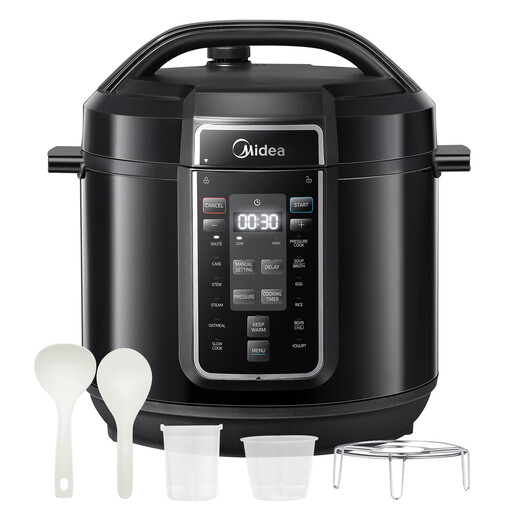
Midea 9-in-1 electric pressure cooker, 8 L, 1 200 W
Worth considering if you want to programme a variety of dishes with a multifunction appliance.
The product title lists 12 preset menus. Follow the fill line and the safety instructions for pressure cooking.
View on Joybuy
Frequently asked questions
Are delayed start and keep warm the same thing?
No. Delayed start postpones the beginning of cooking, while keep warm comes into effect afterwards. Features vary by model: check each one in the manual and make sure the ingredients can safely wait in the conditions provided.
Can you leave cooked food in a switched-off pot until everyone gets home?
Don’t treat a switched-off pot as a way to store food safely. Anses advises not leaving cooked food at room temperature for more than two hours before refrigerating it; it also highlights the risk of Bacillus cereus in rice. Follow food-storage advice and the appliance instructions.
How can you use a pressure multicooker safely?
Follow the fill-level guides and pressure-release procedure in the manual for your model, and don’t open it while it’s under pressure. Instant Pot generally recommends filling to no more than two-thirds for high-pressure cooking, with a lower limit for foods that expand. These guidelines don’t replace the instructions for another appliance.
What warranty applies to an appliance bought from a trader in France?
The statutory legal guarantee of conformity applies to new, second-hand and refurbished goods sold by a trader to an individual. The French Ministry of the Economy explains that you claim it from the seller and that it is separate from an optional commercial warranty. Also check the after-sales service terms and availability of parts for the model you choose.
Does the CE marking prove that a multicooker cooks better?
No. The DGCCRF explains that the CE marking reflects the manufacturer’s commitment to meeting the regulatory requirements that apply to the products concerned. It is neither a certification mark nor an assessment of cooking results.


