People who get home late
You want cooking to continue after setup, with keep-warm or delayed-start functions, so you can spend less time in the kitchen.


Choose a programmable multicooker if you mainly want to start complete meals and then minimise supervision until serving. A compact rice cooker is better suited to grains, soups and simple cooking, while a food processor cooker becomes worthwhile when chopping, mixing and cooking in the same appliance genuinely cuts down your preparation steps.
You want cooking to continue after setup, with keep-warm or delayed-start functions, so you can spend less time in the kitchen.
You mainly cook rice, grains or simple dishes and want an automatic cooker that is easy to clean, without necessarily needing pressure cooking or searing.
A food processor cooker may suit you if chopping, mixing and cooking in the same appliance means you do not need several utensils; it offers less benefit if you only need unattended cooking.
Start with the dishes you make most often, then check the programmes, genuinely usable capacity and cleaning requirements before choosing an appliance type.
| Priority | What to check | Your needs |
|---|---|---|
| Less supervision | Programmes suited to your recipes, time and temperature settings, keep-warm function; delayed start only if the model provides it. | I want to start cooking and get on with something else, without constantly adjusting the temperature or cooking time. |
| Useful functions | Pressure cooking, steaming, slow cooking and searing for varied dishes; rice, porridge or soup programmes for simpler meals; chopping and mixing for a food processor cooker. | My usual dishes should match the available functions, rather than paying for modes I will never use. |
| Cooking pot and cleaning | Usable capacity, fill markers, pot handles, coating, removable parts and confirmed dishwasher compatibility for each individual component. | I want a pot suited to my portion sizes, without replacing the time saved with a lengthy washing-up job. |
| Delayed meals | Delayed-start conditions, instructions in the manual and keeping perishable ingredients chilled until they can be prepared safely. | I want to delay a meal’s start time without confusing programming with food preservation. |
A cooking pot needs a safety margin to prevent spills, so depending on the recipe it may produce fewer portions than its stated volume suggests.
Compare the advertised portion sizes, fill markers and limits specified in the manual for the programmes you will use most often.
Delayed start does not keep food chilled. Anses states that the risk of micro-organisms multiplying increases when food is left at room temperature for too long.
Use this function only with ingredients and situations that comply with hygiene guidance and the manual; keep perishable food chilled until it is ready to be prepared.
Chopping, mixing, kneading and cooking functions only offer a genuine practical benefit when they replace your usual preparation steps.
List the three meals you make most often: if you rarely chop, mix or knead, compare a multicooker or specialist cooker first.
Also consider the appliance’s footprint and how many accessories need to be washed, depending on the model.
Programmes manage the temperature and cooking time, but ingredients still need to be prepared, and many multicookers do not stir food automatically.
Check the manual steps required for your recipes, the accessories included and whether a mixing system is provided before assuming preparation will be completely automatic.
Worth comparing if you are choosing between a Cookeo-style pressure multicooker and a Companion food processor cooker, depending on whether your priority is unattended cooking or preparation as well.
A brand to consider for compact rice cookers and multicookers when the aim is automatic cooking of rice, grains, soups or simple dishes.
Consider it if you want to combine cooking and food preparation in one appliance rather than simply automate cooking.
Joybuy options for preparing meals with less supervision: programmable multicookers for varied dishes and dedicated cookers for rice, grains, soups and simple preparations.
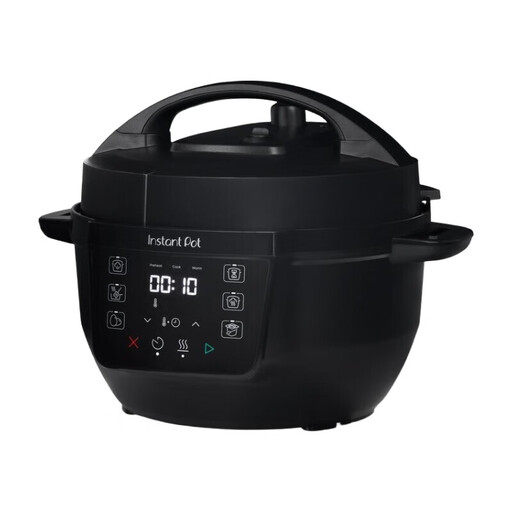 Image unavailable
For a small or medium-sized household wanting to programme varied meals with pressure cooking, slow cooking, rice, steaming and searing.
Stated capacity: 3.8 L. The product listing mentions 12 programmes, delayed start and keep-warm.
Check the power rating of the model supplied: the listing shows conflicting values. Also consult the manual for recipe-specific fill limits.
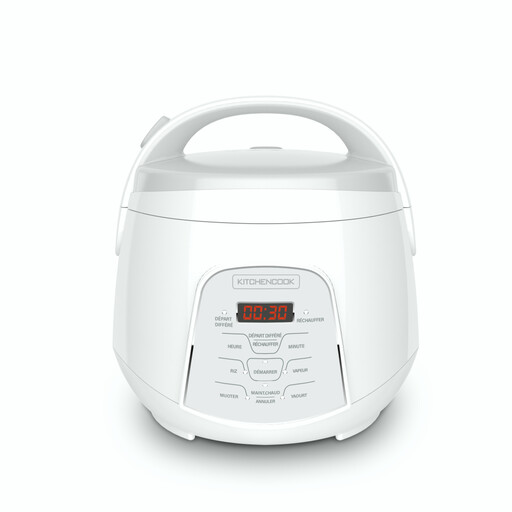 Image unavailable
A compact choice for rice, porridge, soup, steaming or cake, with little supervision required.
Stated capacity: 2 L; dedicated programmes, delayed start of up to 24 hours, automatic keep-warm and a removable non-stick cooking pot.
Pressure cooking and searing are not listed. Allow 40 cm of clearance above the appliance and 10 cm at the sides.
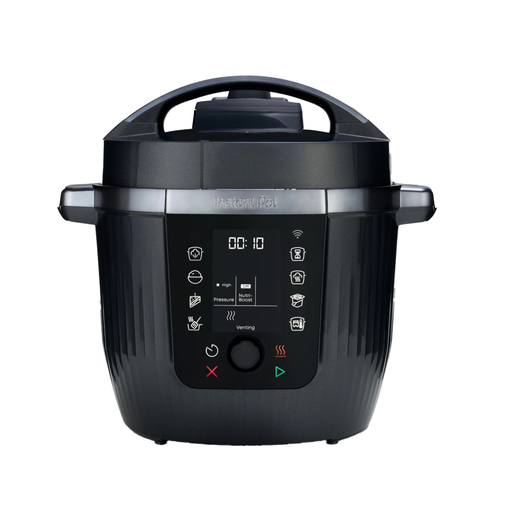 Image unavailable
For regular complete meals when pressure cooking, slow cooking, rice, steaming and searing modes are useful.
Stated capacity: 5.7 L; the listing mentions 28 customisable programmes, time, temperature or pressure settings and automatic keep-warm.
Delayed start is not clearly specified. Check the voltage, plug type and compatibility with your installation before buying.
 Image unavailable
For a household that mainly prepares rice, porridge, soups or simple dishes for a later mealtime.
Stated capacity: 4 L; rice, porridge, soup and cake programmes, delayed start, automatic keep-warm, steaming basket and rice paddle.
Pressure cooking and searing are not listed. Check the keep-warm duration and fill markers in the manual.
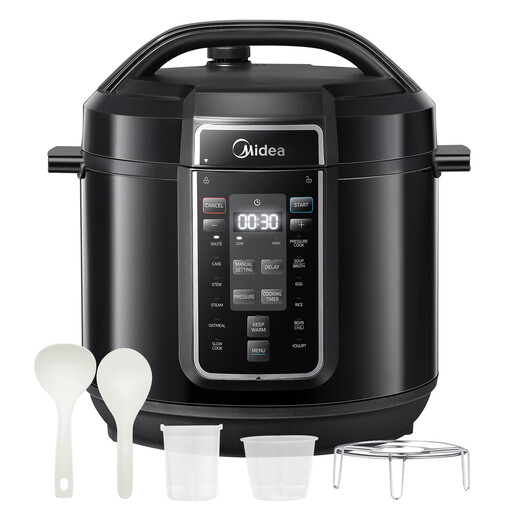 Image unavailable
A pressure multicooker designed for large quantities and programmed complete meals.
Stated capacity: 8 L; 12 preset menus, delayed start of up to 24 hours and keep-warm of up to 12 hours.
Check the voltage, plug type, fill levels and dishwasher compatibility of the parts before buying.
No. Delayed start begins cooking later, but it does not refrigerate the ingredients. Anses reminds us that the risk of micro-organisms multiplying increases when food is left at room temperature for too long; keep sensitive fresh food chilled until it can be prepared in accordance with hygiene guidance and the manual.
Do not rely solely on the stated volume. Que Choisir points out that a cooking pot needs a safety margin to prevent spills and that the genuinely usable capacity varies by recipe. Compare the number of portions stated for the programme you plan to use with the fill limits in the manual.
Check the cooking pot, steaming basket, lid and accessories separately. A removable non-stick pot may make washing easier, but that does not mean every part is dishwasher-safe: look for confirmation for each component.
It may suit you if your main aim is to speed up certain cooking processes and you remain available during the cooking cycle. According to the SEB guide, a stovetop pressure cooker can be used for steaming, cooking in its own juices and slow cooking; it does not replace delayed start, automatic keep-warm or a programmable electric cycle.