Households that like variety at dinnertime
If you alternate between rice, saucy dishes and steamed vegetables, check which programmes the multicooker actually offers. The cooking pot should also suit the quantities you usually prepare.


If you alternate between rice, saucy dishes and steamed food, choose a multicooker with programmes suited to those meals. A rice cooker is a good fit if you mainly cook rice, while a slow cooker is designed for slow-cooked dishes. A cooking food processor is only worth considering if you also want to automate some of the preparation. In every case, check the usable capacity, how the keep-warm function works and the instructions for delayed start.
The meals you cook most often matter more than the number of functions listed.
If you alternate between rice, saucy dishes and steamed vegetables, check which programmes the multicooker actually offers. The cooking pot should also suit the quantities you usually prepare.
A rice cooker is ideal if you cook rice regularly and don’t want to keep an eye on a pan. Compare the stated rice capacity, keep-warm function, steaming accessories and the space you have in your kitchen.
If you mainly make soups, stews or other slow-cooked dishes, a programmable slow cooker is worth considering. Check its cooking settings, how long you can programme it for and what happens when the cycle ends.
Start with the meals you usually cook, then compare the programmes with the portions you need, the scheduling options and how easy the model is to clean.
| Criterion | What to check | Your needs |
|---|---|---|
| Cooking methods | Look for the settings that suit your dishes: rice, steaming, slow cooking or browning. Don’t assume that a programme available on one model will be included on every appliance in that category. | I cook a variety of evening meals, so a multicooker with the settings my recipes need appeals more than an appliance designed mainly for rice. If I cook rice almost every time, a rice cooker may be enough. |
| Cooking with less supervision | Check what the programme takes care of once it has started, how the cooking time is set and whether it switches to keep-warm mode afterwards. For example, Moulinex says the Cookeo Touch Wifi CE902800 manages cooking without needing constant attention. | I want to be able to get on with other things while the food cooks, without assuming the appliance will add ingredients or prepare the recipe for me. |
| Delayed start | Check the model’s instructions to confirm whether it has this function and how it works. For perishable ingredients, follow food storage guidance rather than assuming the timer guarantees food safety. | If I want to start cooking later, I need to be able to use this function with the ingredients for the meal I have planned. |
| Portions and capacity | Compare the stated capacity with the amount you’re allowed to use in your recipes. UFC-Que Choisir points out that a cooking pot’s stated capacity may not be fully usable. | I prepare several portions, so the amount I can actually cook matters more than the capacity printed on the pot. |
| Cleaning and space | Check which parts are removable, which the instructions say are dishwasher-safe and how much space the appliance needs around it. Check the pot, lid and accessories separately. | If I use the appliance several evenings a week, I want to be able to clean the parts I’ve used and have a suitable place to keep it. |
| Preparing ingredients | Distinguish between cooking a dish and weighing, chopping or mixing its ingredients. Les Numériques describes a multicooker as a cooking appliance that does not grind or blend food. | I’m mainly looking for programmed cooking, so a cooking food processor’s preparation functions only matter if I plan to use them. |
According to UFC-Que Choisir, the usable amount depends on the recipe and may be less than the pot’s stated capacity.
Check the limits given in the instructions for the dishes you plan to make, then compare them with your usual portion sizes.
A rice cooker may include a steaming basket or other programmes, but that doesn’t necessarily mean it offers the browning or pressure-cooking settings found on some multicookers.
Make a note of the meals you’ll cook most often and check that the model’s settings can actually prepare them.
Anses warns that poor food storage can encourage bacteria to grow. A delayed-start function does not mean every recipe is suitable for waiting before cooking.
Before setting the appliance to start later, check its instructions and the storage guidance for the ingredients you’re using.
A cooking food processor includes preparation functions you don’t need if all you want to do is cook rice or a slow-cooked dish. You should also distinguish between the capacity of its bowl and that of any steaming accessory.
Before comparing it with appliances designed for cooking, decide whether you’ll use its preparation functions and guided recipes.
These examples illustrate different ways to cook; their features don’t apply to every appliance from the same brand.
The Cookeo Touch Wifi CE902800 is an example of a multicooker for a variety of cooking methods.
The Classic 2 RK103811 is a useful example of a model designed mainly for cooking rice.
The CSC052X is suited to planning slow-cooked meals in advance.
The Thermomix TM7 is designed for people who want to prepare ingredients as well as cook with less supervision.
This selection includes multicookers for a variety of dishes and rice cookers for more focused use. Compare their functions with the meals you usually make; this selection doesn’t cover every type of appliance discussed above.
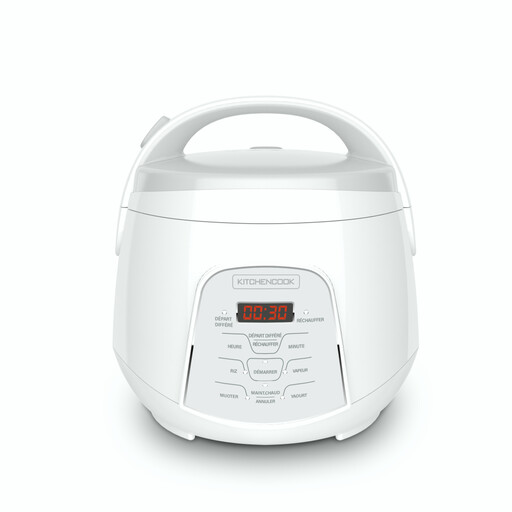 Image unavailable
Worth considering if you’d like to make a variety of meals with a 2 L multicooker. Check the programmes and usable capacity for your recipes, as well as the space you’ll need around the appliance.
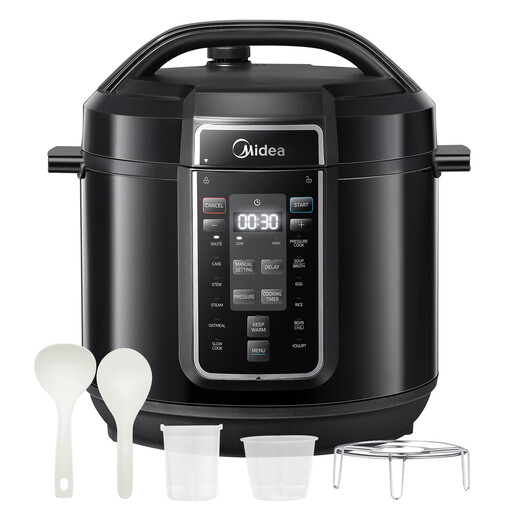 Image unavailable
This model is presented as a versatile option for a range of meals, with 12 pre-set menus, an 8 L capacity and 1,200 W of power. Check the usable capacity for your recipes, along with the operating voltage and electrical compatibility, before buying.
 Image unavailable
If rice is what you cook most, this 4 L model lists delayed start, a keep-warm function and a steaming basket. Check the instructions for how long the keep-warm function lasts and how to use it, especially for recipes you plan to schedule.
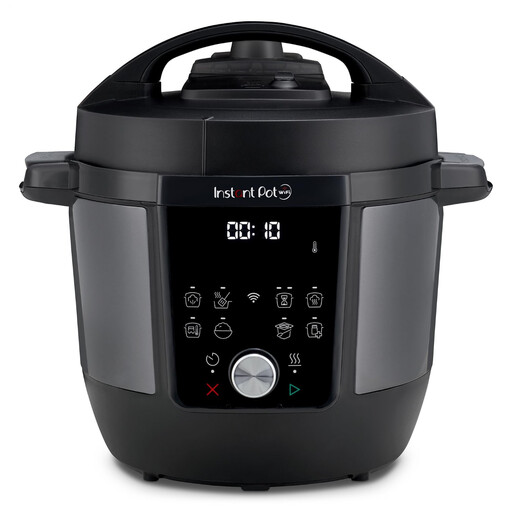 Image unavailable
This 5.7 L multicooker is worth comparing with the range of meals you’d like to cook. If starting it in advance or controlling it remotely matters to you, check exactly what these functions offer before buying: the name ‘WiFi’ alone doesn’t tell you what you can control.
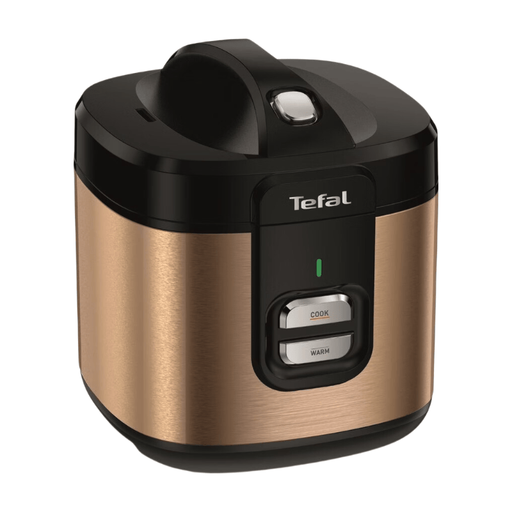 Image unavailable
Designed mainly for cooking rice, this 2 L model lists a 12-hour keep-warm function. Compare the amount of rice it can actually cook with your usual portions, and check the scheduling features and how to clean the accessories if these are important to you.
Yes, as long as the recipe suits a programme available on the model. For example, Moulinex says the Cookeo Touch Wifi CE902800 manages cooking without needing constant attention. You’ll still need to prepare the ingredients, start the right programme and follow the instructions.
Compare the quantities allowed for your recipes, not just the stated capacity. UFC-Que Choisir points out that you can’t always fill a pot to its full stated capacity. Check the instructions, especially for foods that may expand or boil over.
No. This function doesn’t replace food storage guidance. Anses warns that poor storage can encourage bacteria to grow, so follow the appliance instructions and the relevant guidance for the ingredients in your dish.
It depends on the parts and the model. Moulinex’s information says the Cookeo Touch Wifi CE902800’s pot is dishwasher-safe; Crock-Pot lists the removable pot and lid of the CSC052X as dishwasher-safe. Check each part in the instructions for the appliance you’re considering.