Who are these options for?
The right choice depends as much on the tasks you want to avoid as on the dishes you make.
Busy households cooking complete meals
If you mainly make rice, slow-cooked dishes or steamed food, a multicooker lets you do it all in one pot. Compare its programmes with the recipes you actually make: a feature is only useful if it suits the meals you cook.
People who prepare ingredients as well
If chopping, blending, grating or kneading is a regular part of your routine, consider a cooking food processor and its attachments instead. A multicooker designed for cooking won’t take care of these preparation tasks.
Small kitchens and households keeping an eye on portions
Measure the available space with the lid and attachments in place, then compare the filling limit with the quantities you cook. The volume marked on a bowl or pot alone isn’t enough to tell you how many portions you can make.
What sets these appliances apart?
Start with the tasks you want the appliance to handle, then check the quantities, space required and cleaning instructions for the model you’re considering.
Programmable multicooker
Consider it: if your ingredients are already prepared and you mainly want to start cooking in one pot.
Drawback: a multicooker designed for cooking won’t chop or blend ingredients, so you’ll need to do those tasks separately.
Cooking food processor
Consider it: if preparing ingredients is also a big part of your routine.
Drawback: bowls, blades and other attachments mean more items to store and clean.
Separate appliances
Keep them: if your current equipment already covers your recipes or you need to cook several things at once.
Drawback: cooking in several containers can mean more handling and washing up.
| Criterion |
What to check |
What you need |
| Everyday cooking |
Look for the settings your recipes need, such as slow cooking, steaming, reheating or, depending on the model, pressure cooking. Check the settings and instructions for each mode. |
I want to start making my usual dishes without having to stay by the hob, while still following the appliance’s instructions. |
| Usable capacity |
Check the filling limits for each recipe, especially for liquids, ingredients that expand and pressure cooking. Que Choisir notes that the 6 L Cookeo pot cited in its guide has a maximum preparation capacity of 4 L. |
The quantities I make should suit my household, without having to work out the usable cooking capacity from the stated capacity alone. |
| Ingredient preparation |
Check which tasks the appliance can handle and which attachments are actually included, such as a blade, whisk, discs or steaming basket, depending on the model. A cooking mode doesn’t mean the appliance can chop or blend. |
If I often chop or knead, I need to know whether the food processor can handle those steps, not just the cooking. |
| Space and cleaning |
Compare the dimensions with the lid and attachments in place, then check which parts are removable and how they should be washed. Consult the manual to see which parts are dishwasher-safe. |
My worktop space is limited, and I want to be able to clean the parts I use after an everyday meal. |
| Cooking several things at once |
List the dishes you prepare at the same time and the containers you already have. Check whether cooking everything in one pot will really suit the way you work. |
When different parts of a meal need to cook separately, keeping my current appliances may suit the way I cook better. |
Which branded models can you use as a guide?
These ranges illustrate different uses; their features don’t necessarily apply to other models from the same brand.
Moulinex
Moulinex describes the Cookeo+ CE851A10 as a 6 L multicooker with six cooking modes and 150 built-in recipes.
- Its advertised modes include steaming, slow cooking, browning, slow cooking, reheating and pressure cooking.
- For the Cookeo model cited by Que Choisir, the 6 L pot has a maximum preparation capacity of 4 L. Check the limits for the specific model and recipe you choose.
Magimix
The Cook Expert XL Connect is an example of a cooking food processor. Magimix gives its bowl a total capacity of 4.8 L and a usable capacity of 3.8 L.
- Magimix presents this range as suitable for cooking and preparation tasks such as chopping, grating, kneading and whisking.
- Allow space for the attachments; Magimix advises careful handling of its blades and discs.
Vorwerk
According to Vorwerk, the Thermomix TM7 combines a 2.2 L bowl with a 6.8 L Varoma designed for steaming. These figures refer to separate containers with different uses.
- Ingredient preparation and guided cooking are central to the way the TM7 is designed to be used.
- Check the bowl capacity against your recipes; Vorwerk asks users to read the entire manual before first use.
Which Joybuy options should you consider?
This selection includes a cooking food processor for anyone who also wants to prepare ingredients, followed by four multicookers designed for cooking in one pot. Compare their features with your recipes and the limits given in their manuals.
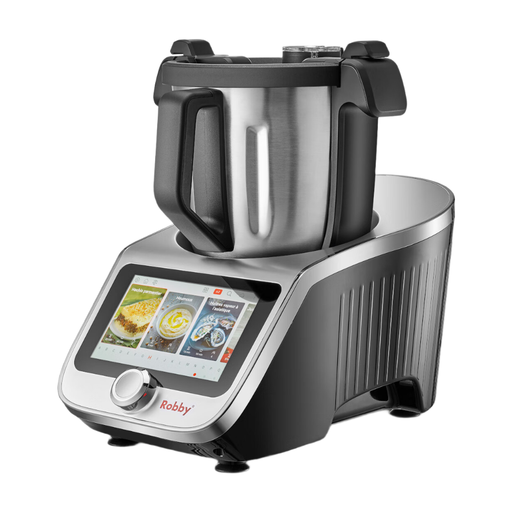 Image unavailable
Robby Smart Multifunction Cooking Robot, XL bowl and built-in scales
Worth considering if you want to bring food preparation and cooking together, with built-in scales and a large touchscreen listed in the product title. It also advertises 750 recipes; check that they suit the way you cook. Consult the manual for permitted quantities, and measure the space you’ll need with the bowl in place.
View on Joybuy
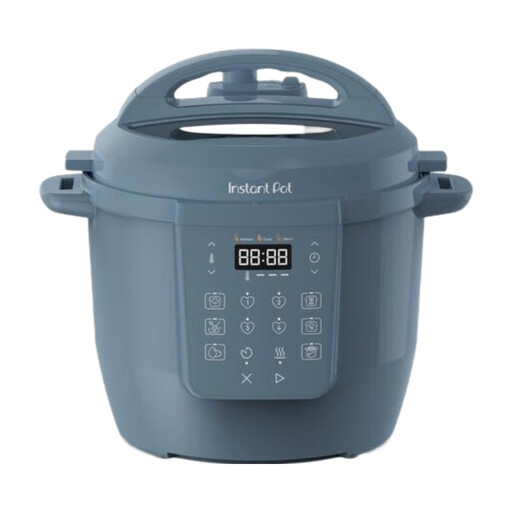 Image unavailable
Instant Pot Classic 5.7L Daydream Blue
This option is for meals you want to cook in one pot, rather than for mechanical food preparation. Its stated capacity is 5.7 L. Check the filling limits for your recipes and the appliance’s dimensions before deciding if this size is right for you.
View on Joybuy
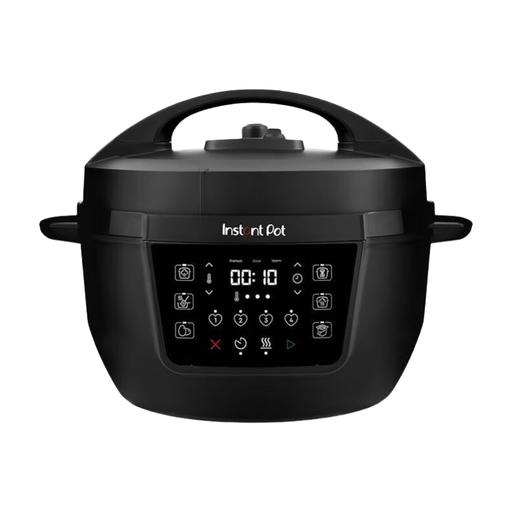 Image unavailable
Instant Pot Rio XL 7,1L
Its stated capacity of 7.1 L is worth comparing with the quantities you usually cook. This figure doesn’t determine the permitted amount for every recipe: check the manual for filling limits and make sure you have enough room on your worktop.
View on Joybuy
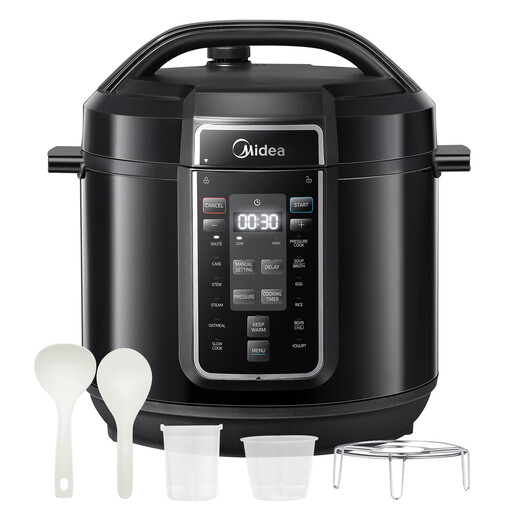 Image unavailable
Midea 9-in-1 Electric Pressure Cooker, 8L, 1200W, 12 programmes
This pressure cooker may suit households looking for a choice of cooking programmes. The title lists 8 L and 1200 W, but the description also gives the capacity as “8 quarts”. Confirm the capacity of the model supplied, then check its filling limits. Also check its dimensions and cleaning instructions.
View on Joybuy
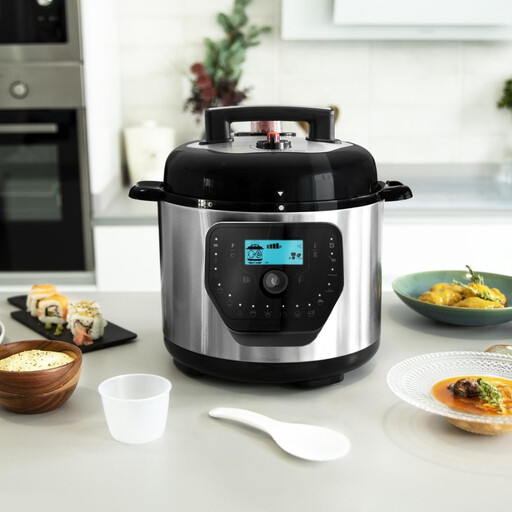 Image unavailable
Cecotec GM H Deluxe Fry, 6 L, air fryer lid and scales
This model combines a programmable pot, an air fryer lid and built-in scales. Check whether you’ll use all these features for your everyday meals. Its stated capacity is 6 L; consult the filling limits and cleaning instructions. Before buying, also check whether clear instructions are available in French.
View on Joybuy
Frequently asked questions
Can a 6 L pot cook 6 L of food?
Not necessarily. Que Choisir notes that a 6 L Cookeo pot has a maximum preparation capacity of 4 L. For your appliance, follow the filling limits in the manual and recipe, especially when cooking liquids, ingredients that expand or food under pressure.
When should you choose a cooking food processor over a multicooker?
Choose according to the tasks you want the appliance to handle. A multicooker is mainly for programmable cooking, while a cooking food processor is worth considering if you also want to chop, blend, grate or knead. Check the functions and attachments of the specific model before relying on it to prepare ingredients.
What should you check about cleaning before you buy?
Check the manual for the model to find out which parts are removable, which are dishwasher-safe and how to clean the bowl or pot, lid and attachments. With a cooking food processor, remember to check the instructions for its blades and discs too: Magimix advises careful handling.
Does a guided programme mean you can leave the appliance unchecked?
No. It may reduce the need for manual adjustments, but you still need to follow the manual, filling limits and model-specific safety precautions. Vorwerk, for example, asks users to read the Thermomix TM7 manual in full before first use.


