
Livraison le jour même ou le lendemain

Qualité garantie

Débloquez vos offres de bienvenue: Livraison GRATUITE | Jusqu'à -80 % | 30 jours d'essai gratuits à JoyPlus
Téléchargez l'application
Fixing a mirror, lightweight shelf or decorative feature without drilling into the wall sounds simple. However, the wrong clear no-nails, no-screws adhesive can leave marks, lose its grip in damp conditions or come unstuck under the weight of the object.
Before you order, take the time to distinguish a construction adhesive from one designed for crafts or small repairs. The surface material, the object’s weight, exposure to water and drying time all have a direct effect on how well the bond holds.
An adhesive described as clear may still be slightly visible once dry, especially if it is applied in a thick layer or to a backlit surface. For a truly discreet bond, choose a formula clearly described as clear or ultra-clear, then apply it in thin beads or evenly spaced dots.
Being clear does not guarantee that an adhesive is compatible with the material. A product suitable for glass, for example, may not work with certain plastics.
A strong construction adhesive is not automatically suitable for every object. Bond strength depends on the contact area, how porous the surface is and how well it has been prepared. Dust on a mirror or grease on a metal surface can compromise adhesion, even with a formula designed for demanding projects.
An adhesive intended for indoor use may not be suitable for a bathroom, kitchen or outdoor fixing. Check its stated resistance to moisture, UV rays and temperature changes. Bear in mind, though, that ‘moisture-resistant’ does not necessarily mean the bond can withstand permanent immersion.
For a clear, multi-surface adhesive, check the list of compatible materials carefully. Hybrid construction adhesives generally work with glass, mirrors, wood, metal and ceramic. Some plastics can be more difficult to bond.
Polyethylene (PE), polypropylene (PP) and PTFE are often excluded. Acrylic glass, copper, brass and flexible PVC may also require a specific formula. If you’re not sure what type of plastic you have, test the adhesive on an inconspicuous area first.
A small pack is enough for occasional repairs or medium-sized decorative projects. A 290 or 300 g cartridge is better suited to repeated jobs, long beads and projects that require a caulking gun.
A gun helps you control the amount of adhesive and apply it evenly. To work neatly:
Some adhesives let you adjust the position for a few minutes, while others set very quickly. This is especially important when aligning a mirror or decorative feature.
It can take several hours for the bond to reach its full strength. So avoid hanging a heavy object straight away, even if the adhesive seems to hold after a few seconds.
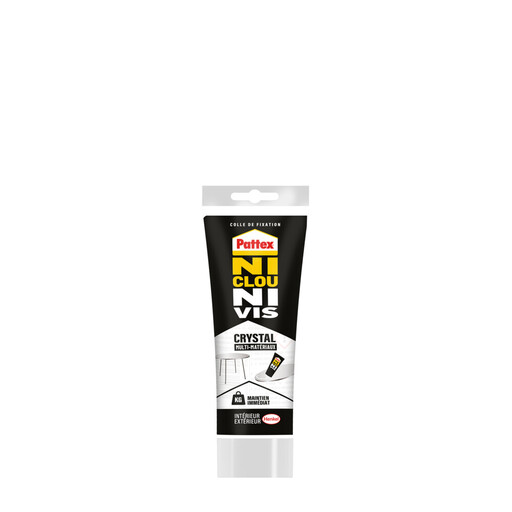
Why it suits this type of user: This size is ideal for occasional fixings of decorative features made from glass, mirror, wood or metal. There’s no need to buy a large quantity for a one-off job.
The product description specifies a solvent-free, odourless formula with a clear finish, making it suitable for bonds where appearance matters. Be sure to check which surfaces are excluded.
Flextec hybrid polymer, repositionable for up to 15 minutes according to the product description, with a stated temperature range of -30 °C to +80 °C and moisture resistance, except in cases of permanent immersion.
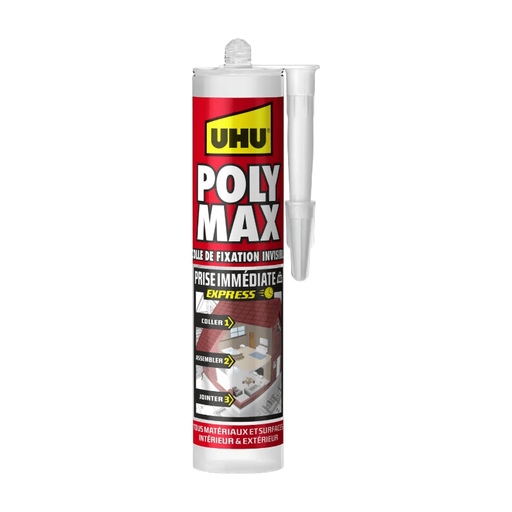
Why it suits this type of user: The large cartridge is ideal for renovation and decorating projects that need even beads over several metres.
The formula is described as solvent-free, acid-free and odourless, with a clear finish. It is not suitable for PE, PP, PTFE or bitumen.
MSP hybrid polymer with stated permanent elasticity and resistance to water and UV rays, according to the product description. Suitable for temperatures from -40 °C to +100 °C.
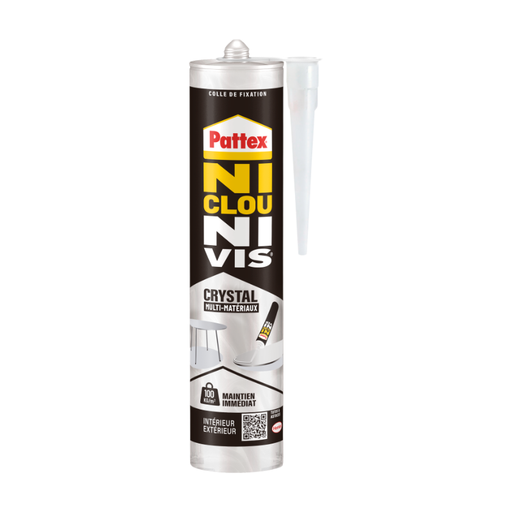
Why it suits this type of user: The large size is designed for regular DIYers and professionals looking for an adhesive for glass and mirrors, metal or compatible plastics, to be applied with a caulking gun.
The product description lists materials that are not suitable, including acrylic, copper, brass and flexible PVC. This helps you avoid buying the wrong product, rather than relying on the broad claim that it works on multiple materials.
Ultra-clear finish and a formula described as solvent-free, with an initial hold after pressing. The product is stated to resist UV rays, moisture and temperature changes from -30 °C to +80 °C.
We’ve put together a comprehensive, regularly updated selection of products that meet these strict criteria and comply with European safety regulations.
A hybrid construction adhesive designed for glass and mirrors may be suitable, provided the surface is clean, dry and strong enough. Check which materials are excluded and plan to support the mirror temporarily. For a large or heavy mirror, adhesive should not replace fitting recommendations or suitable safety fixings.
Some products are described as suitable for both indoor and outdoor use, with resistance to UV rays, moisture and temperature changes. This should be clearly stated in the product description. It does not mean the adhesive can withstand permanent immersion, standing water or every weather condition.
The time required varies depending on the formula, temperature, bead thickness and materials being bonded. The initial hold may develop quickly, but the bond often needs several hours to reach full strength. Follow the curing time shown on the packaging and avoid putting the object under strain until it has fully cured.