Homes with rugs and hard floors
You’re looking for a vacuum for your main cleaning, rather than a secondary one. The floorhead and accessories should suit the floor coverings you actually clean.


For regular cleaning of rugs, carpets and hard floors, choose a bagged cylinder vacuum if you want to limit handling dust. Que Choisir also notes that bagged models have an advantage when it comes to suction, although it’s still worth comparing individual models and their floorheads. A bagless cylinder is a good choice if you’d rather empty and maintain a canister, while a wet and dry vacuum is mainly worth considering if you also need to pick up liquids or DIY debris.
You’re looking for a vacuum for your main cleaning, rather than a secondary one. The floorhead and accessories should suit the floor coverings you actually clean.
You want to minimise contact with dust when emptying the vacuum and are happy to replace the bags with compatible ones. Que Choisir highlights this as a key difference between bagged and bagless cylinder vacuums.
As well as your usual floors, you may sometimes need to pick up rubble, larger pieces of debris or liquids. A wet and dry vacuum can meet this need, which is different from everyday cleaning.
Choose this if: you regularly clean rugs and carpets and want to collect the dust in a bag.
Bear in mind: you’ll need to replace the bags and check that their product code matches your model.
Choose this if: you prefer a reusable canister and are happy to empty it and maintain the filters.
Bear in mind: emptying it means more contact with dust, according to Que Choisir.
Choose this if: you also need to pick up liquids or DIY debris.
Bear in mind: its size may make it cumbersome for everyday cleaning around the home.
For thorough manual cleaning across different floor types, start by considering the surfaces and dirt you need to tackle. Then compare the different formats based on how they collect dust and how easy they are to handle.
| Criteria | What to check | What matters to shoppers |
|---|---|---|
| Multi-surface cleaning | Check which floor coverings the supplied floorhead is designed for, and whether there’s a brush suitable for delicate floors. | If my rugs and hard floors need different accessories, I want to be able to switch between them rather than assume one brush will work everywhere. Around 36% of shoppers would prioritise this. |
| Dust collection | Compare replacing a bag with emptying a canister, and check what filter maintenance is required. | I’d rather choose how I handle dust than discover the drawback the first time I empty the vacuum. This would be the top priority for around 29% of shoppers. |
| Ease of use | Check the stated operating radius, noise level and how easy the specific model is to move around. | When cleaning takes a while, I want to avoid changing sockets and move the vacuum around without difficulty. Around 21% of shoppers would put this convenience first. |
| Unusual messes | Make sure the vacuum and its filter configuration are suitable for the liquids or debris you need to deal with. | I also need to clean up after DIY or pick up liquids, and I’m willing to accept a bulkier vacuum. Around 14% of shoppers would prioritise this versatility. |
The motor’s electrical power doesn’t tell you everything about how well a vacuum cleans. Que Choisir also highlights the importance of the floorhead’s design.
Look at the floorhead and accessories supplied, then find tests of the model on the types of floors you have.
Bags, filters and brushes are designed for specific product codes. Kärcher’s accessory lists, for example, show which models they’re compatible with.
Make a note of the vacuum’s full model number before choosing a consumable or brush.
An incompatible accessory could mean having to place another order and delaying maintenance of your vacuum.
A wet and dry vacuum is designed for messes beyond everyday household dust. Its size can also make it harder to store and move around.
If you mainly clean rugs, carpets and hard floors, compare cylinder vacuums and their floorheads first.
Manufacturers’ stated capacities, noise levels and brush descriptions don’t, on their own, measure performance on every type of floor. Que Choisir’s comparisons assess suction and other aspects of use separately.
Use the product listing to check the configuration, then look for a test of the specific model if its performance on rugs or carpets will help you decide.
The Silence Force range of bagged cylinder vacuums may appeal to households looking for accessories to clean different floor types.
The PowerPro range includes bagless cylinder vacuums for people who prefer to empty a canister.
Kärcher’s WD/KWD wet and dry vacuums are for households that also need to tackle DIY debris or liquids.
For manual cleaning across different floor types, this selection includes a bagged cylinder vacuum and two upright vacuums: one cordless and one corded. Uprights offer a different format from the cylinder vacuums discussed above.
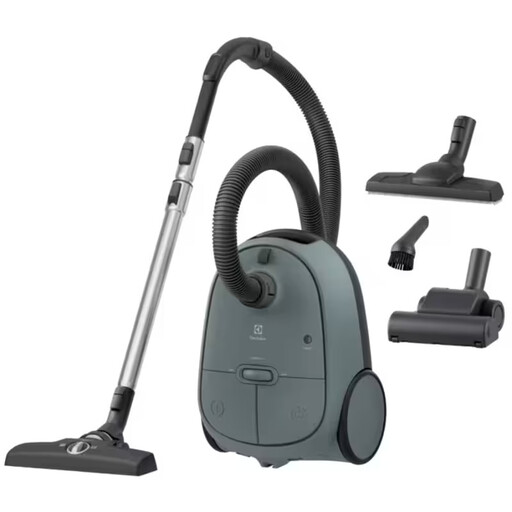 Image unavailable
Worth considering if you’re looking for a bagged cylinder vacuum to clean different floor coverings. Check that the brushes supplied suit your rugs and hard floors, and make sure you know which bags are compatible. This model isn’t designed to pick up liquids.
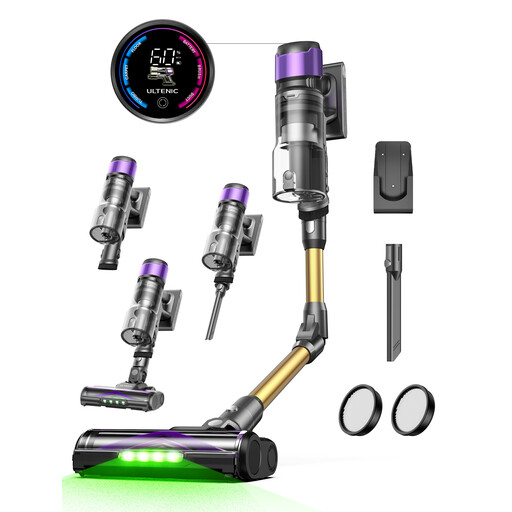 Image unavailable
Consider this if you’d prefer a cordless upright for cleaning rugs and hard floors rather than a cylinder vacuum. The stated battery life is up to 60 minutes. Check the conditions for this claim, the floorhead supplied and the product code of a compatible replacement battery.
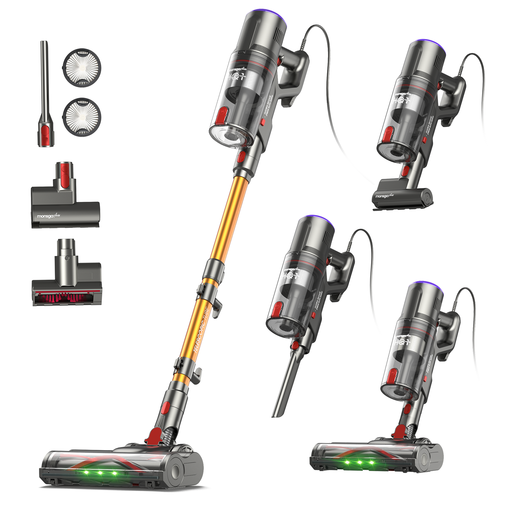 Image unavailable
Worth considering if you want to clean rugs and hard floors with a mains-powered upright rather than a cylinder vacuum. The 65 kPa and 600 W figures appear in the product name, but they don’t tell you how it will perform on every floor type. Also check the weight of the assembled vacuum and which brushes are compatible.
A parquet brush is worth considering if you have delicate hard floors and the supplied floorhead isn’t designed for them. If you’ll be switching between rugs and carpets, also check which surfaces the main floorhead is suitable for and which accessories are included with the specific model.
You’ll need to replace the bag when it’s full, using one that’s compatible with your vacuum. A bagless cylinder avoids this step, but you’ll need to empty the canister and maintain the filters. Que Choisir says that bagless models expose you to more dust when emptying them.
Start with the vacuum’s full model number, not just the name of its range. Then check the list of compatible models for each accessory. Kärcher, for example, provides this type of list for WD/KWD consumables.
It can help you compare models: France’s Ministry for Ecological Transition states that vacuum cleaners are among the products covered by the repairability index in France. Check the index for the specific model rather than judging its repairability by the brand name alone.