
Livraison le jour même ou le lendemain

Qualité garantie

Débloquez vos offres de bienvenue: Livraison GRATUITE | Jusqu'à -80 % | 30 jours d'essai gratuits à JoyPlus
Téléchargez l'application
A multi-surface disinfectant spray can make it easier to clean your kitchen, bathroom and frequently touched areas. But the claims on the bottle aren’t enough to help you make the right choice. A product labelled “antibacterial” isn’t necessarily suitable for surfaces that come into contact with food. Likewise, a formula that tackles limescale may contain bleach or require thorough rinsing.
So before you buy, check what the product is intended for, which active ingredients it contains and what precautions are listed on the label.
A cleaner removes grease, soap marks and visible dirt. A bactericidal and virucidal disinfectant is designed to work against certain micro-organisms under specific conditions, including the amount of product used, contact time and surface type.
So claims such as “kills 99.9% of bacteria” need to be taken in context. They don’t mean the product kills every germ or works in every situation. Check the information on the packaging, the standards it claims to meet and how long you need to leave it on the surface.
Bleach may be suitable for some uses, but it isn’t compatible with every material. Manufacturers often advise against using it on wood, aluminium, linoleum, textiles and chrome-plated surfaces. A bleach-free disinfectant may be more versatile for everyday use, as long as you follow the manufacturer’s instructions carefully.
In the kitchen, a “food contact” claim doesn’t necessarily mean you can skip rinsing. Depending on the formula, you may still need to rinse with drinking water after the contact time.
A 750 or 800 ml bottle isn’t necessarily better value if you have to use a large amount of product or rinse several times. Fragrance is a secondary consideration: it tells you nothing about how effective the product is or whether it’s suitable for different materials.
Sprays on the market use a wide range of formulas, including sodium hypochlorite, ethanol, hydrogen peroxide and quaternary ammonium compounds. Each comes with its own precautions.
Never mix disinfectant with bleach, limescale remover or any other cleaning product. The reaction could release dangerous gases.
For the product to work as claimed, it needs to remain on the surface for the time stated on the label. Wiping it off straight away can significantly reduce the intended contact time. Products for food-contact surfaces may also need rinsing, even if their product information says they can be used without rinsing on other surfaces.
A household disinfectant cleaner won’t meet the same needs in a shower, on a worktop or on a door handle. In the bathroom, look for a formula that tackles limescale and soap marks. In the kitchen, check that it’s specifically suitable for surfaces that come into contact with food. For frequently touched areas, a ready-to-use format and a reasonable contact time make cleaning much easier.
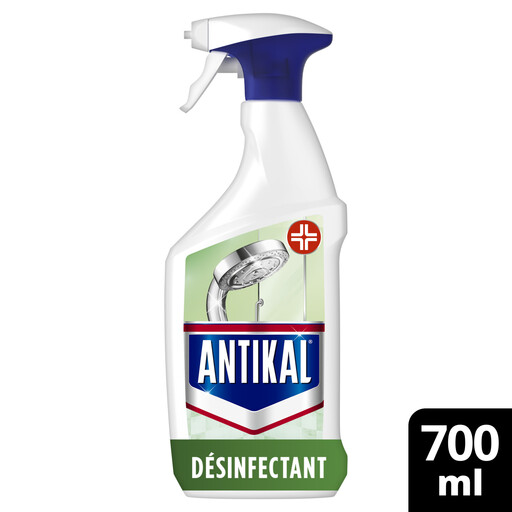
Why this is a good fit: With its 700 ml capacity and ready-to-use format, this spray is suitable for everyday bathroom cleaning without the need to use lots of different products.
The product information claims it tackles limescale, soap marks, certain bacteria and certain viruses. However, you must follow the contact time and safety warnings.
A formula stated to contain less than 5 % non-ionic surfactants, a handy trigger spray and suitability for tiles, sinks, baths and taps.
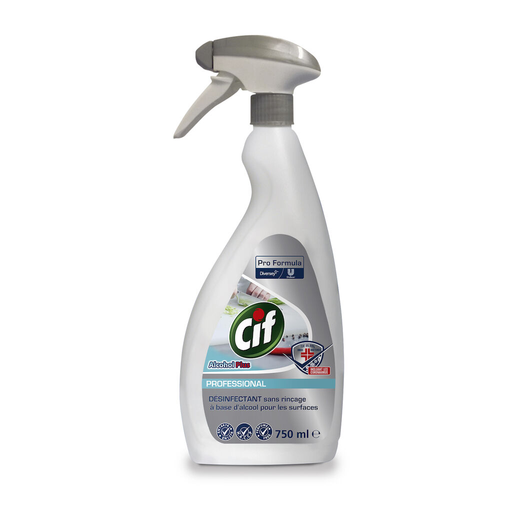
Why this is a good fit: This product is designed for households looking to disinfect small surfaces regularly, with a claim that it’s suitable for indirect food contact.
The stated 80 % ethanol content is a reminder that this product is flammable. This is an important factor to consider, alongside its disinfecting claims.
A ready-to-use product that, according to the product information, requires no rinsing. It claims bactericidal, fungicidal and virucidal properties in line with several specified EN standards.
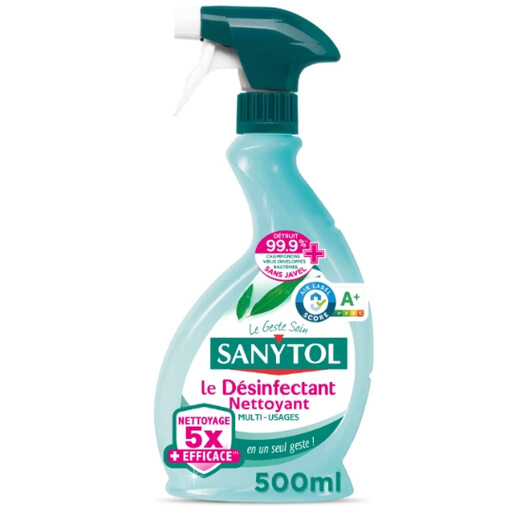
Why this is a good fit: Its multi-surface design suits households that regularly clean worktops, handles, sinks, toilet bowls and everyday accessories.
The product information specifies five minutes for general use and 15 minutes for certain food-contact surfaces, toys, and accessories used by babies and pets, followed by a rinse with drinking water.
A bleach-free formula, a 500 ml bottle and a clearly stated active ingredient: 0.2 % didecyldimethylammonium chloride.
We’ve put together a comprehensive, regularly updated selection of products that meet these criteria and the European safety requirements.
No. A multi-purpose product may be suitable for several washable surfaces, but it won’t necessarily replace a powerful degreaser in the kitchen or a product specifically formulated to tackle limescale. For each use, check that it’s suitable for the material and follow the rinsing instructions.
It depends on the formula. Surfaces that come into direct contact with food must be treated according to the instructions on the label. Some products require rinsing with drinking water, while others can be used without rinsing in specific conditions.
The time varies depending on the formula and what you’re using it for: general cleaning, everyday disinfection or treating a food-contact surface. Always follow the time stated on the packaging. Wiping the product off too soon may stop it working as intended.