
Livraison le jour même ou le lendemain

Qualité garantie

Débloquez vos offres de bienvenue: Livraison GRATUITE | Jusqu'à -80 % | 30 jours d'essai gratuits à JoyPlus
Téléchargez l'application
A multi-purpose utility knife can be used to open boxes, cut carpet, prepare food or work on cables. However, a model designed for DIY jobs is not necessarily suitable for the kitchen, just as a small folding knife is not designed for repetitive tasks.
To avoid unpleasant surprises, it is best to compare the tool’s design, locking system and intended uses. Here are the main criteria to consider before choosing a versatile cutting tool for the home, workshop or building site.
The term “multi-purpose” covers a wide range of products. A DIY knife with a replaceable blade is designed to cut cardboard, thin plastic, flexible panels or carpet. It should not be used to prepare food.
By contrast, a multi-purpose kitchen knife, such as a Santoku, is intended for slicing, chopping and mincing ingredients. Its blade and handle are not designed for cutting cables, plaster or building materials.
The blade’s composition matters, but it is not enough to assess its service life. SK5 steel is commonly used for cutters and replacement blades, particularly because of its rigidity and ability to retain its edge during the tasks for which it is intended. However, its performance also depends on the blade thickness, its treatment and the material being cut.
For an electrician’s knife, hardened steel can be useful when making repeated cuts. Nevertheless, you should check that the model is specifically designed for stripping and cutting cables. The material used can never, on its own, prove that a tool is suitable for every application.
A poorly secured sharp tool can open in a pocket or close while you are cutting. With a folding knife, look for a clearly described locking mechanism, such as a blade-locking system or liner lock. On a professional cutter, the blade must remain completely stable while force is applied.
A belt clip, blade compartment or quick-change mechanism can also make everyday use easier, provided you follow the manufacturer’s recommendations.
Stainless steel reduces the risk of corrosion, particularly in the kitchen or in a damp environment. Carbon steel can offer good mechanical strength, but it requires more thorough drying and maintenance. In all cases, wipe the blade after use and replace it as soon as it is damaged or requires excessive pressure.
For cutter blades, use only refills compatible with the specified format. Trapezoid blades and snap-off blades cannot always be fitted to the same handles.
A handle that is too short can affect control, while an overly bulky tool quickly becomes awkward to carry. For example, the zenitech electrician’s knife measures 10 cm when closed and 17.2 cm when open. It is therefore easy to store while still providing a useful cutting length.
A rubber coating, aluminium handle or wooden grip can also make a noticeable difference to comfort. The right choice depends on the length of your working sessions, whether you wear gloves and the level of precision required.
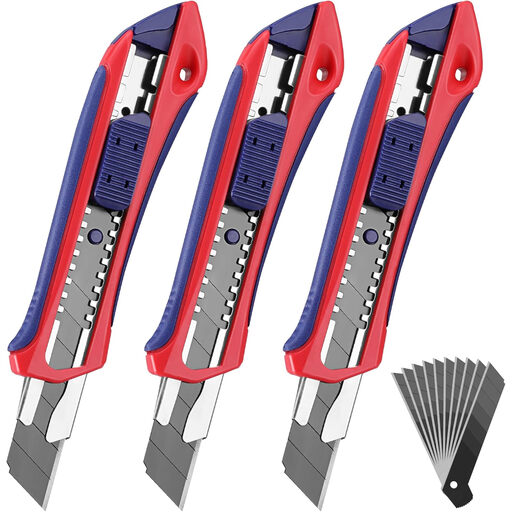
Why this choice suits this profile : This set of three utility knives is suitable for small household jobs, packaging and DIY projects where several tools need to be readily available.
The 10 SK5 blades supplied reduce the risk of having to work with a blunt blade, while the locking system helps prevent unwanted movement.
Three handles, 18 mm snap-off blades, and ABS and TPR grips with a rubberised section.
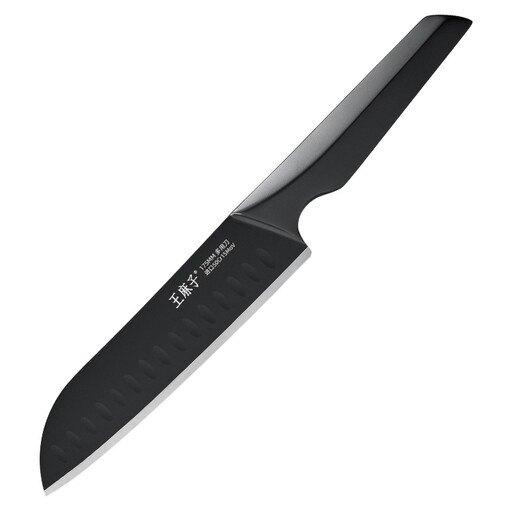
Why this choice suits this profile : This Santoku knife is aimed at people who prioritise food preparation and want a model dedicated to everyday cutting tasks.
Its culinary purpose is clearly distinct from that of a professional cutter or a building-site knife.
Blade advertised as 50Cr15MoV steel and 430 stainless steel handle, for slicing, chopping and mincing.
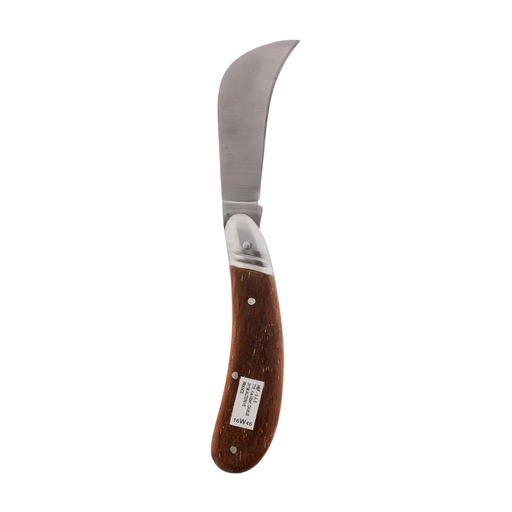
Why this choice suits this profile : This compact electrician’s knife is designed for professionals and DIY enthusiasts who regularly cut or strip cables.
Its functions focus on stripping, slicing and cutting cables rather than presenting the knife as a universal tool.
Hardened steel, ergonomic handle, 10 cm closed format and 17.2 cm open length.
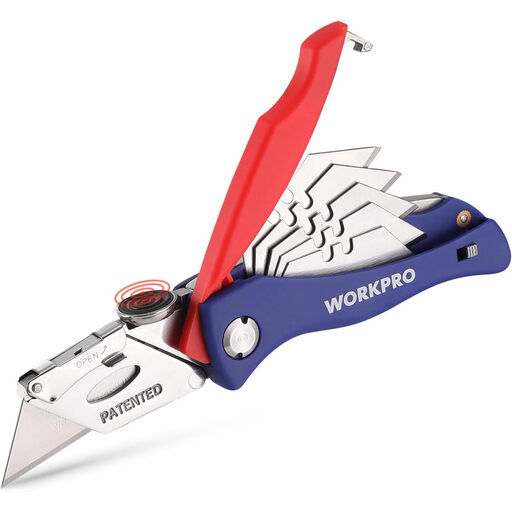
Why this choice suits this profile : Its folding design is suitable for flooring fitters, decorators and DIY enthusiasts working with carpet, PVC, insulation or similar materials.
The quick-change mechanism and locking system allow you to replace a worn blade instead of continuing to work with an inadequate cutting edge.
Stainless steel handle, belt clip, integrated storage and five SK5 blades included.
We have compiled a complete, real-time updated list of products that meet these demanding selection criteria and European safety regulations.
A professional cutter with a replaceable blade or a folding carpet knife will generally be the most suitable option. Check blade compatibility, the presence of a locking system and whether the tool can be carried safely when closed.
It depends on the material, the pressure applied and the amount of cutting involved. Replace the blade as soon as it catches, produces uneven cuts or requires unusual force. A model supplied with replacement blades helps you maintain consistent cutting performance.
No. A Santoku knife is a multi-purpose kitchen knife intended for food. For cardboard, plaster, cables or carpet, choose a tool specifically designed for the material concerned.