
Livraison le jour même ou le lendemain

Qualité garantie

Débloquez vos offres de bienvenue: Livraison GRATUITE | Jusqu'à -80 % | 30 jours d'essai gratuits à JoyPlus
Téléchargez l'application
A multi-purpose strong glue can save a repair in minutes, but not all formulas are created equal. Repairing a teacup, fixing a skirting board, assembling wood or rebuilding a metal part all demand different properties.
The trap is to rely solely on claims like "universal", "instant" or "strong". These promises don't specify which materials are compatible, the setting time, or how well it holds up to moisture. Here are the criteria to check before you buy, along with a selection of glues suited to different needs.
An instant glue, usually formulated with cyanoacrylate, sets in seconds. It works well on small, clean, perfectly fitted surfaces such as ceramic, metal, wood or certain plastics.
However, it doesn't automatically replace a fixing glue or epoxy resin. If the assembly will be subject to vibration, flexing or has significant gaps, a more flexible formula or one that can fill spaces is a better choice.
Many glues are not suitable for polyethylene (PE), polypropylene (PP) or PTFE. These plastics have a low surface energy, which makes adhesion difficult without a suitable primer.
Before applying a glue for plastic, always check the technical data sheet. A test on an inconspicuous area is still advisable, especially with flexible PVC, acrylic, silicone, copper or brass.
A water-resistant glue can withstand moisture or occasional washing without being designed for continuous immersion. Temperature fluctuations, UV rays and movement of the substrate can also weaken the bond.
For outdoor use, check the stated temperature range, UV resistance and the level of moisture exposure it can handle. A glue designed for an interior wall won't necessarily suit a patio or a constantly wet area.
A wood glue is not the same as a metal glue. Porous wood can absorb some of the product. Metal generally needs to be degreased and free from any oxidation. Glass and ceramic require a thin application to avoid visible marks.
For decorative assemblies, a transparent glue will better preserve the appearance of the piece. For walls and ceilings, a white fixing glue may be more appropriate, especially when at least one of the surfaces is porous.
A small 3 to 5 g bottle is enough for occasional repairs. For skirting boards, mouldings, panels or renovation work, a 290 to 450 g cartridge for use with a caulking gun will be more suitable.
Before application:
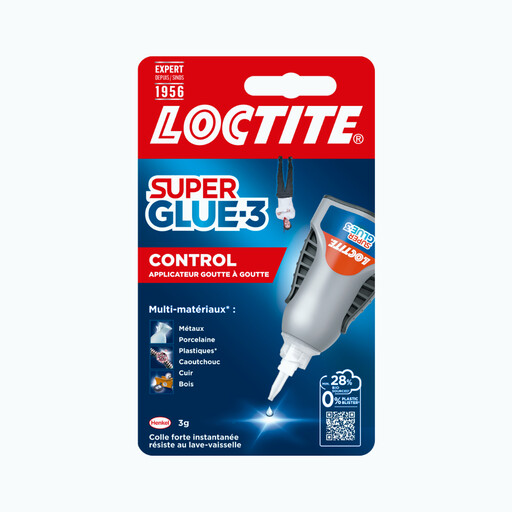
Why this suits this profile: Its 3 g bottle and control button are particularly handy for small household repairs, without needing to buy a large cartridge.
The controlled flow prevents applying too much product. The data sheet states compatibility with several materials, while explicitly excluding PE, PP and PTFE.
A clear liquid formula, precise application and stated resistance to water and the dishwasher after curing.
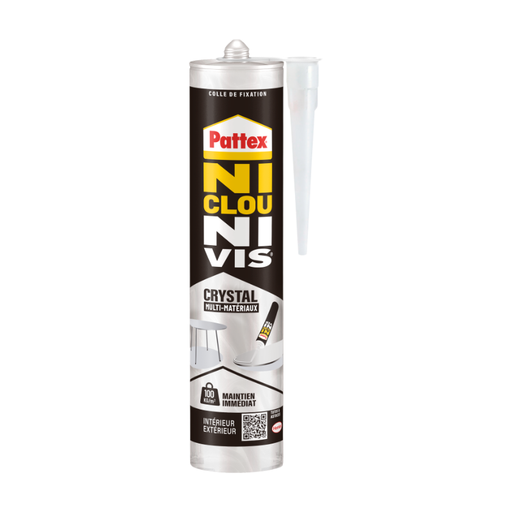
Why this suits this profile: Its clear finish is ideal for mirrors, glass and decorative items where aesthetics matter as much as the strength of the fix.
The data sheet distinguishes between resistance to moisture and UV and permanent immersion. A useful nuance to avoid confusing outdoor bonding with total waterproofing.
A Flextec hybrid polymer that can be repositioned for 15 minutes, with a stated temperature range of -30 °C to +80 °C.
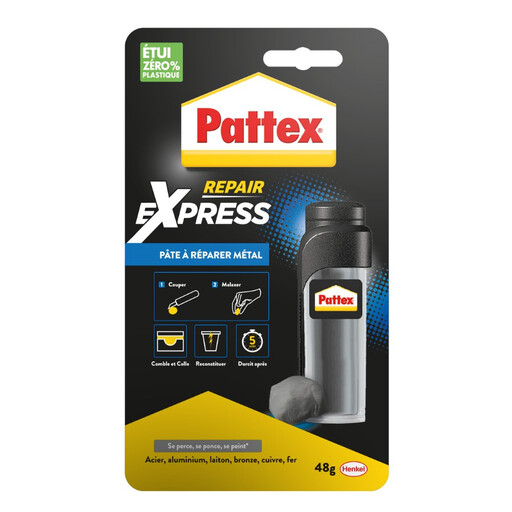
Why this suits this profile: This epoxy paste is designed to repair parts made of steel, aluminium, copper, brass or bronze, with the ability to fill defects and then rework the surface after curing.
It doesn't just rely on a fast set: the two components are kneaded together, then the material can be sanded, painted or drilled once hardened.
Stated resistance to water, including immersion, and a temperature range between -30 °C and +120 °C.
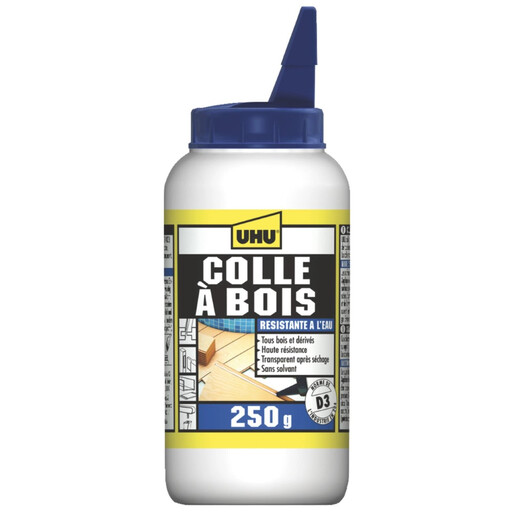
Why this suits this profile: Its 250 g format is ideal for joinery, assembly, veneering and carpentry work on softwood, hardwood or exotic wood.
The D3 classification according to EN 204 standard specifies the level of moisture resistance, rather than suggesting that a wood glue can withstand all immersion.
A solvent-free formula, an initial set stated at 10 minutes and a transparent finish after drying.
We've put together a comprehensive, real-time updated selection of products that meet these strict criteria and European safety requirements.
Start by identifying the type of plastic. PE, PP and PTFE are often incompatible with common glues. For other plastics, an instant glue, a gel or a hybrid polymer may work depending on the rigidity of the part, its flexibility and its exposure to moisture. A preliminary test is still recommended.
The initial set can happen in seconds or minutes, but this doesn't necessarily mean full strength has been reached. An epoxy glue or a fixing glue may need up to 24 hours to achieve its stated performance. Always follow the manufacturer's recommended time before putting the assembly under stress.
No. A no-nails, no-screws glue depends on the porosity, cleanliness and flatness of the surfaces. Some formulas designed for interior walls require at least one of the surfaces to be porous. They don't replace a mechanical fix when a heavy load needs to be hung or when the substrate is damaged.