
Livraison le jour même ou le lendemain

Qualité garantie

Débloquez vos offres de bienvenue: Livraison GRATUITE | Jusqu'à -80 % | 30 jours d'essai gratuits à JoyPlus
Téléchargez l'application
A multi-purpose strong glue can seem like it does it all. Yet a formula designed for wood won't necessarily work on plastic, metal or a surface exposed to moisture. The risk is buying a product sold as "universal" only to find, a few days later, that it's peeling, leaving visible marks or not sticking properly.
To help you avoid unpleasant surprises, Joybuy's Product Recommendation Officer has reviewed the uses, materials and real-world constraints before putting together a suitable selection.
An instant glue can hold two pieces together in seconds. That doesn't mean the bond can immediately take a heavy load. Some formulas, such as epoxy glues or fixing adhesives, only reach their maximum strength after several hours, or even 24 hours.
So it's important to distinguish between:
PE, PP and PTFE plastics are among the most difficult materials to bond with a standard instant glue or epoxy resin. A clear glue can give a neat result on glass, but won't necessarily suit flexible PVC, copper or certain very smooth surfaces.
Before you order, check the list of compatible and incompatible materials. For a glue intended for plastic, testing on an inconspicuous area is the best precaution.
A standard wood glue can be perfectly fine for a piece of furniture in a dry room. However, a shelf in a utility room, kitchen or garden shed will need to cope with more moisture. The EN 204 D2 and D3 classifications provide a handy reference for wood assemblies:
If the bond is near a heat source, also check the maximum temperature it can withstand. According to its technical data sheet, a high-temperature neoprene glue can resist up to 120 °C.
A claim like "water-resistant" should always be taken in context. It can mean resistance to splashes, humidity or prolonged exposure, but doesn't necessarily mean the product can handle permanent immersion.
For mechanical assemblies, a thread-locking resin is not a substitute for a standard glue. It's used to stop nuts, bolts and screws from loosening under vibration, while generally allowing disassembly with hand tools.
Most failed bonds start with poorly prepared surfaces. Clean, dry and degrease the surfaces thoroughly. Remove dust, old adhesive residue and any loose material. For wood, the pieces should fit together properly and have a moisture content that matches the manufacturer's recommendations.
The amount of glue also matters: too thick a layer can slow drying and cause oozing, while too little can leave areas that aren't properly bonded.
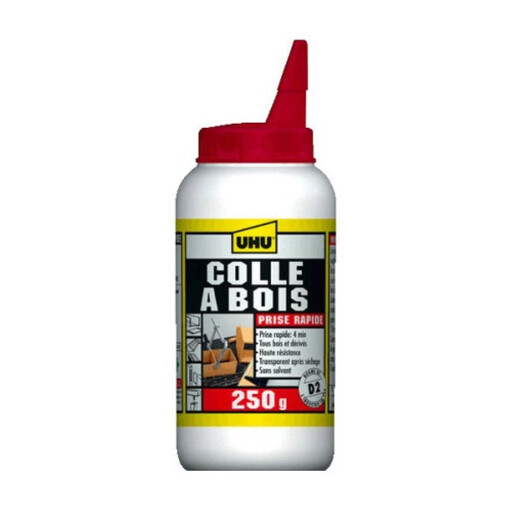
Why this suits this profile: With its 250 g bottle and precision nozzle, this glue is ideal for small woodworking jobs, furniture repairs and everyday DIY projects.
The EN 204 D2 classification immediately tells you its intended use, unlike a simple glue sold as universal. It's designed for wood, not tricky plastics.
Solvent-free formula, dries clear and grabs in around 6 minutes.
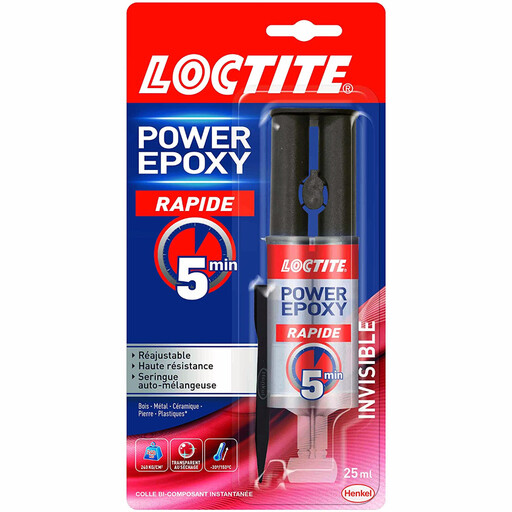
Why this suits this profile: Its self-mixing syringe makes it easy to measure the resin and hardener for repairs that need a clear finish and gap-filling.
Its formula is designed to fill gaps, unlike an instant glue which generally needs perfectly fitting surfaces.
Grabs in 5 minutes, resistant to water, oil and some solvents after curing.
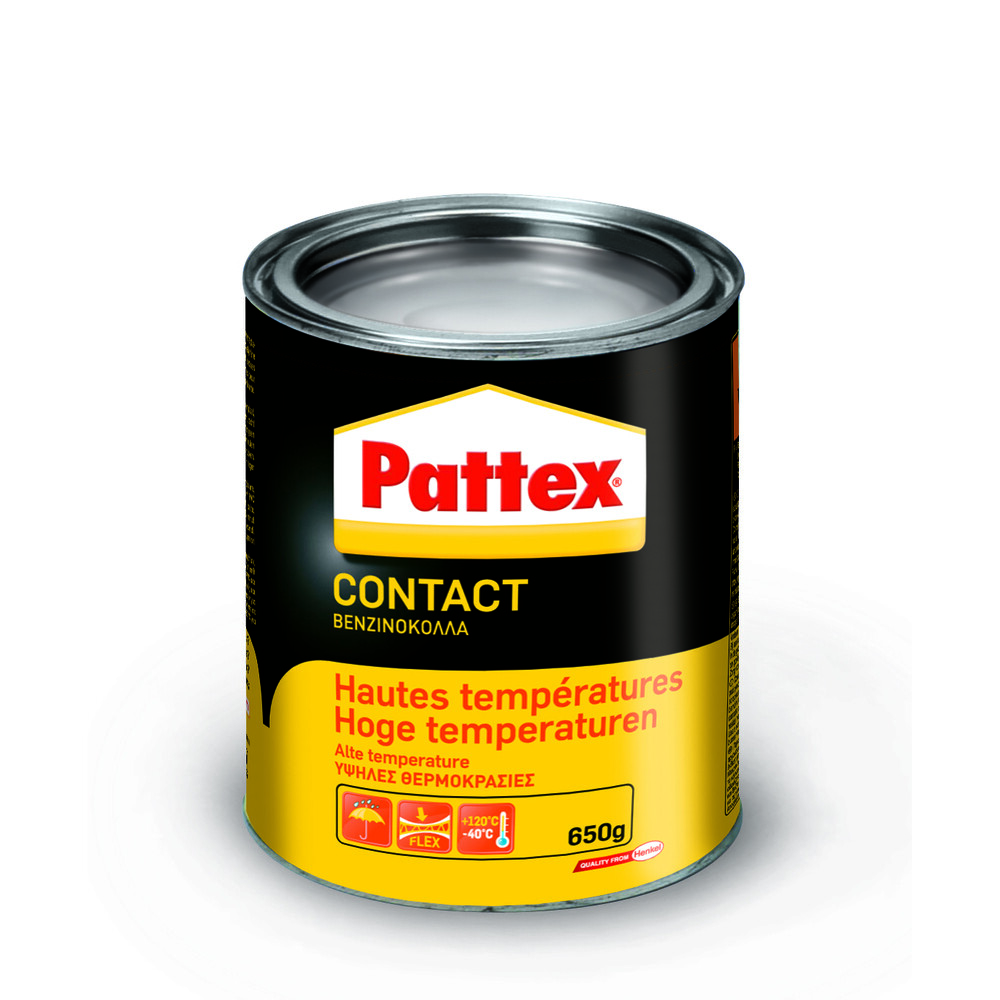
Why this suits this profile: Its 650 g size is ideal for repeated bonding jobs on laminates, wood, metal, cork, leather or rubber, especially near heat sources.
Its technical data sheet states heat resistance up to 120 °C and recommends applying the glue to both surfaces, with a waiting time of 10 to 15 minutes.
Strong initial adhesion, can be applied with a brush or spatula, and no hardener to mix in.
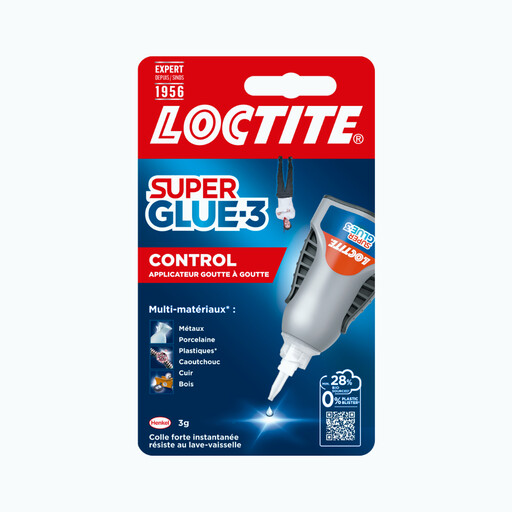
Why this suits this profile: Its dosing button and shock-resistant bottle are well suited to small household repairs on ceramic, metal, rubber, wood or certain plastics.
The data sheet clearly lists the excluded plastics — PE, PP and PTFE — so you don't treat all plastics with the same glue.
Precise application, clear finish and claimed resistance to water and dishwasher cycles.
We've put together a comprehensive, real-time updated list of products that meet these demanding selection criteria and European safety regulations.
For a variety of small repairs, a controlled-flow instant glue can work if the surfaces are clean and fit perfectly. If the pieces have gaps, irregular shapes or are under significant stress, an epoxy glue will be more suitable thanks to its filling ability. In any case, check the excluded materials.
For wood, go for a D3 classification when the assembly is regularly exposed to moisture or water splashes. For fixing something to a wall or panel, a polymer glue or mounting adhesive can work, depending on the surface. Bear in mind: none of these claims automatically mean the product is designed for prolonged immersion.
The time depends on the formula, temperature, humidity and the nature of the surfaces. A wood glue may grab in a few minutes but only reach its full strength after 24 hours. A fixing glue or epoxy resin also needs to stay perfectly still for the time stated on the packaging.