
Livraison le jour même ou le lendemain

Qualité garantie

Débloquez vos offres de bienvenue: Livraison GRATUITE | Jusqu'à -80 % | 30 jours d'essai gratuits à JoyPlus
Téléchargez l'application
A sponge might seem like a simple purchase, but the wrong choice can leave marks, hold onto grease or wear out in just a few days. For washing up, cleaning the bathroom and everyday household chores, multi-purpose scouring sponges should be chosen based on the surfaces you need to clean, how often you use them and how you look after them.
An abrasive side can tackle baked-on residue and stubborn dirt. However, it is not necessarily suitable for non-stick pans, shiny surfaces, glass or painted finishes. Even a sponge labelled as "non-abrasive" deserves a test on an inconspicuous area – not all materials and coatings react the same way.
An absorbent sponge is certainly handy for wiping down a worktop or soaking up water around the sink. But this description alone tells you nothing about how easily it rinses clean, how well the foam holds up, or its ability to shift grease. A sponge that stays damp for hours quickly becomes unpleasant to use.
Claims like "long-lasting" and "reusable" should be backed up with verifiable information: machine-washability, maximum temperature, stated number of cycles or recommended replacement frequency. A multi-pack can be practical, but you also need to look at the price per sponge and the actual durability of each side.
For versatile use, a dual-sided sponge remains a reliable choice:
For everyday washing up, check whether the sponge is compatible with non-stick pans, glass or ceramic hobs. Product descriptions do not all give the same guidance.
Vegetable cellulose sponges are valued for their absorbency and soft feel. Some models combine cellulose, synthetic fibres, microfibres or foam. The material should therefore be assessed according to the intended use, rather than considered in isolation.
A machine-washable sponge can help reduce how often you need to replace it. Recommended temperatures vary between models: some can be washed at 40 °C, while others claim up to 70 °C. Always follow the temperature and care instructions on the packaging.
A compact size makes it easier to reach corners, edges and narrow utensils. A flexible shape can also be practical for cleaning sinks, taps or bathroom surfaces.
Then compare the number of pieces. A pack of household sponges with two, three or four units lets you separate uses – one sponge for washing up, another for the bathroom, for example. This is far better than using the same accessory all around the house.
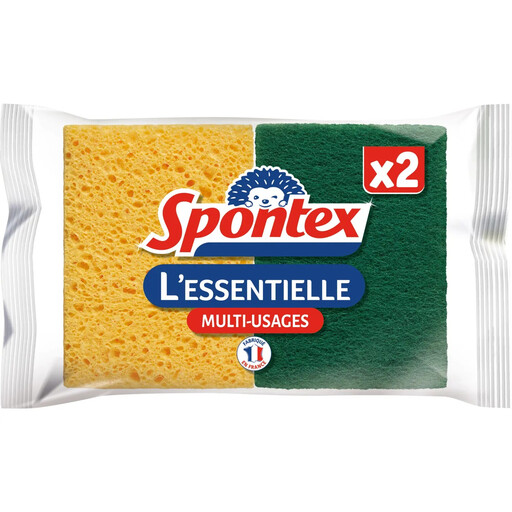
Why this choice suits this profile: This pack of two dual-sided sponges is ideal for everyday tasks in a small kitchen or a single-person household. Their size makes it easy to reach awkward corners.
The soft side and the scouring side let you clearly separate uses, rather than relying on a single level of abrasiveness.
PEFC-certified vegetable cellulose, stated to be made in France, and rinsing recommended after each use.
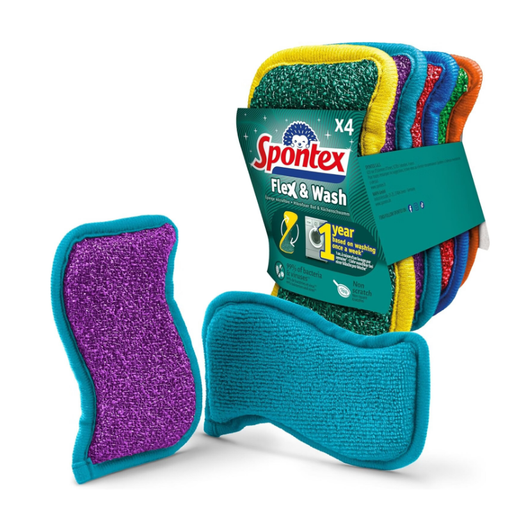
Why this choice suits this profile: Households that prefer a reusable accessory will appreciate the machine-washable design, the S-shape and the four-piece pack.
The stated lifespan is based on a concrete figure – up to 52 wash cycles – rather than a vague promise of longevity.
Microfibre side for wiping, scouring side stated to be non-scratching, and recycled fibres according to the product description.
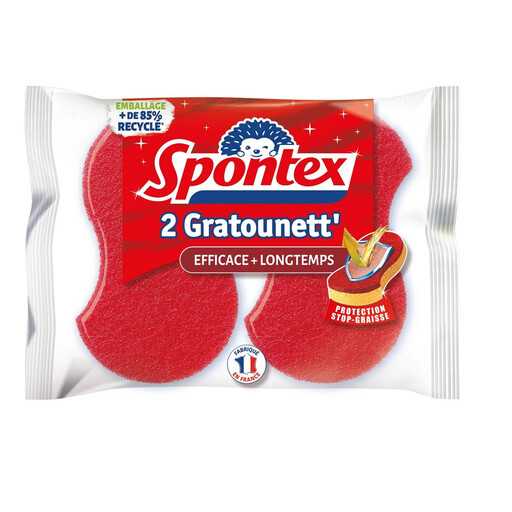
Why this choice suits this profile: If you regularly clean greasy dishes or heavily used utensils, you may want a sponge designed to rinse more easily.
The Stop-Grease treatment is said to help remove greasy residue when rinsing the scouring side.
Two sponges, stated to be made in France, absorbent structure and rinsing recommended after each use.
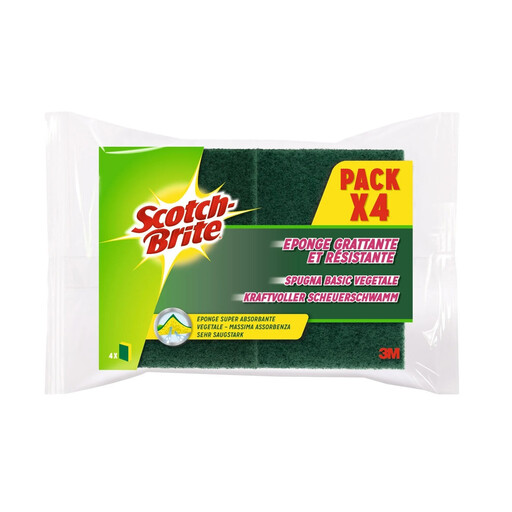
Why this choice suits this profile: The four-piece pack lets you divide tasks between washing up, kitchen surfaces and everyday household cleaning.
The green side is for scouring and the vegetable sponge side for wiping, which prevents mixing up the uses.
Four pieces, dual-sided design and vegetable cellulose stated to be highly absorbent for wiping.
We have put together a comprehensive, real-time updated selection of products that meet these exacting criteria and comply with European safety regulations.
An anti-grease sponge with a scouring side that is easy to rinse can work well for greasy dishes and utensils. The Stop-Grease treatment on certain Spontex models is said to help wash away residue during rinsing. Still, use washing-up liquid and rinse the sponge after each use.
It can reduce how often you need to buy new ones, provided you follow the washing instructions. Compare the permitted temperature, the stated number of cycles and the pack price. Washing does not mean you can avoid replacing the sponge when it is worn out or when good hygiene can no longer be guaranteed.
It depends on how often you use it, the type of dirt you clean and how well it dries. Several product descriptions recommend replacing it roughly every two months for hygiene reasons. Heavy use or insufficient drying may, however, mean you need to change it sooner.