
Livraison le jour même ou le lendemain

Qualité garantie

Débloquez vos offres de bienvenue: Livraison GRATUITE | Jusqu'à -80 % | 30 jours d'essai gratuits à JoyPlus
Téléchargez l'application
Pliers may seem easy to choose… until the day they slip on a fitting, crush a hose or lose their edge after only a few uses. For professionals in plumbing, mechanics, electrical work and maintenance, as well as DIY enthusiasts, choosing the right multi-purpose pliers and gripping tools should be based on how they will actually be used, not on a simple marketing promise.
Water pump pliers can grip round, flat or hexagonal parts. However, they will never replace cutting pliers, wire strippers or circlip pliers. Using a tool outside its intended function can damage its jaws, the workpiece or even injure the user.
A well-rounded set of pliers should include several profiles: long-nose pliers for hard-to-reach spaces, diagonal cutters for wires, gripping pliers for fittings, and a dedicated tool for circlips or hoses.
This wording tells you nothing about the alloy used or the treatment applied. It is better to look for precise details such as chrome vanadium steel (Cr-V), chrome molybdenum steel (Cr-Mo) or forged carbon steel. Heat treatment of the jaws and cutting edges also gives a more reliable indication of resistance to wear.
The surface finish also deserves your attention, particularly in a damp workshop or in a car boot. A nickel-plated, blackened or oiled coating can slow oxidation, but it does not replace regular cleaning or dry storage.
Pliers that are too short may not provide enough leverage. Conversely, an oversized model can quickly become cumbersome to carry or use under a bonnet. Check the length, maximum opening and, for cutting tools, the maximum material diameter they can handle.
The handle should remain stable without compressing your palm. A TPR, PP or resin coating can improve grip, but it does not turn ordinary pliers into an insulated tool. Never use them on a live circuit unless they have been specifically designed for that purpose.
For fittings, nuts or pipes, examine the tooth profile and opening range. The 305 mm WORKPRO Professional Water Pump Pliers offer a maximum opening of 50 mm, with push-button adjustment. This capacity is suitable for parts in a range of shapes, provided you stay within the manufacturer’s specified limits.
If you need two sizes, a set of water pump pliers measuring 180 mm and 250 mm offers respective openings of 33 mm and 43 mm. The smaller model is practical for everyday jobs, while the larger one provides greater reach when working on bigger assemblies.
Choosing cutting pliers depends on the material to be cut and its diameter. The 210 mm WORKPRO Mini Bolt Cutter offers a maximum capacity of 2.3 mm for hard materials, thanks to heat-treated Cr-Mo steel jaws. This limit must be respected to prevent the cutting edge from deforming or material from being ejected.
For electrical work, 2-in-1 wire strippers reduce the number of tools you need to carry. The 200 mm WORKPRO model is designed to strip 10, 12, 14 and 16 AWG wires and cut hard wires up to 2.0 mm. Always check the gauge before removing insulation.
Circlip pliers must match the type of circlip being used: internal or external, straight or angled. A set of four pliers with 1.6 mm tips and stated openings of up to 33 or 36 mm covers several configurations. For hose pliers, make sure they are intended for flexible lines: tools designed for rigid pipes or high-pressure systems are different.
For car maintenance, choose oil-filter pliers primarily according to their diameter range. The DURATECH kit featured offers compatibility from 63 to 103 mm for its three-jaw wrench and also includes a 300 mm long-handled pair of pliers.
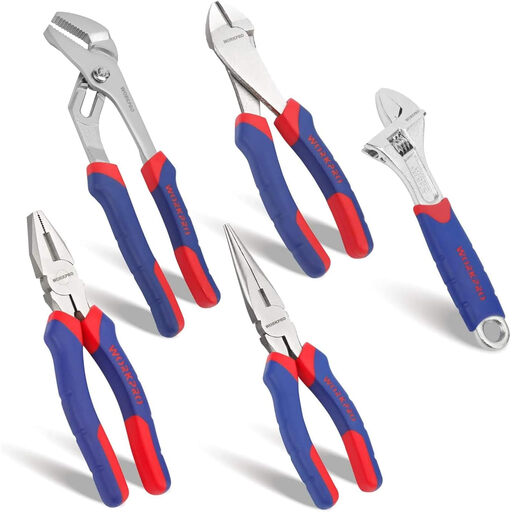
Why this choice suits this profile : This five-piece set includes water pump pliers, combination pliers, cutting pliers, long-nose pliers and an adjustable wrench for everyday household repairs.
Each tool has a clearly defined function, helping you avoid using water pump pliers for cutting or stripping.
Five tools, non-slip TPR and PP handles, and heat-treated alloy steel.
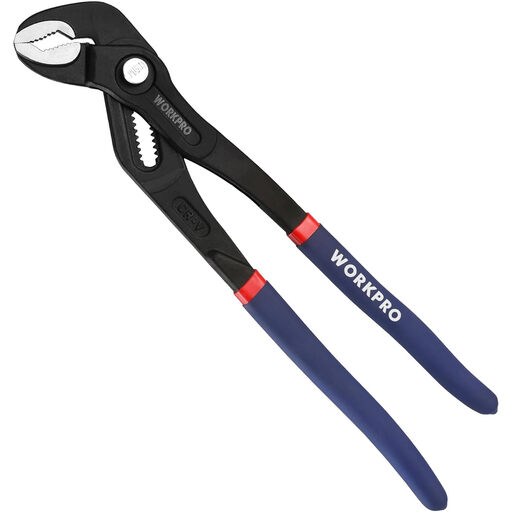
Why this choice suits this profile : Measuring 305 mm in length and offering a stated maximum opening of 50 mm, they are suitable for regular work on pipes and fittings.
The opening and push-button adjustment mechanism are clearly specified, rather than hidden behind a vague promise of versatility.
Cr-V steel, gripping teeth and ergonomic plastic handles.
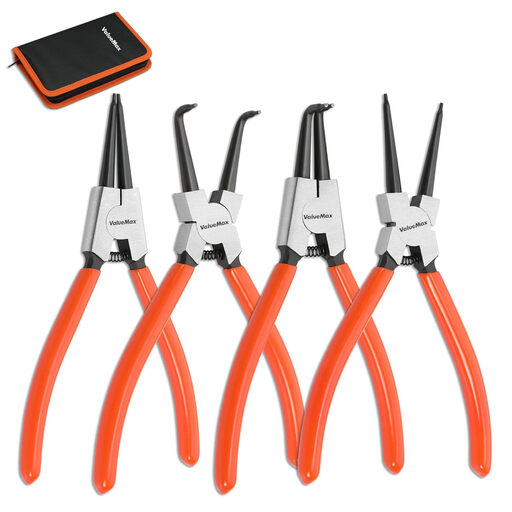
Why this choice suits this profile : Its four configurations — straight, angled, internal and external — are suitable for mechanical and automotive repair work.
The type of pliers and tip diameter are specified, reducing the risk of a poor fit on the circlip.
Four 180 mm pliers, a stated opening of up to 36 mm and a storage pouch.
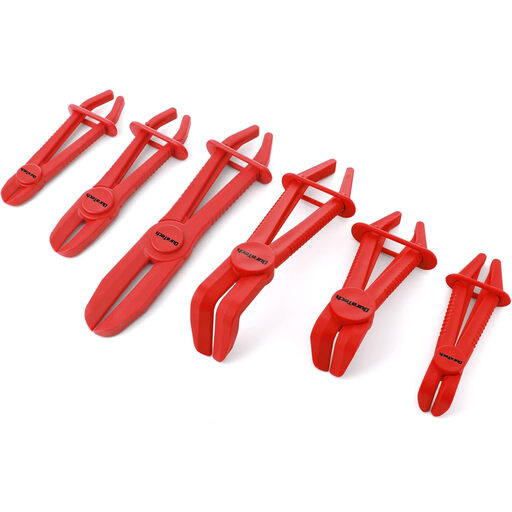
Why this choice suits this profile : The six straight and angled models make it easier to hold brake, fuel, radiator or coolant hoses in place.
The opening dimensions are detailed and the tool is clearly intended only for hoses, helping you avoid using it on rigid or high-pressure lines.
Reinforced PA6 nylon, non-slip handles and a safety loop to keep the pliers closed.
For pipes and fittings, water pump pliers with toothed jaws are generally the most suitable choice. Pay particular attention to the maximum opening, handle length and adjustment system. A 180 to 250 mm model is sufficient for everyday jobs, while 305 mm pliers provide greater reach.
It depends on how often they are used, the material being gripped and whether the stated capacity is respected. A treated-steel tool that is cleaned after use and stored in a dry place will generally retain its performance for longer than pliers used on materials that are too hard or left in a damp environment.
A set is suitable for a variety of repairs and avoids the need to buy multiple tools separately. Individual pliers become more worthwhile when you regularly carry out a specific task, such as crimping, fitting circlips, removing oil filters or working on hoses. The right choice therefore depends on the tools you will genuinely use in your workshop.