
Livraison le jour même ou le lendemain

Qualité garantie

Débloquez vos offres de bienvenue: Livraison GRATUITE | Jusqu'à -80 % | 30 jours d'essai gratuits à JoyPlus
Téléchargez l'application
A multi-purpose knife can be used to cut cardboard, open packaging, lay carpet, strip certain cables or prepare food. But not all models are designed for the same tasks. The practical tool of a plasterboard fitter won't necessarily suit a cook, while an electrician's knife has no place replacing a site cutter.
Before you head to the checkout, three common mistakes keep cropping up:
For cardboard, plastic film, insulation, PVC or carpet, a folding utility knife with a replaceable blade is generally more suitable than a fixed-blade model. Trapezoidal blades in SK5 carbon steel are valued for their sharpness and ease of replacement, but they remain sensitive to moisture. Wipe them down after use and change them as soon as they start to snag.
For finishing work, a filling knife has a wide, flexible blade. It is used to spread filler, plaster or joint compound, not to cut materials. A 101.6 mm (4-inch) blade offers a good balance between precision and coverage for small wall repairs.
An electrician's knife, on the other hand, has a shape suited to cutting and stripping cables. It does not replace a certified insulated tool for working on live components. Before any operation, cut the power supply and verify the absence of voltage with the appropriate equipment.
A reliable lock reduces the risk of the blade closing or shifting during cutting. The most common systems are:
Always test the lock without forcing it. If the blade has any side-to-side play, if the button is difficult to operate or if the mechanism doesn't return properly, move on.
A compact knife slips easily into a pocket or clips onto a belt, but a shorter blade can limit cutting depth. Check the dimensions of the knife when closed and open, especially if you plan to use it on a building site.
The handle must remain stable, even when you're wearing gloves. Aluminium, stainless steel, wood and ABS each offer different levels of comfort and grip. A belt clip makes the tool easier to access, while an integrated compartment for SK5 replacement blades prevents interruptions during the day.
In the kitchen, choose a dedicated knife that is washable and designed for food contact. A peeling knife or a cheese knife should not be mixed with DIY tools.
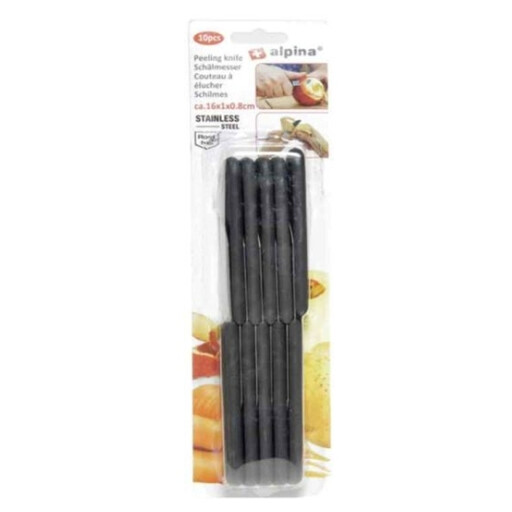
Why this choice suits this profile: This set of 10 peeling knives is ideal for a household that wants several utensils dedicated to fruit and vegetables, without investing in a multi-purpose site tool.
It stops you paying for unnecessary features and clearly separates food preparation from DIY tasks.
Set of 10 pieces, stainless steel blades, plastic handles and a 16 cm format.
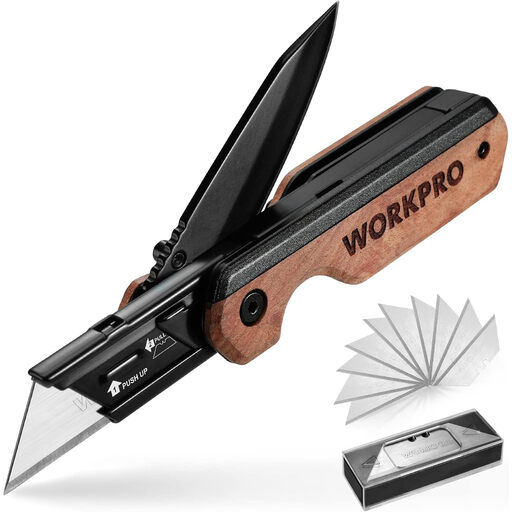
Why this choice suits this profile: Its 100 mm closed length, mahogany wood handle and dual function will appeal to those looking for a refined tool for camping, gardening and everyday small tasks.
The liner lock mechanism and quick-change system reduce risky handling when switching from one blade to another.
Fixed stainless steel blade, 10 additional SK5 blades, belt clip and a construction combining aluminium and wood.
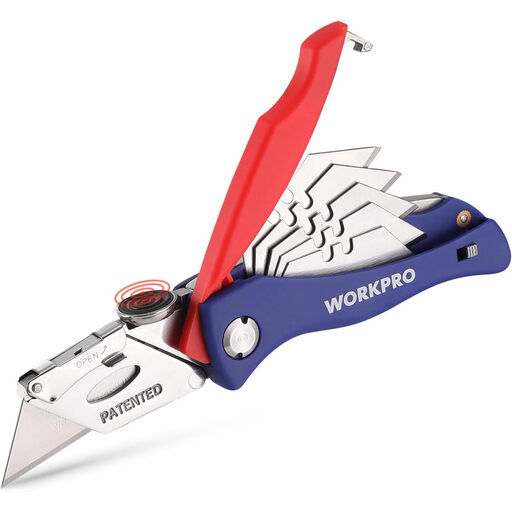
Why this choice suits this profile: This professional craft knife is aimed at tradespeople, carpet fitters, roofers and DIYers who regularly change blades to work with a variety of materials.
The quick-change mechanism and integrated storage prevent you from continuing with a blunt blade or carrying loose blades around.
Stainless steel handle with clip, back lock, 5 SK5 blades included and a folding design.
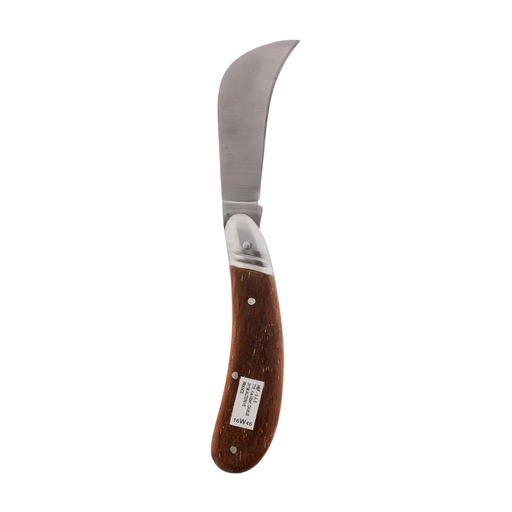
Why this choice suits this profile: This folding electrician's knife combines stripping, slicing and cutting functions for de-energised work and everyday wiring tasks.
Its 10 cm closed length limits exposure during transport, while the blade must be locked before each use.
Hardened steel, 17.2 cm open length, ergonomic handle and a stated two-year guarantee against manufacturing defects.
We have put together a comprehensive, real-time updated selection of products that meet these strict criteria, as well as European safety requirements.
To keep your multi-purpose cutting tool in good condition:
A cheese knife, such as the Alpina model with a 23.5 cm stainless steel blade, should be washed in warm, soapy water and then dried thoroughly. The manufacturer recommends not putting it in the dishwasher to preserve its sharpness and finish.
Its lifespan depends on how often you use it, the materials you cut, how well you maintain it and whether you can replace the blade. A model with interchangeable blades can remain functional for longer: the handle and mechanism are kept when only the blade is worn out.
A replaceable trapezoidal SK5 steel blade is suitable for repeated cuts of carpet, cardboard, PVC or light insulation, within the limits specified by the manufacturer. For a clean cut, work smoothly without jerking and replace the blade as soon as it loses precision.
No. An ordinary electrician's knife is not automatically an insulated tool. Cut the power supply, verify the absence of voltage and use equipment bearing the markings and certifications required for the type of electrical work in question.