
Livraison le jour même ou le lendemain

Qualité garantie

Débloquez vos offres de bienvenue: Livraison GRATUITE | Jusqu'à -80 % | 30 jours d'essai gratuits à JoyPlus
Téléchargez l'application
A multi-purpose knife can be used to open cardboard boxes, cut carpet, strip cable or even prepare food. But not all models are designed for the same tasks. A practical folding knife for carrying around won't necessarily replace a professional craft knife, while a versatile kitchen knife has no place on building materials.
Before you buy, three common mistakes keep cropping up:
The right choice therefore depends on your profile, the materials you need to cut, and how often you'll use it.
For cutting work, the SK5 blade in carbon steel is very common on craft knives and utility knives. This grade is valued for its hardness and its ability to hold a decent edge during regular manual use. However, it doesn't guarantee compatibility with all materials or a permanent sharpness.
Trapezoidal blades are generally suitable for cardboard, soft coverings, packaging films and certain renovation materials. Snap-off 18 mm blades are handy for quickly refreshing the cutting edge. For the kitchen, it's better to choose a dedicated blade, such as a santoku knife, and maintain it separately from your DIY tools.
On a worksite, the blade must stay firmly in place during use. Check for a mechanical lock, a locking button or, for folding models, a reliable closing mechanism.
Tool-free blade changing saves time in the workshop, warehouse or on site. A built-in compartment for spare blades also helps avoid interruptions. However, any handling should be done with the blade retracted or with suitable gloves, on a stable surface, and keeping the tool away from your body.
The shape of the handle directly affects precision and fatigue. A rubber coating improves grip, while an aluminium or steel handle offers more rigidity. For mobile use, a knife with a belt clip stays easily accessible without ending up at the bottom of a pocket with other items.
Also remember to check the tool's dimensions, both closed and open. A compact model is easier to store, but a handle that's too short can compromise control during prolonged cutting. The weight should suit the task: light for everyday carry, more robust for repetitive jobs.
The models shown below meet different needs. This selection is based on the features stated for each product, not on a promise of universal effectiveness.
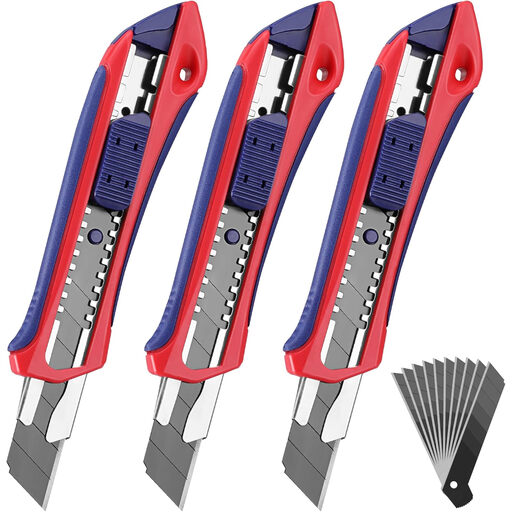
Why this choice suits this profile: This set is ideal for small household tasks, opening cardboard boxes, arts and crafts, and organising a shared workshop.
The 10 spare blades prevent you from continuing to work with a dull blade, while the three craft knives let you spread the tasks across different tools.
Snap-off 18 mm blades in SK5 steel, ABS and TPR handle, locking mechanism and a set of three pieces.
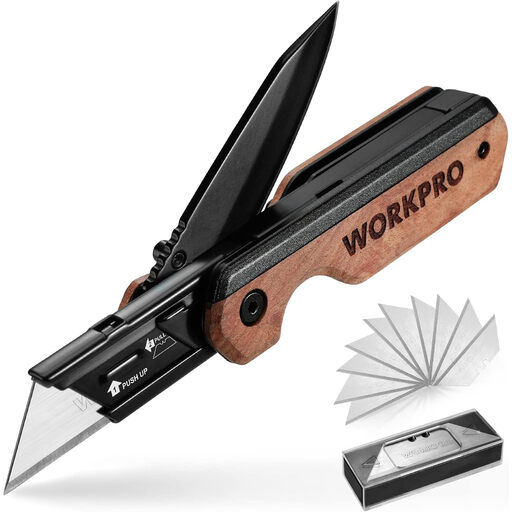
Why this choice suits this profile: This folding knife combines a fixed blade and a craft knife function in a format designed for everyday carry.
The liner lock mechanism and quick-change system minimise risky handling.
Wood and aluminium handle, belt clip, folding blade and 10 additional SK5 trapezoidal blades.
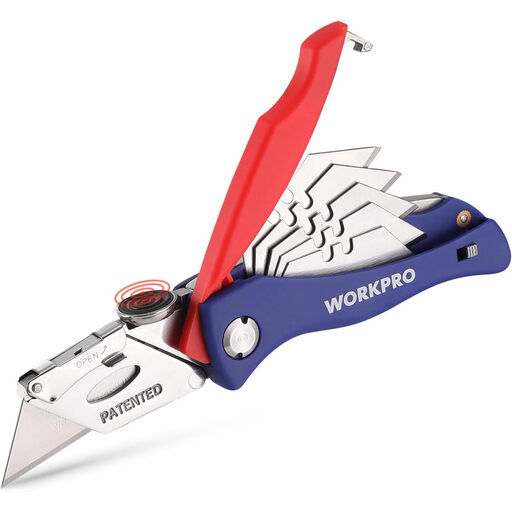
Why this choice suits this profile: Its design targets carpet fitters, tradespeople and DIYers who regularly cut coverings, insulation or PVC sheets.
The built-in magazine holds five SK5 blades, while the quick-change mechanism cuts down on downtime caused by wear.
Stainless steel handle, rear lock, belt clip, compact folding format and five SK5 blades included.
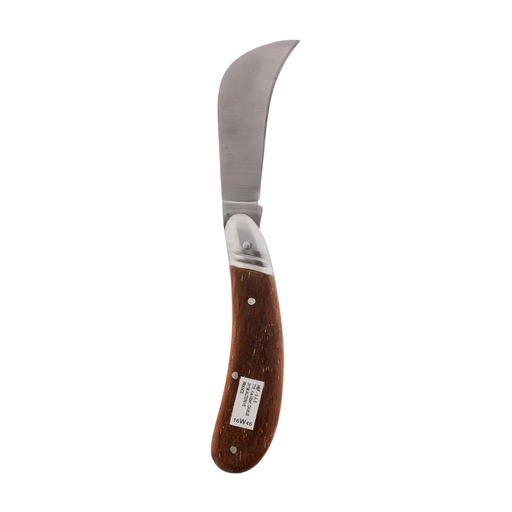
Why this choice suits this profile: This electrician's knife is designed for stripping, slicing and cutting cables as part of operations suited to this purpose.
Its functions are clearly focused on cable work, rather than passing off a general-purpose tool as electrician's equipment.
Hardened steel, 10 cm closed length, 17.2 cm open length and ergonomic handle.
We've put together a comprehensive, real-time updated selection of products that meet these demanding selection criteria, while complying with European safety regulations.
The lifespan of a blade depends on the material being cut, the pressure applied, the frequency of cuts and storage conditions. To reduce risks and preserve your tool:
A DIY knife should never be used to prepare food. Similarly, a versatile kitchen knife, a santoku or any blade intended for food should be used and cleaned separately from tools that have touched cardboard, glue or renovation materials.
A craft knife with an 18 mm snap-off blade or a trapezoidal blade is generally suitable for opening cardboard boxes and packaging. Choose a model with a reliable lock, a non-slip handle and spare blades that are easy to find. For regular use in a warehouse, a folding model with a clip can also make carrying it easier.
There's no standard duration. A blade used on clean cardboard won't wear at the same rate as one used to cut carpet, insulation or an abrasive material. Inspect the edge regularly and replace the blade as soon as the cut becomes uneven or requires unusual effort.
Yes, if its locking system, blade and handle match the planned work. A compact folding knife is practical to carry, but it doesn't replace a specialised tool when cuts are repetitive or involve thick materials. For electrical work, choose an electrician's knife designed for that function and follow the relevant isolation procedures.