
Livraison le jour même ou le lendemain

Qualité garantie

Débloquez vos offres de bienvenue: Livraison GRATUITE | Jusqu'à -80 % | 30 jours d'essai gratuits à JoyPlus
Téléchargez l'application
Multi-purpose cutting tools offer an obvious advantage: they prevent you from accumulating accessories in the workshop, kitchen or garden shed. However, the versatility advertised on the packaging does not guarantee comfortable use or a long service life. Scissors designed for food will never replace wire strippers, just as loppers are not suitable for delicate stems.
Before buying, start by identifying how you intend to use the tool, then check the materials and cutting capacity. This approach helps you avoid three common mistakes.
A tool described as multi-purpose may combine two related operations, such as cutting and stripping a wire. That does not make it compatible with every material or suitable for every task. Wire cutters must never be used on a live cable, while a putty knife has no place in the kitchen.
The product listing should specify the intended uses, accepted diameters and compatible materials. This information is far more useful than a vague promise of versatility.
The term ‘stainless steel’ covers very different compositions and levels of hardness. For kitchen scissors, check that the model is suitable for food contact and that its care requirements match this use. In the garden, a high-carbon steel blade can deliver a clean cut, but it will need careful drying and protection against corrosion.
A coating can delay the appearance of rust, but it does not remove the need to clean the tool or store it somewhere dry.
A longer blade is not necessarily more practical. For precise cuts, a short blade often offers better control. Conversely, loppers need handles long enough to transfer force without tiring your hands.
You should also respect the capacity specified by the manufacturer. Using precision secateurs on a branch that is too thick will accelerate wear and could damage the mechanism.
In the kitchen and at the barbecue, stainless steel kitchen utensils are popular because they are easy to maintain and offer good resistance to moisture. However, a blade intended for food must be clearly described as such in the product listing.
For DIY, 420 stainless steel is particularly suitable for scraping, spreading and finishing work. The DOBERMAN putty knife shown below has a 101.6 mm blade made from 420 stainless steel, protected by a varnished coating. It is designed for plaster, filler, putty and plasterboard joints, but certainly not for kitchen use or electrical work.
Dimensions should always be considered in relation to the intended use:
A non-slip handle, a well-positioned spring or a securely fixed wooden shaft can make a real difference over repeated use. For prolonged tasks, the shape of the handle matters just as much as the blade steel.
After each use, remove any residue, dry the metal parts and occasionally apply a small drop of oil to the joints of gardening tools. DIY tools should be stored away from moisture. For any electrical work, switch off the power, check that there is no voltage using a suitable device and use only a tool designed for the task.
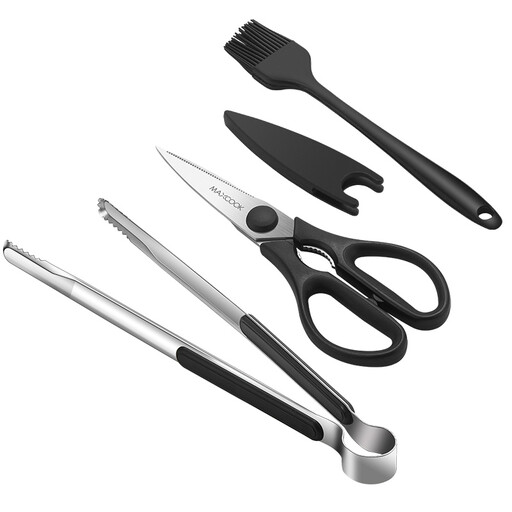
Why this choice suits this profile : This set combines tongs, an oil brush and scissors for barbecue meals, so you do not have to buy each accessory separately.
The contents are clearly specified : three separate accessories for three precise uses, rather than one supposedly universal tool.
A three-piece stainless steel set that is practical for preparing and serving grilled food.
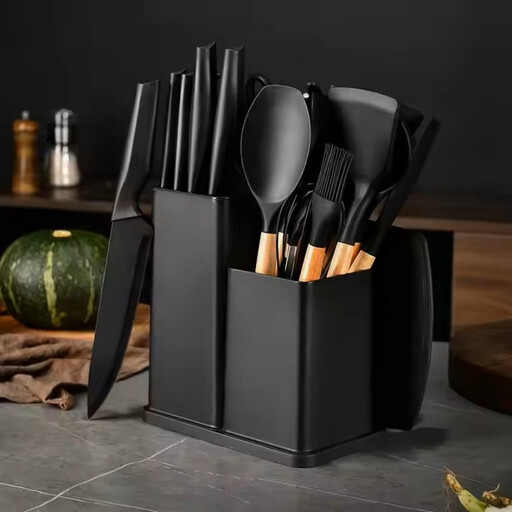
Why this choice suits this profile : Cooks who want their knives and accessories to match have a complete set for a wide range of preparations.
Each task can be assigned to the appropriate utensil, rather than placing all the strain on a single blade.
A 19-piece set bringing together knives and silicone accessories.
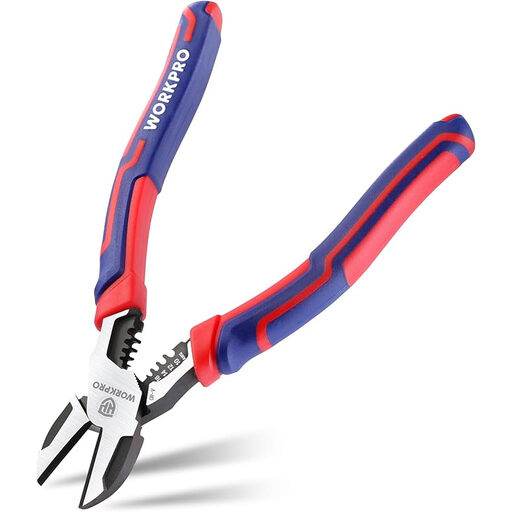
Why this choice suits this profile : Electricians and DIY enthusiasts benefit from wire cutters with a stripping function, in a 200 mm format.
The 10, 12, 14 and 16 AWG stripping gauges, along with the capacity to cut hard wires up to 2 mm, are clearly indicated.
Chrome vanadium steel, non-slip TPR handles and a two-in-one design.
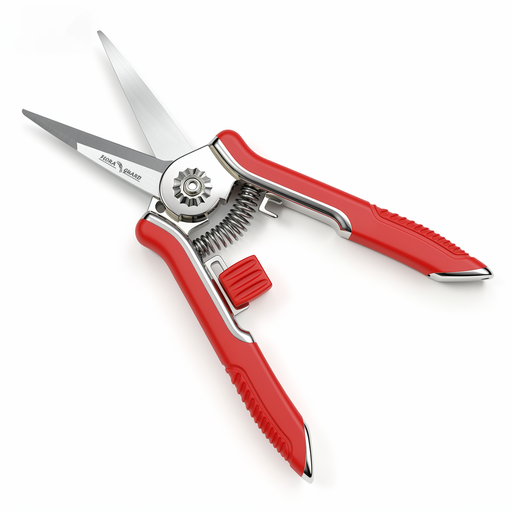
Why this choice suits this profile : Its fine tip is ideal for flowers, stems and small branches up to 6 mm, particularly when caring for potted plants and carrying out detailed work.
The 6 mm limit is clearly stated, helping you avoid using it on branches that are too thick.
A stainless steel blade, a stated hardness of 54 HRC and a soft, non-slip handle.
We have brought together a comprehensive, real-time updated selection of products that meet these demanding criteria as well as European safety standards.
For domestic use, start with your most common needs: cooking, small repairs or plant care. Kitchen scissors, a multi-purpose pair of pliers and precision secateurs will often cover more situations than a single tool with poorly defined functions.
Clean the blade after every use, dry it promptly and store the tool somewhere dry. Never use it on a material for which it was not designed, do not exceed its cutting capacity and regularly check the screws, springs, handles and joints. Coated blades should be cleaned without harsh abrasives to preserve their treatment.
Poultry shears are suitable for specific poultry cuts and certain small elements. Bone shears, on the other hand, are designed to withstand greater stresses on the blade and mechanism. Choose according to the material you need to cut, how often you will use the tool and the capacity explicitly stated in the product listing.