
Livraison le jour même ou le lendemain

Qualité garantie

Débloquez vos offres de bienvenue: Livraison GRATUITE | Jusqu'à -80 % | 30 jours d'essai gratuits à JoyPlus
Téléchargez l'application
A sponge might seem like a simple accessory. Yet the wrong choice can lead to scratches, stubborn odours or constant replacements. Washing-up, worktops, sinks, showers or mirrors – multi-purpose cleaning sponges aren't all designed for the same tasks.
Before buying a pack, take the time to check the fibre type, abrasion level and care instructions. Here are the key criteria to consider to avoid unpleasant surprises.
The label non-scratch sponge doesn't guarantee it's safe for a non-stick pan, a lacquered surface or a glossy hob. Grease or dirt particles trapped in the fibres can also cause micro-scratches.
Check the manufacturer's recommendations and test the sponge on an inconspicuous area first. Delicate surfaces should generally be cleaned with the soft side or a microfibre face.
An abrasive side is useful for dried-on food residue, saucepans or certain bathroom grime. However, it isn't necessarily suitable for glass, non-stick coatings or painted surfaces.
Double-sided sponges let you switch between heavy-duty cleaning and gentle wiping. Just make sure you use each side for its intended purpose.
A cheap pack can end up costing more if the sponges crumble quickly, hold onto odours or don't rinse well. Conversely, a machine-washable sponge may require a higher upfront investment but reduce the need for replacements.
Lifespan also depends on how you use, rinse and dry the sponge after each clean. Even a very durable sponge isn't designed to stay damp in a closed container.
For soaking up spills, wiping a sink or cleaning a worktop, choose an absorbent sponge made from plant-based cellulose or with a structure designed to hold water. Pleasant for wiping, plant-based cellulose can be combined with a scouring face.
Synthetic fibres, microfibre and technical foams meet other needs: streak-free finishing, window cleaning or reaching into corners. Refer to the composition stated on the product page rather than relying on a vague description.
The scouring power should match the level of dirt. For a ceramic hob, non-stick pan or glass surface, pick a side explicitly labelled as non-scratch and still do a test first.
For heavily soiled pans, a firmer scouring side can be useful. However, recommendations vary depending on the material. Washing-up sponges designed for delicate utensils shouldn't be confused with those meant for stubborn grime.
After each use:
Some machine-washable sponges can be washed at 40 °C, 70 °C or for a specific number of cycles. These instructions aren't interchangeable – always follow the temperature stated on the packaging. Replace the sponge when it becomes misshapen, frays, loses effectiveness or holds onto an odour despite washing.
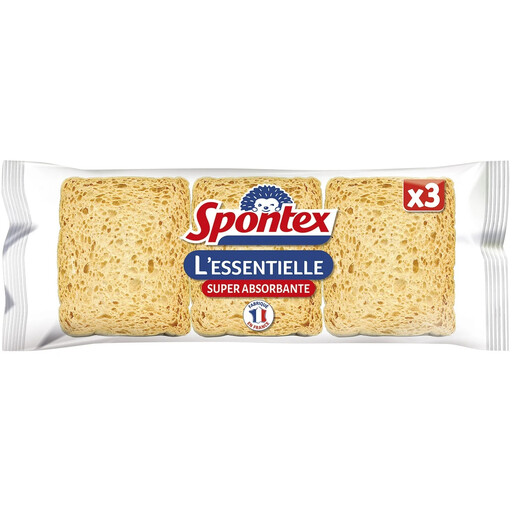
Why this choice suits this profile: A pack of three sponges for everyday tasks in the kitchen, bathroom and around the house.
The product page specifies incompatible surfaces, including non-stick coatings, which reduces the risk of misuse.
Absorbent cellulose, pack of three and manufactured in France as stated.
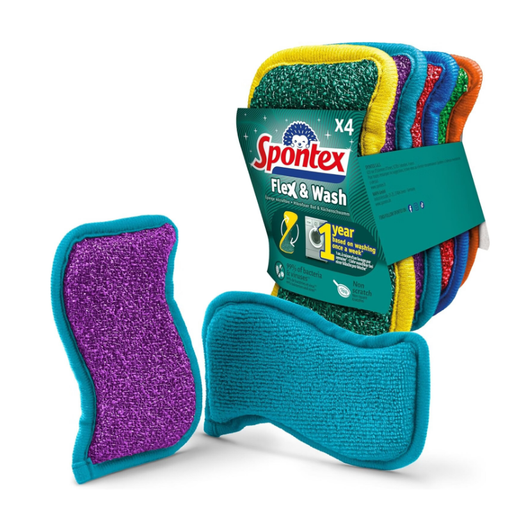
Why this choice suits this profile: A solution for households that want to reuse their sponges and reduce replacements.
The stated ability to withstand up to 52 washes means you don't have to throw the sponge away at the first sign of wear.
Microfibre face, non-scratch scouring side and recycled fibres mentioned on the product page.
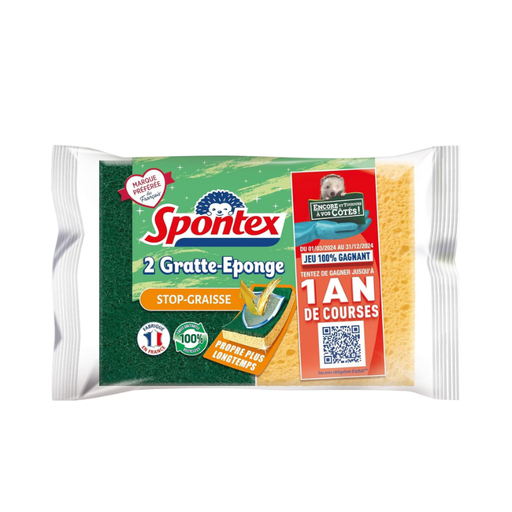
Why this choice suits this profile: A solution designed for frequent washing-up and surfaces regularly exposed to grease.
The Stop-Grease system is described as making fibre rinsing easier, while the product page advises against using the scouring side on delicate surfaces.
Plant-based absorbent part, fibres designed to hold less grease and machine washable at 40 °C.
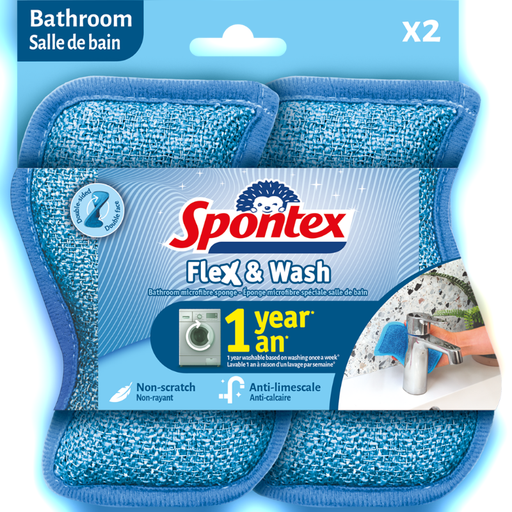
Why this choice suits this profile: Its design combines moderate scouring with wiping for the shower, mirrors and tiled surfaces.
The product page distinguishes the scouring side, intended for limescale, from the microfibre side, designed for windows and mirrors. A test beforehand is still recommended.
Machine washable or dishwasher safe according to the product page, with an absorbent foam core.
We've put together a comprehensive, real-time selection of products that meet these demanding criteria, while complying with European safety regulations.
Choose a sponge explicitly labelled as non-scratch and use its soft side. Even then, test it on a small area first and avoid any conventional abrasive side. The pan manufacturer's recommendations should always take priority.
It depends on how often you use it and how you care for it. Several product pages recommend replacing it roughly every two months for hygiene reasons, while some durable, washable sponges can be used for longer, under the conditions specified by the manufacturer. Change it straight away if it frays, becomes misshapen or holds onto an odour.
They can reduce the number of purchases, but their real cost also depends on the pack price, the wash temperature and the care instructions. A washable sponge is only worthwhile if it's rinsed after each use, dried properly and washed according to the manufacturer's guidelines.