
Livraison le jour même ou le lendemain

Qualité garantie

Débloquez vos offres de bienvenue: Livraison GRATUITE | Jusqu'à -80 % | 30 jours d'essai gratuits à JoyPlus
Téléchargez l'application
A sponge that holds on to grease, tears apart within days or scratches a ceramic glass hob can quickly turn a small saving into a recurring expense. Whether you are cleaning dishes, the kitchen, bathroom or everyday messes, multi-purpose cleaning sponges are not all designed to handle the same demands.
The right choice depends above all on the surface you need to clean, the sponge’s absorbency and how easy it is to maintain. Here are the key points to consider before placing your order, along with a selection of recommended models available on Joybuy.
A dishwashing sponge with a scouring side may work perfectly well on saucepans, sinks or hard-wearing worktops. That does not mean it is suitable for a non-stick pan, lacquered surface, glass or a glossy hob.
Even a non-scratch sponge should be tested first on an inconspicuous area. Particles trapped between the sponge and the surface can leave marks when you scrub.
A sponge’s lifespan depends on how often it is washed, the type of dirt it tackles and how well it dries between uses. A washable, reusable sponge should be rinsed thoroughly, wrung out and left to air-dry. If it remains damp at the bottom of the sink, unpleasant odours can develop quickly, even when the material is designed for long-term use.
Replacement recommendations vary from one model to another. Some products claim approximately two months of use, while washable models can last for up to 52 maintenance cycles.
A highly abrasive side can remove stubborn, baked-on residue, but it also increases the risk of damaging delicate finishes. For everyday dishwashing, a double-sided sponge is often the most versatile option: the soft side absorbs and wipes, while the scouring side is used only when needed.
An absorbent sponge made from plant-based cellulose is suitable for washing, wiping and soaking up spills. Some models combine cellulose with foam or polyurethane for greater flexibility and improved water retention.
Microfibre is particularly effective for wiping mirrors, windows and surfaces that need to remain spotless and streak-free. However, it cannot always replace a scouring side when an older deposit needs to be lifted.
For saucepans and sinks, a dedicated scouring texture can make it easier to remove residue. For a ceramic glass hob, non-stick pan or painted surface, however, choose a side labelled non-scratch and check the manufacturer’s care instructions.
A grease-fighting sponge fitted with fibres designed to rinse clean easily can help reduce the build-up of grime. It still needs to be rinsed thoroughly after every use.
Check whether the sponge is machine-washable or dishwasher-safe, at what temperature and subject to which restrictions. Some washable Spontex sponges are designed for a 40°C cycle, while another long-lasting model specifies washing at 70°C.
In all cases:
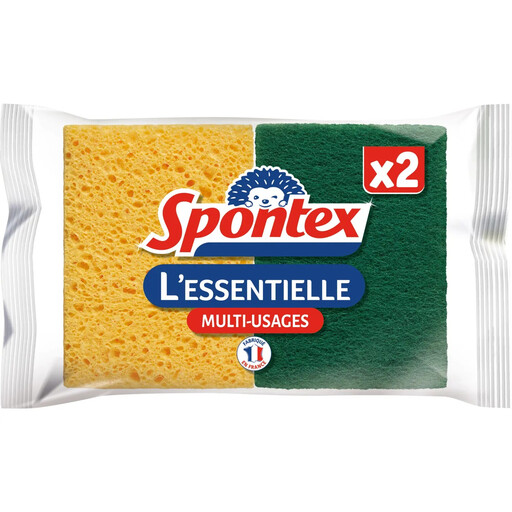
Why this model fits the profile: its compact size and two-sided design cover everyday kitchen and household tasks without requiring a collection of different accessories.
The soft side is ideal for wiping, while the scouring side tackles more persistent grime. The product listing mentions PEFC-certified plant-based cellulose and recommends replacing the sponges approximately every two months.
A two-sponge pack, manufacture listed as taking place in France and absorbent cellulose designed for everyday use.
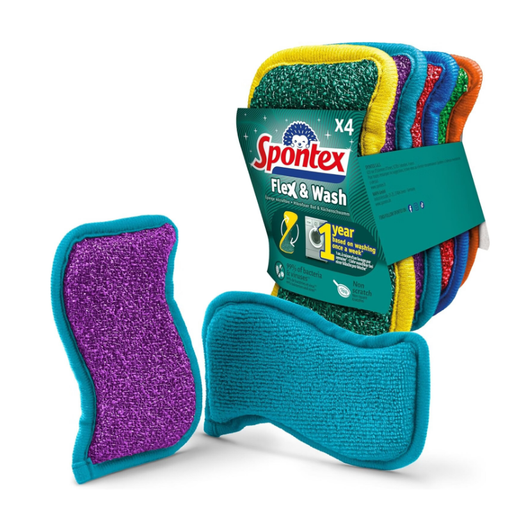
Why this model fits the profile: it is designed for households that want to replace their sponges less often while cleaning several rooms with one flexible format.
The product listing claims up to 52 machine washes, with a microfibre side and a non-scratch scouring side. Testing it on an inconspicuous area is nevertheless recommended.
A four-sponge pack, an S-shaped design described as flexible and plastic-free packaging according to the product listing.
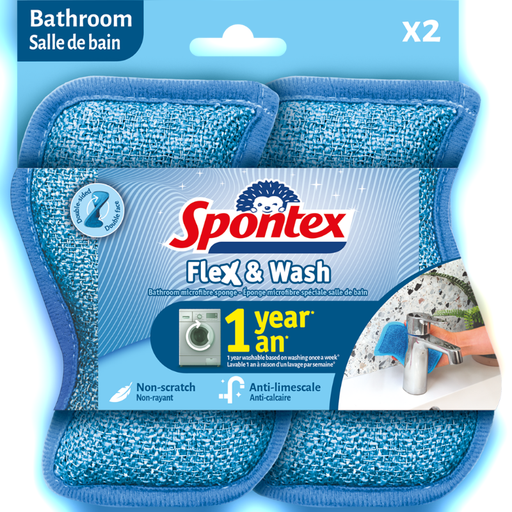
Why this model fits the profile: its two-sided design is made to tackle bathroom deposits, water marks, mirrors and glass surfaces.
The scouring side tackles limescale, while the microfibre side is designed for wiping. The product listing permits washing at up to 40°C and advises against using the sponge on hot surfaces.
An absorbent foam core and recycled fibres listed among the materials.
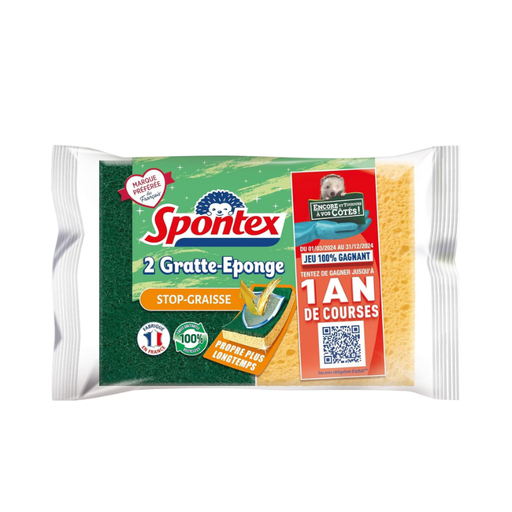
Why this model fits the profile: it is intended for kitchens where sponges regularly have to deal with grease, food residue and repeated washing.
The Stop-Grease system is presented as making the fibres easier to rinse clean. The product listing also specifies machine washing at 40°C.
A two-sponge pack featuring a plant-based section made from cotton, wood pulp and flax, with a design described as highly absorbent.
Choose a non-scratch sponge and avoid conventional abrasive fibres. Even when a model is described as gentle, test it on a small area first and follow the recommendations in the product listing. Never use the scouring side of a standard sponge on a non-stick coating.
It depends on the model and how well you care for it. Some products claim up to 52 washes, equivalent to around one year when washed once a week. However, replace it sooner if it starts to fray, becomes misshapen, absorbs less effectively or retains an odour despite rinsing.
Yes. A microfibre sponge can be used to wipe dishes, taps, mirrors and glass surfaces. For heavy grease or ingrained limescale, a double-sided sponge with a suitable texture will generally deliver better results. Ideally, keep kitchen sponges for the kitchen and bathroom sponges for the bathroom.