
Livraison le jour même ou le lendemain

Qualité garantie

Débloquez vos offres de bienvenue: Livraison GRATUITE | Jusqu'à -80 % | 30 jours d'essai gratuits à JoyPlus
Téléchargez l'application
A multi-purpose cleaner can make light work of cleaning your kitchen, bathroom and floors. But not all products are created equal. A formula that cuts through grease won't necessarily be suitable for a screen, while a product containing bleach requires special care.
Before buying a cleaning product, three common mistakes keep cropping up:
Start by working out what you mainly need to clean:
The term 'multi-surface' doesn't mean the product is suitable for all materials. Check the warnings regarding aluminium, untreated wood, painted surfaces, textiles, electronic devices and natural stone.
For occasional use, a ready-to-use spray of around 750 ml is particularly handy. It avoids any messing about and lets you easily target the area you want to clean. In a large family, shared building, hotel or restaurant, a concentrated cleaner or a 5 L container can cut down on the number of refills and reduce logistics costs.
To compare products properly, look at the number of doses stated, the volume you get after dilution and the amount needed for each clean. St Marc concentrate, for example, claims up to 33 doses from its 1 L format, depending on the manufacturer's recommended dosage.
A cleaning gel containing bleach sticks more easily to vertical surfaces and can tackle certain stubborn stains. However, it must never be mixed with vinegar, descaler, ammonia or any other cleaning product.
If it's a disinfectant cleaner, read the label carefully. Check the intended uses, dilution, contact time and whether you need to rinse surfaces that come into contact with food. Products claiming a biocidal action should be used with care, in line with their labelling and the standards set by the manufacturer.
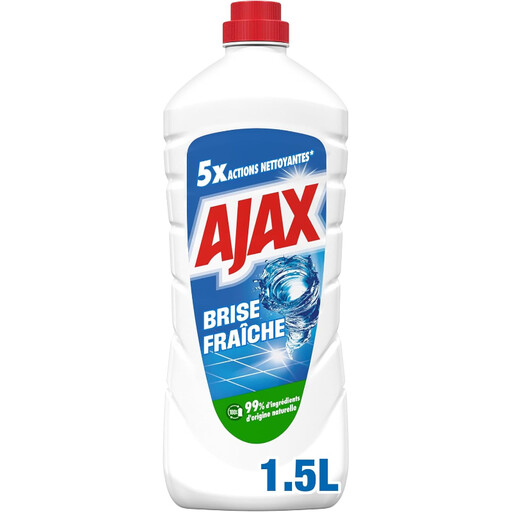
Why this pick suits this profile: With its 1.5 L format and claimed effectiveness in cold water, this product is ideal for everyday cleaning of floors, the kitchen and the bathroom.
It stops you buying a different product for every room, without forcing you to rely on bleach.
Versatile formula, effective in cold water, with a bottle made from recycled and recyclable plastic according to the product sheet.
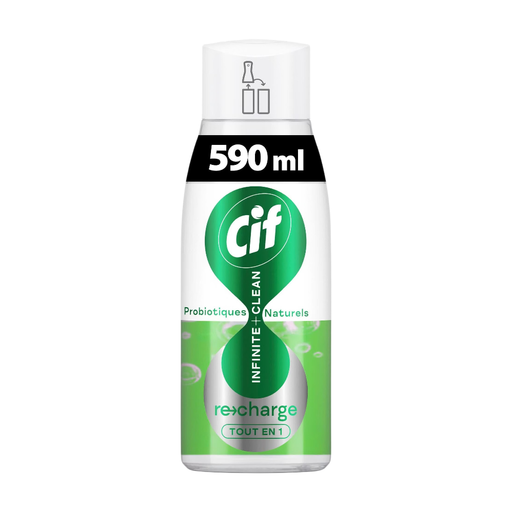
Why this pick suits this profile: This refill is for those who want to simplify cleaning across several rooms and surfaces, with a fine mist spray.
The refill format means you don't have to buy a whole new bottle every time. You do need the compatible spray bottle and must follow the instructions for delicate surfaces.
590 ml refill, claimed no-rinse use on many surfaces and contains probiotics according to the product description.

Why this pick suits this profile: With its 5 L container, this product is aimed at busy households, professional cleaners, the hospitality industry and shared facilities.
Its bleach-free formula shows that a disinfecting action doesn't have to rely on a chlorine-based product. The dilution and contact time must still be followed as per the label.
Professional 5 L format, bleach-free formula and references to EN 13697, EN 1650 and EN 14476 standards on the product sheet.
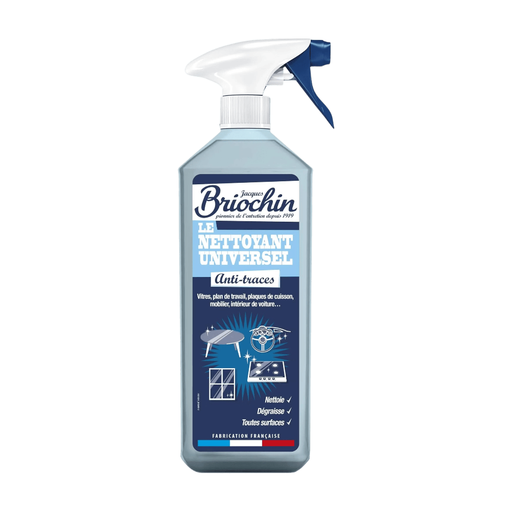
Why this pick suits this profile: Ready to use, this spray is ideal for regular cleaning of furniture, windows, mirrors, worktops and varnished surfaces.
Its formula with no artificial colouring and its targeted format limit the amount you apply. To clean a screen, spray the product onto the cloth, never directly onto the device.
750 ml format, claimed anti-smudge action and predominantly naturally derived ingredients according to the product sheet.
We've put together a comprehensive, real-time updated selection of products that meet these exacting criteria, while also taking European safety regulations into account.
No, not in every case. A standard multi-purpose cleaner removes dirt, whereas a disinfectant claims a specific action, subject to particular usage conditions. Check the label, especially for dilution and contact time.
A ready-to-use spray is fine for small areas and quick cleans. For frequent use, a concentrated cleaner, a refill or a 5 L container can work out more cost-effective. Compare the number of doses you get rather than just the price of the bottle.
Yes, provided the label allows it for the materials in question. Floors, worktops, stainless steel surfaces, windows and painted surfaces don't all react the same way. A product containing bleach, a cream cleaner or an acidic cleaner needs extra checking before you apply it.