
Livraison le jour même ou le lendemain

Qualité garantie

Débloquez vos offres de bienvenue: Livraison GRATUITE | Jusqu'à -80 % | 30 jours d'essai gratuits à JoyPlus
Téléchargez l'application
A multi-purpose cleaner can make household cleaning much easier, provided you look beyond the claims on the label. The same product may be suitable for tiles, sinks or washable floors, but not recommended for untreated wood, natural stone or certain electronic devices.
Before buying a multi-surface cleaner, there are three common pitfalls to avoid.
The words ‘all surfaces’ do not mean you can skip the instructions. A surface may be washable without being suitable for an acidic, alcohol-based, abrasive or highly degreasing product. Marble, oiled wood, screens and delicate finishes often require indirect application or a specialist product.
The best approach is to test the cleaner on a small, inconspicuous area, especially the first time you use it.
Claimed performance against dirt, bacteria or grease depends on the procedure followed, contact time, quantity applied and surface treated. It is not a guarantee that applies in every situation.
When using a surface disinfectant, follow the label, dosage and stated contact time precisely. A simple spray designed to remove marks does not automatically have a biocidal action.
A ready-to-use bottle is convenient, but a concentrate or cleaner refill can reduce the volume transported and the number of bottles used. When comparing prices, however, look at the cost per litre of prepared solution, rather than just the price of the sachet or small bottle.
In the kitchen, choose a product that can tackle grease, food marks and build-up around the sink or hob. A multi-purpose degreaser can be effective on stubborn dirt, but always check that it is compatible with the material.
In the bathroom, a vinegar-based product can help remove limescale deposits from compatible surfaces. For floors, choose a dilutable format if you regularly clean large rooms. A floor cleaner that is too concentrated or incorrectly dosed may leave a film, making rinsing essential.
The size of the container alone is not enough to assess value for money. Check the actual quantity of usable solution, dilution options and the recommendations shown on the packaging.
Always read the hazard pictograms and instructions for use. Some products may cause eye irritation, an allergic reaction or skin irritation. Alcohol-based formulas may also be flammable.
Never mix a cleaner with bleach, an acidic product or another detergent. For surfaces that come into contact with food, rinse with drinking water when the label requires it, even if the product is advertised as rinse-free in other situations.
Disinfectant claims should be examined carefully. References to European standards, such as EN 1276, EN 13697 or EN 14476, relate to specific testing conditions. They do not replace the procedure specified by the manufacturer.
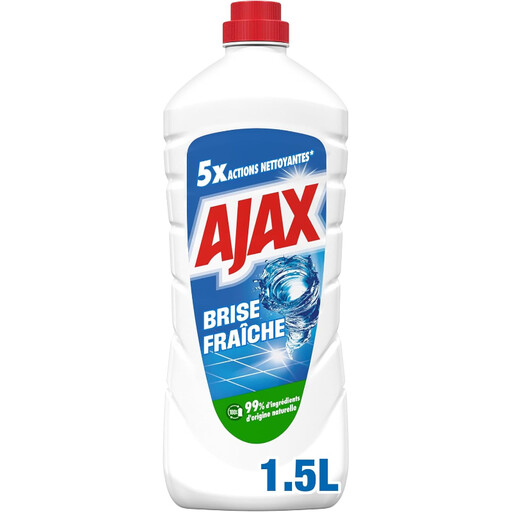
Why this choice suits this profile : Its 1.5 L format and ability to be used neat or diluted make it suitable for everyday cleaning of floors, kitchens and bathrooms with just one product.
The instructions distinguish between direct application and dilution, helping to prevent waste and over-dosing.
Family-sized 1.5 L format, claimed effectiveness with cold water and a recycled plastic bottle, according to the product information.
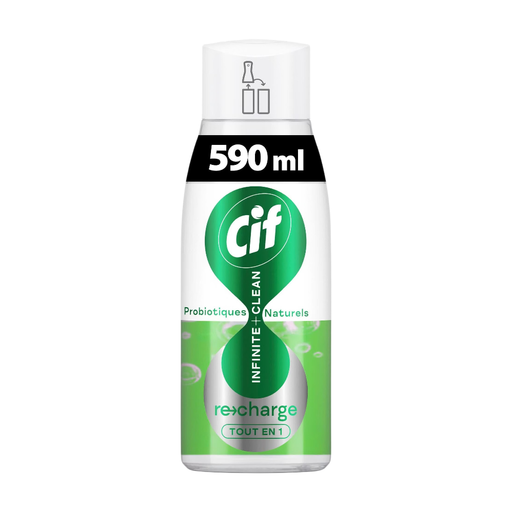
Why this choice suits this profile : This refill is aimed at households looking for a premium presentation, a fine mist and a product suitable for numerous surfaces, with a compatible spray bottle that can be kept and reused.
The refill format means you do not need to buy a complete spray bottle every time. Delicate surfaces should nevertheless be tested first, as stated in the safety instructions.
590 ml refill, claimed rinse-free cleaning and a plastic reduction claim from the brand : check the details on the packaging.
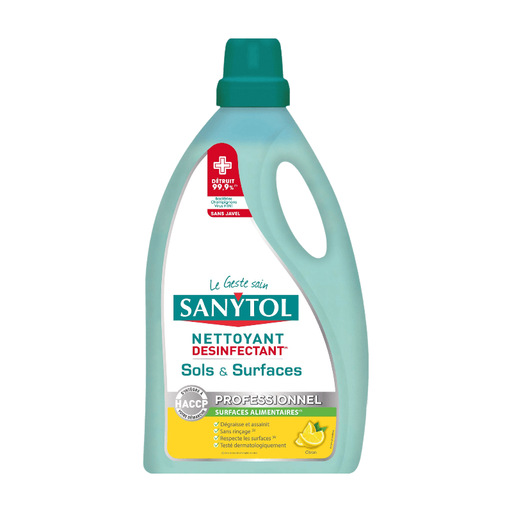
Why this choice suits this profile : The 5 L container is suitable for large areas, large families and professionals who want to incorporate cleaning and disinfection into a well-defined routine.
The product information mentions regulated biocidal use and refers to the label for dilution and contact time : there is no room for guesswork when it comes to dosage.
5 L format, claimed bleach-free formula and references to EN 13697, EN 1650 and EN 14476 standards in the product description.
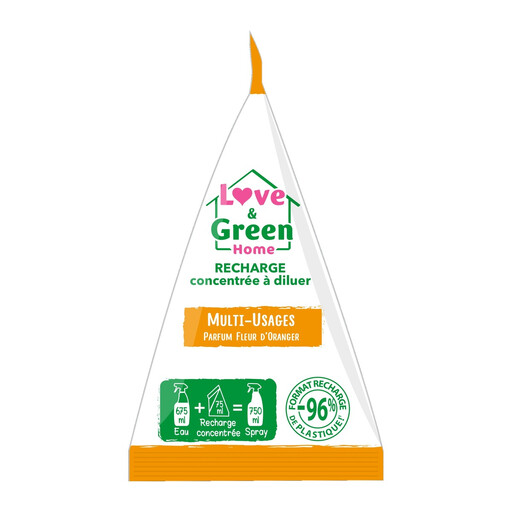
Why this choice suits this profile : Each of the two 75 ml pods is mixed with 675 ml of water to make 750 ml of product. A format that suits organised users.
The amount of water to add is clearly stated, reducing the risk of making a solution that is too concentrated or too diluted.
Two refills, reusable bottle for up to seven uses according to the product information, and Ecocert certification as an Écodétergent stated by the brand.
We have put together a complete, real-time updated selection of products that meet these demanding criteria and European safety regulations.
Often, yes, provided the product information confirms that it is compatible with the surfaces concerned. For a worktop or table that comes into contact with food, rinse according to the manufacturer’s instructions. However, limescale deposits may require a kitchen and bathroom cleaner with a specialist formula.
A cleaner removes dirt, grease and marks. A disinfectant is designed to reduce certain micro-organisms under specific conditions. You must follow the contact time, dosage and precautions stated on the label. Disinfection is not essential for every daily clean.
Use the recommended quantity, avoid overloading the surface and choose a clean cloth, preferably a microfibre one. On windows, screens and glossy surfaces, spray the product onto the cloth rather than directly onto the surface. A streak-free cleaning formula cannot work miracles if you use too much product or a saturated cloth.