
Livraison le jour même ou le lendemain

Qualité garantie

Débloquez vos offres de bienvenue: Livraison GRATUITE | Jusqu'à -80 % | 30 jours d'essai gratuits à JoyPlus
Téléchargez l'application
A multi-purpose cleaner can make daily cleaning much easier, provided you choose a formula suited to your surfaces and cleaning habits. Ready-to-use spray, concentrate to dilute, scouring cream, household bicarbonate of soda or disinfectant solution: each format meets a very specific need.
The main pitfall is buying a product marketed as universal, only to find that it leaves streaks, requires laborious rinsing or damages certain materials. Here are the criteria to review before filling your cupboard with cleaning products.
A multi-surface cleaner removes visible dirt, residue and, in some cases, grease. A disinfectant cleaner has an entirely different purpose: it must be used in accordance with its label, particularly observing a specific contact time.
A product containing cleaning bleach is not automatically a disinfectant. The product information for LA CROIX multi-purpose bleach cleaner, 1.5 L also specifies that it is not intended for disinfection. By contrast, biocidal products must clearly state their approved uses and the precautions to take. So do not rely solely on the ‘antibacterial’ claim highlighted on the packaging.
A large container can reduce the cost per use, but only if you follow the recommended dosage. Using more product does not necessarily improve the result: it can leave a film on the floor and mean you have to rinse for longer.
Concentrated formulas, such as the CAROLIN 5 L multi-purpose cleaner, are mainly intended for households that clean very frequently and for professional users. In a regularly maintained flat, a 750 ml or 1 L bottle will often be easier to store and handle.
Even a formula described as universal is not necessarily suitable for untreated wood, natural stone, waxed surfaces, screens or non-stick coatings. A scouring cream or abrasive sponge can dull, scratch or alter the appearance of a glossy surface.
Before using the product for the first time, always test it on an inconspicuous area and check the recommendations provided by the furniture or appliance manufacturer.
The volume should match how often you clean. A 1.5 L format may suit a family that cleans regularly, while a 5 L container is better suited to intensive use.
For floors, choose a formula that clearly states whether it can be diluted. In the kitchen, opt for a kitchen and bathroom cleaner that can tackle grease or limescale, depending on the issue. For windows and mirrors, a streak-free cleaner that dries quickly helps minimise marks, provided you use a clean, dry cloth.
To clean a screen, spray the product onto the cloth rather than directly onto the device, unless the manufacturer advises otherwise. Surfaces that come into contact with food should be rinsed whenever the label specifies this.
The word ‘natural’ does not mean you can skip reading the label. Some fragranced products may, for example, contain allergenic substances that must be listed on the packaging. Chlorine-based solutions require particular care: never mix them with vinegar, an acidic product, ammonia or another cleaner.
Disinfectants must be handled carefully in a well-ventilated room, following the recommended dosage and contact time. References to European standards, such as EN 1276, EN 13697 or EN 14476, should be checked on the label and considered in relation to the intended use.
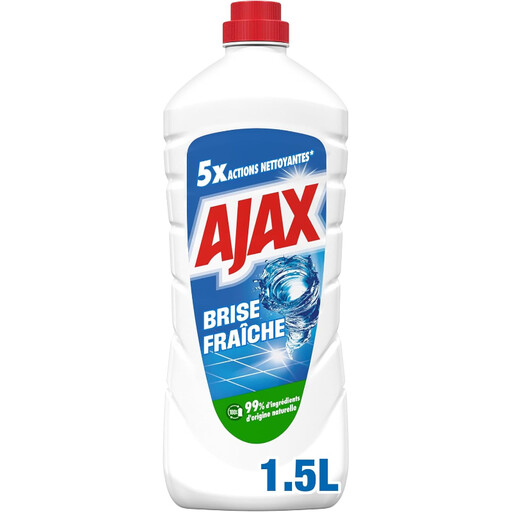
Why this choice suits this type of user : Its 1.5 L format and its suitability for use neat or diluted allow you to clean floors, the kitchen and the bathroom with a single product.
The option to use it in cold water means you do not have to rely on hot water and makes everyday cleaning easier. However, check the dosage stated on the label.
The product information states that it contains 99 % naturally derived ingredients, comes in a recycled-plastic bottle and can be used on several types of surface.
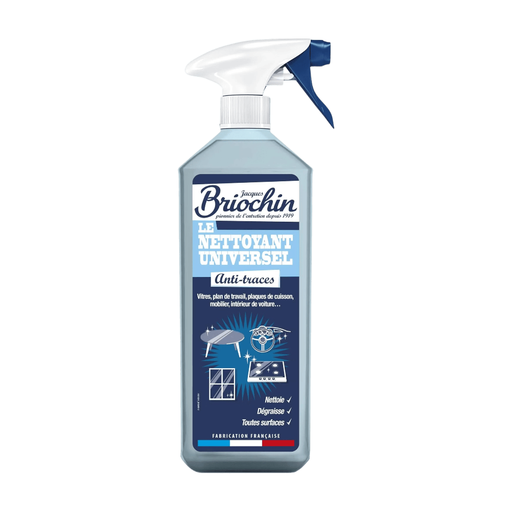
Why this choice suits this type of user : This spray is suitable for furniture, windows, mirrors, worktops and varnished surfaces: a practical solution for interiors where the finish matters.
The product information states that it helps prevent streaks and does not require rinsing for several uses. For a screen, however, apply the product to the cloth, never directly to the device.
Its 750 ml spray format, the absence of artificial colourants stated in the product information and its formula based on plant-derived non-ionic surfactants make it a refined option.

Why this choice suits this type of user : Its 5 L container is aimed at communal facilities, professional premises and households that clean their floors and surfaces very frequently.
It is presented as a bleach-free formula. For disinfection, you must follow the dilution and contact time stated on the label.
The product information mentions bactericidal, fungicidal and virucidal uses associated with specific EN standards, as well as compatibility with HACCP procedures.
For an even result, start by removing dust and crumbs, then use the smallest recommended amount. On a very greasy surface, leave the product to work for a few moments rather than immediately adding more.
Rinse surfaces that come into contact with food and wash cloths and mops regularly. Avoid mixing products, particularly cleaning bleach with a limescale remover or vinegar. Ventilate the room and keep bottles out of the reach of children.
We have put together a complete, real-time-updated list of products that meet these strict selection criteria and European safety regulations.
No. The term ‘multi-purpose’ refers to a list of surfaces defined by the manufacturer. Natural stone, raw wood, screens and delicate coatings require special care. Check the label and test the product on a small, inconspicuous area.
A cleaner removes dirt. A disinfectant contains an active substance and must be applied according to a specific procedure: dosage, contact time, ventilation and any required rinsing. Both functions can be combined in a single product, but they are not interchangeable.
The shelf life depends on the formula, packaging and the manufacturer’s instructions. Keep the bottle closed and away from heat and sunlight. To find the expiry date and batch number, check the packaging directly.