
Livraison le jour même ou le lendemain

Qualité garantie

Débloquez vos offres de bienvenue: Livraison GRATUITE | Jusqu'à -80 % | 30 jours d'essai gratuits à JoyPlus
Téléchargez l'application
A multi-function steam cleaner can tackle floors, grout, the kitchen, windows, carpets and even your car interior. However, not every appliance is as versatile as it may appear. A model that is effective at loosening grease will not necessarily replace a sofa upholstery cleaner, while an appliance designed for textiles may be impractical for cleaning large floor areas.
Before placing your order, there are three particularly common pitfalls that are easy to avoid.
Power, measured in watts, mainly indicates energy consumption and the capabilities of the heating system or motor. On its own, it does not tell you how much steam is produced or how strong the suction is.
For a steam appliance, look instead at the pressure in bars, steam flow rate and heat-up time. For a textile cleaner, suction power in kPa and water flow provide a more useful indication of how effectively dirt and moisture will be extracted.
Steam can loosen certain types of dirt and soften residues. However, it does not collect dirty water from a sofa, carpet or car seat. For these surfaces, an appliance that combines spraying and suction, such as a portable carpet cleaner, will generally be more suitable.
Also check that the textile is suitable for cleaning with water. Delicate velvet, certain coated materials and fabrics that cannot be washed with water may be damaged. Always test the appliance on an inconspicuous area and check the care label before you begin.
A small tank is sufficient for a quick job on a splashback or grout, but it can soon become frustrating when you need to clean several rooms in succession. Conversely, a larger appliance will often be more difficult to store or transport.
Check the length of the cable and hose, whether clean and dirty water are kept separate, and how easy the attachments are to clean. Leaving a dirty-water tank full after use can encourage unpleasant smells and make the appliance less pleasant to use.
For a floor steam cleaner, a pressure of a few bars makes it easier to loosen dirt from compatible surfaces. Several steam levels allow you to adjust the flow to the material and limit how much moisture is applied.
To clean a sofa, carpet or car interior, choose a model with a suction function instead. The ROUNY Portable Carpet Cleaner, for example, states 13 kPa suction, 1 300 W of power and three modes: cold water, hot water and steam. These figures correspond to the specifications stated by the manufacturer and do not guarantee identical results on every fabric.
A two-tank system keeps clean water separate from collected water. This is particularly practical for armchairs, stairs, rugs and car seats. The ROUNY model has a 1 400 ml clean-water tank and a 1 200 ml dirty-water tank.
A standard handheld steam cleaner often has a more modest capacity. The BISSELL Steam Shot B2635J has a 0.36-litre tank, making it more suitable for small, targeted jobs than for continuously cleaning a large carpet.
A steam cleaner with accessories should include attachments that are genuinely useful for your needs: a nylon brush, concentrator nozzle, window squeegee, grout attachment or floor head. Cable length also affects your freedom of movement, particularly in homes where sockets are a long way apart.
For mains-powered appliances, check 220–240 V compatibility, the presence of the required regulatory information, instructions in French and clear usage guidance. Never direct steam at a person, animal, electrical socket or heat-sensitive surface. Allow the appliance to cool down before changing an attachment or emptying the tank.
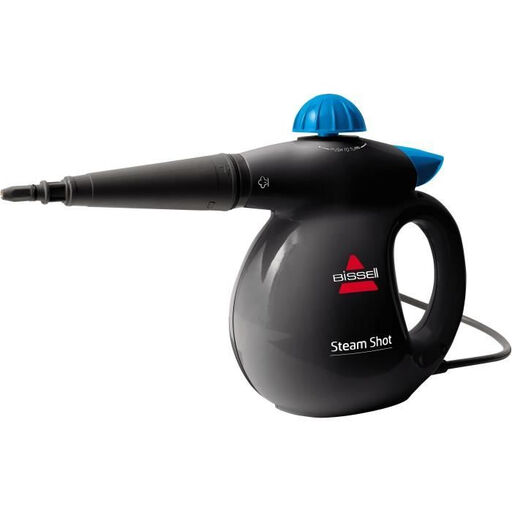
Why this choice suits this profile : Its compact design is ideal for small jobs in the kitchen, bathroom, around taps or on grout.
The product states a heat-up time of approximately 60 seconds and a 0.36-litre tank. It is therefore clearly intended for occasional jobs rather than cleaning a large carpet.
Stated steam pressure of 4.5 bars, a 4.8 m cable and dedicated accessories for windows, corners and flat surfaces.
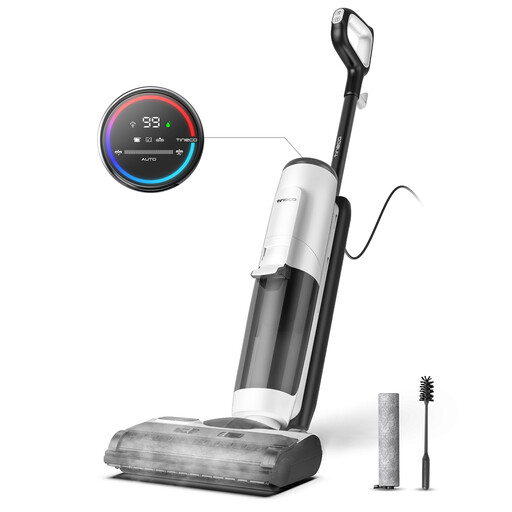
Why this choice suits this profile : Its stick design, made for hard floors, is aimed at households looking for a dedicated solution for regularly maintaining compatible surfaces.
Its targeted design avoids choosing a textile appliance for maintaining hard floors. However, check the surfaces approved in the instructions before use.
Hard-floor mop, corded power supply and digital display, as indicated by the product name.
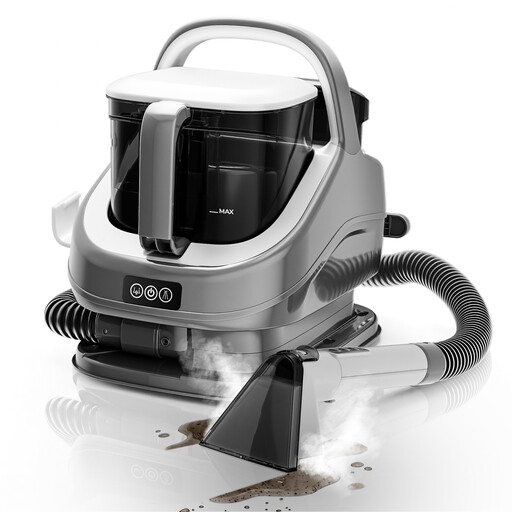
Why this choice suits this profile : It is suitable for households that regularly clean sofas, rugs, stairs, cushions, pet areas or car seats.
Its two tanks keep clean water separate from dirty water. The 1.1 m hose and 3 m cable make it easier to reach seats and awkward corners.
Three stated modes, 13 kPa suction, 1 400 ml and 1 200 ml tanks, and 1 300 W of power.
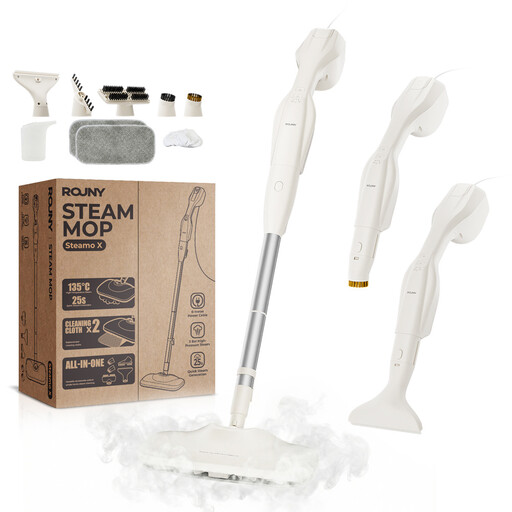
Why this choice suits this profile : Switching from stick mode to handheld mode lets you clean floors, windows, walls, corners and kitchen surfaces with one appliance.
The two steam levels and included accessories let you distinguish between routine maintenance and stubborn dirt, without mistaking this versatility for a genuine textile suction function.
Stated heat-up time of 25 seconds, 6 m cable, pressure of 2.5 to 3 bars and five accessories for different surfaces.
We have put together a complete, real-time updated list of products that meet these demanding selection criteria and European safety standards.
To prevent marks and minimise moisture, work in small areas. Start by vacuuming up dust and hair, then choose the appropriate attachment. When cleaning textiles, do not stay in the same place for too long and make sure the room is well ventilated.
After each use, empty any remaining water, rinse the removable parts and leave them to dry. With a textile cleaner, also clean the hose and dirty-water tank. Never add detergent to the tank unless the instructions explicitly allow it.
It depends on the material and the manufacturer’s recommendations. A steam cleaner may be suitable for some hard-wearing fabrics, but it does not always replace a textile cleaner with a suction function. Check the sofa’s care label, test the appliance on an inconspicuous area and avoid fabrics that are sensitive to water or heat.
Yes, some models are suitable for seats, carpets and compatible interior surfaces. A car steam cleaner should be easy to handle and have a hose or attachments designed for the job. Keep electrical components, screens and controls away from direct contact with steam.
The cost mainly depends on electricity consumption, heat-up time and how often the appliance is used. Tap water may be suitable if the instructions allow it, but very hard water may require more frequent maintenance. Check the manufacturer’s recommendations before using filtered or demineralised water.