
Livraison le jour même ou le lendemain

Qualité garantie

Débloquez vos offres de bienvenue: Livraison GRATUITE | Jusqu'à -80 % | 30 jours d'essai gratuits à JoyPlus
Téléchargez l'application
Are you a DIY enthusiast, a model maker, or an expert in finishing 3D prints? Juggling a sander, a mini-drill, and an engraver can quickly become a costly headache. The multi-function rotary tool stands out as the all-in-one solution for your precision work. However, with a vast array of options on the market, finding the right one can be challenging.
As the Head of Product Recommendations at Joybuy, my mission is to guide you with clear, objective information. This guide breaks down the essential criteria and presents a selection of models tailored to your projects—all without unnecessary marketing jargon.
Before we dive into our top picks, here are the key criteria to consider to make the right choice.
Power, measured in watts (W), and speed, in revolutions per minute (RPM), are two crucial factors. A powerful motor (over 150W) will more effectively handle demanding tasks like grinding metal or making cuts. Variable speed is a major advantage: a slow speed is essential for polishing delicate materials, while a high speed is necessary for drilling or cutting. For a versatile DIY multi-tool, a range of 8,000 to 30,000 RPM is an excellent benchmark.
A multi-function rotary tool is nothing without its accessories. A well-stocked rotary tool kit will save you from making additional purchases. Check for essential accessories based on your needs:
The quality and variety of the included accessories are a key indicator of the product's value for money.
Comfort is paramount, especially for long projects. A lightweight tool with a non-slip (soft-grip) coating and a balanced design will reduce fatigue. Also, consider the power source:
Here is our selection of models that stand out from the crowd, designed for various needs and budgets.
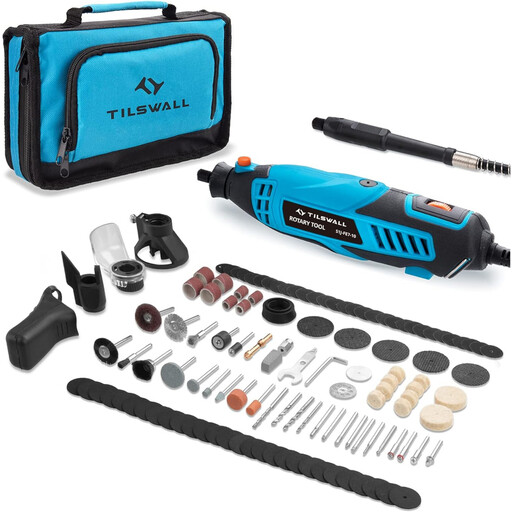
Why it stands out: This corded model combines high power with a very comprehensive accessory kit, all at an affordable price point. It's the all-in-one solution for tackling a multitude of projects without additional investment.
Pros:
Who is it for? The regular DIYer or 3D printing enthusiast looking for a high-performance, versatile corded tool that offers an excellent features-to-price ratio for finishing 3D prints and many other tasks.

Why it stands out: While not a rotary tool in the traditional sense (sanding/grinding), this precision electric screwdriver is an ideal companion for meticulous assembly work. Its digital torque display is a real game-changer for electronics and model making.
Pros:
Who is it for? The electronics repair technician, PC builder, or model maker who needs a specialised tool for precision screwing and unscrewing, where torque control is more important than rotational speed.
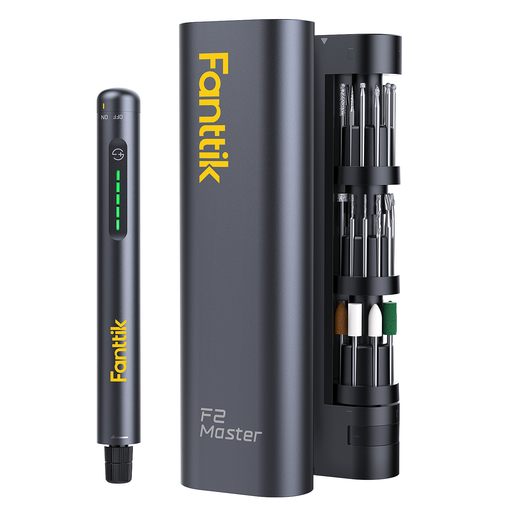
Why it stands out: This cordless model is all about portability, design, and quiet operation. Its brushless motor and feather-light weight make it an excellent engraving pen or finishing tool to take anywhere. It positions itself as a modern and compact Dremel alternative.
Pros:
Who is it for? The creative artisan, DIY hobbyist, or model-making enthusiast who prioritises manoeuvrability, quietness, and cordless freedom for precision tasks like engraving, polishing, and carving.
This selection is just a glimpse. If you haven't found the perfect tool for your needs, explore our full category to discover many more solutions for your projects.
Discover our collection of DIY tool kits
A multi-function rotary tool is designed for a wide range of tasks (sanding, grinding, engraving, polishing, cutting) thanks to its high rotational speed. A precision mini-drill, on the other hand, focuses on drilling small holes, prioritising torque and chuck precision. However, most rotary tools can serve as a mini-drill thanks to the drill bits included in their kits.
Absolutely. It's one of its most common applications. Finishing 3D prints with fine abrasive bands helps to smooth out the print layers. Engraving bits and grinding wheels are also very useful for removing supports and deburring parts with great precision.
Most manufacturers use standard shank diameters for their accessories, with 3.2 mm and 2.3 mm being the most common. This provides good cross-brand compatibility. However, always check the collet (chuck) diameter of your tool before buying accessories from another brand to ensure they are fully compatible.