
Livraison le jour même ou le lendemain

Qualité garantie

Débloquez vos offres de bienvenue: Livraison GRATUITE | Jusqu'à -80 % | 30 jours d'essai gratuits à JoyPlus
Téléchargez l'application
A multi-function food preparation appliance can lighten the load in an already well-equipped kitchen and speed up everyday meals. But only if its promises actually match your needs. A multi-function food processor with blender, electric chopper, kitchen grater or slicer will only be truly useful if its accessories suit your recipes, the space you have available and how often you use it.
An appliance marketed as "5-in-1" or "all-in-one" can hide several accessories you'll hardly ever use, that take up space or that become fiddly to set up. Instead, check the functions that are actually available: chopping, blending, slicing, dicing, grating, juicing or mincing meat all require different blades and different power levels.
A compact chopper is perfectly adequate for herbs, garlic or nuts. However, if you regularly prepare family meals or large quantities, a more comprehensive appliance will be far more at home.
The wattage gives you an idea of the motor's capabilities, but it doesn't guarantee fast preparation or an even result. The shape of the blades, the capacity of the bowl, the stability of the base and the maximum operating time all matter just as much.
A 200 W mini chopper designed for pulse operation, for example, isn't meant to replace a heavy-duty meat grinder. Conversely, a more powerful motor can be unnecessarily bulky if you mainly prepare small portions.
Removable blades, washable bowls and dishwasher-safe accessories make a real difference after every use. However, always check the instructions: some parts need to be washed by hand, and the motor unit must never be submerged.
A multi-function mandoline or slicer has particularly sharp blades. So the presence of a pusher, finger guard, non-slip feet and a locking system deserves as much attention as the design.
For a single person or small preparations, a 0.5 L bowl may be enough. For a family, a capacity of 1.5 to 1.8 L avoids having to do multiple batches. Bear in mind that the usable volume is often less than the stated capacity: it's best not to fill the container to the brim, especially with liquid preparations.
A large-capacity multi-function appliance will handle soups, sauces, grated vegetables or dishes for several people with ease. A small chopper, on the other hand, is quicker to get out and put away on a daily basis.
Stainless steel blades generally resist moisture and hard foods better than components whose quality isn't specified. Also check which discs are supplied for slicing, grating or dicing. A blender needs a blade suited to liquid preparations, while a meat grinder must be used in line with the manufacturer's instructions.
For a manual kitchen grater, a non-slip base and a handle with a soft-touch area improve grip. The bowl material is also worth a look: glass is stable and doesn't retain odours, while BPA-free plastic designed for food contact keeps the overall weight down.
Measure the space available on your worktop and in your cupboards. Some appliances need clearance around the motor to dissipate heat properly. Also think about the accessories: a versatile appliance is only really useful if you can store its discs and blades without losing them.
Check the maximum continuous operating time. The KitchenCook Matt Pod, for example, is designed for cycles of 15 to 20 seconds, followed by a cooling period. An electric slicer can run for longer, but it too must respect the rest periods stated in the instructions.
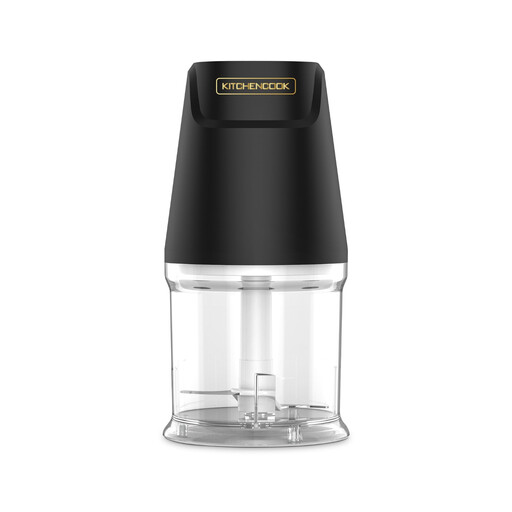
Why this choice suits this profile: With its 0.5 L bowl and compact design, it's ideal for small kitchens and occasional tasks like chopping garlic, herbs, nuts or baby food.
Its maximum operating time of 15 to 20 seconds per cycle clearly defines its purpose and stops you mistaking it for a heavy-duty appliance.
200 W motor, stainless steel blades and a BPA-free bowl suitable for food contact.
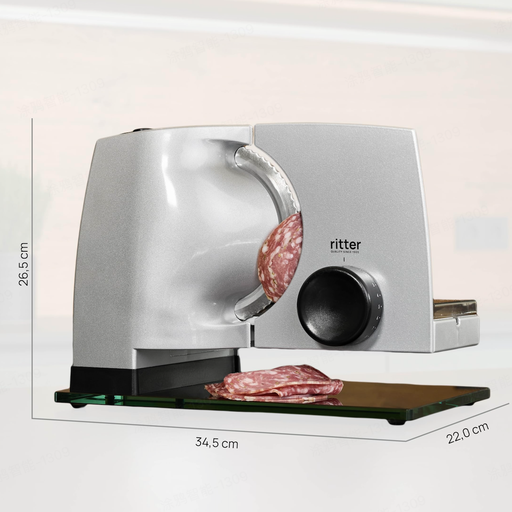
Why this choice suits this profile: This electric slicer is aimed at those who regularly cut bread, fruit, vegetables or cold meats and want a well-made appliance.
The removable carriage makes cleaning easy, while the adjustable thickness lets you tailor the cut to each type of food.
Serrated blade, adjustment up to approximately 20 mm, detachable carriage and shatter-resistant glass plate.
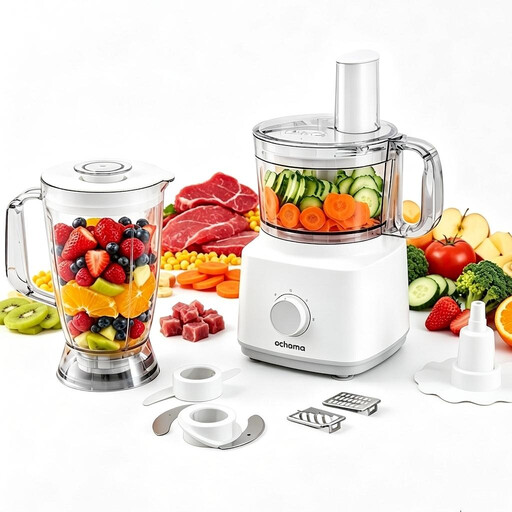
Why this choice suits this profile: With its 1.8 L capacity and functions for chopping, blending, grinding, slicing and grating, it's designed for families and cooks who prepare multiple dishes in a row.
Each function has its own accessories, so you can see the appliance's versatility for yourself rather than relying on a marketing claim.
750 W motor, 1.8 L bowl and detachable parts designed to simplify cleaning.
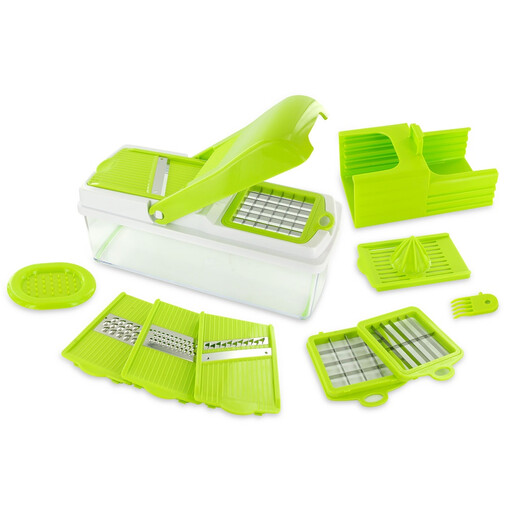
Why this choice suits this profile: This manual mandoline is ideal for salads, gratins, spiralised vegetables and garnishes, with no plug or motor to maintain.
The seven interchangeable accessories are clearly listed and used with a safety pusher. Hand washing is still required, however.
Five functions, a collection container, seven accessories and a compact size of approximately 11.5 × 12.5 × 27.5 cm.
We've put together a comprehensive list, updated in real time, of products that meet these strict selection criteria and European safety regulations.
It all depends on the power and how long you use it. A 750 W appliance used for a few minutes can be perfectly reasonable for an occasional task. Meanwhile, a 200 W motor running in pulses will consume less over a short cycle. To compare models, look at the power, but also at the actual time needed for your recipes.
There's no universal lifespan. It depends on how often you use it, whether you respect the rest periods, how you clean it and the type of food you prepare. Avoid forcing the blades on ingredients that are too hard, and replace any damaged accessories before using the appliance again.
Always unplug the appliance before removing its accessories. Wash the bowls, discs and blades according to the instructions, then dry them thoroughly. The motor unit should be cleaned with a damp cloth and must never be submerged in water. For a mandoline or grater, use the guard provided when storing it to reduce the risk of cuts.