
Livraison le jour même ou le lendemain

Qualité garantie

Débloquez vos offres de bienvenue: Livraison GRATUITE | Jusqu'à -80 % | 30 jours d'essai gratuits à JoyPlus
Téléchargez l'application
A multi-function food preparation appliance can save you time when making soups, smoothies, sauces, pasta and homemade cakes. The trouble is, product specs often mix up maximum power, total capacity and number of accessories. Before you know it, you end up with a bulky machine that's a pain to clean or poorly suited to the quantities you actually prepare.
Before you head to the checkout, three pitfalls deserve your attention.
A hand blender is suitable for soups, purées and sauces prepared directly in a deep container. For liquid preparations and drinks, a multi-function blender or a smoothie blender will generally be more appropriate. If you need to chop herbs, vegetables or small quantities of food, a compact electric chopper can prove more practical.
'All-in-one' appliances don't necessarily replace a stand mixer when kneading bread dough becomes a regular task. For family baking, a stand mixer fitted with a dough hook, whisk and flat beater will often be a more coherent choice.
Power should always be considered in relation to the type of preparation. A model with 250 to 600 W may be sufficient for small quantities, sauces or cooked vegetables. However, thick preparations and kneading require a motor and transmission designed to handle that kind of strain.
Also check for a variable speed control or multiple speeds. This control allows you to start gently, limit splashing and adjust the texture more precisely. The information about continuous operation is just as important: some hand blenders in this selection should only be used for about one minute at a time, then left to cool between cycles.
For a food processor intended for family use, compare the bowl capacity, its dimensions and the available space under your kitchen cabinets. A stainless steel bowl withstands frequent use well. Accessories that come into contact with food must be used in accordance with their instructions and the manufacturer's recommendations.
In the UK, pay particular attention to the following points:
The CE mark corresponds to a declaration of conformity with applicable European requirements; it does not, on its own, guarantee superior performance. As for the blades, they remain very sharp: always unplug the appliance before removing an accessory or cleaning it.
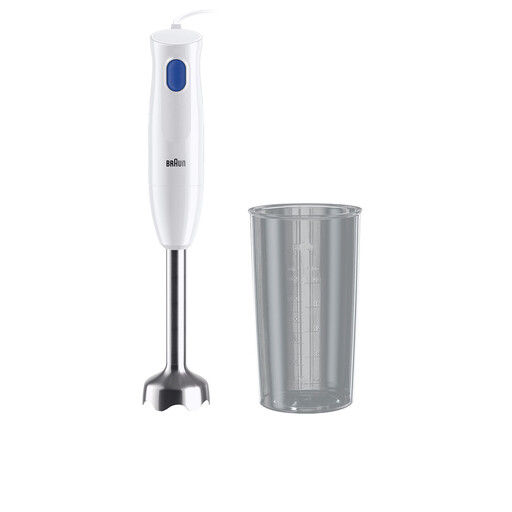
Why this choice suits this profile: Its single-speed control, stated weight of 0.626 kg and 600 ml measuring jug are ideal for first preparations, such as sauces, soups and small quantities.
Its deliberately simple set-up avoids paying for accessories that would end up at the back of a cupboard. The shaft and jug are stated as dishwasher-safe.
450 W motor, EasyTwist system and compact format, easy to store.
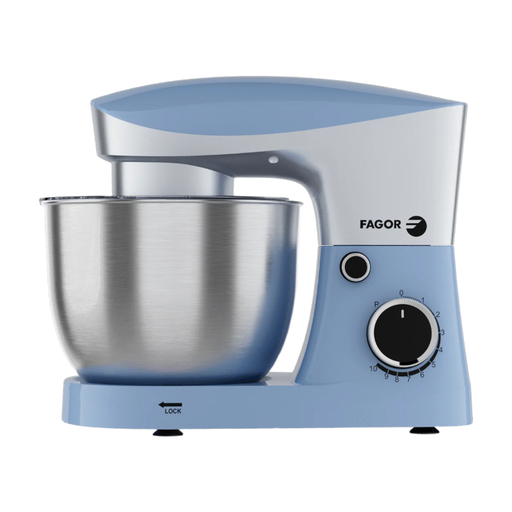
Why this choice suits this profile: Regular bakers have a 6-litre bowl, 10 speeds and a pulse function to adapt the appliance to different preparations.
The stated usable capacity is 5.7 litres, which avoids confusing the total volume of the bowl with the quantity you can actually use.
Stated 1,500 W motor, stainless steel accessories, overheating protection and suction feet.
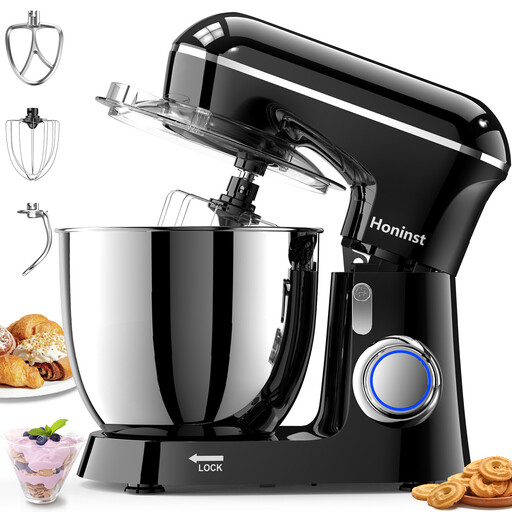
Why this choice suits this profile: With its stated bowl capacity of approximately 6.2 litres and three accessories, this model is aimed at families and enthusiasts of bread, cakes, pizzas or pastry.
The dough hook, whisk and flat beater are clearly identified: each one serves a specific task, without accumulating unnecessary accessories.
10 speeds, stated planetary action, tilting head and overheating protection.
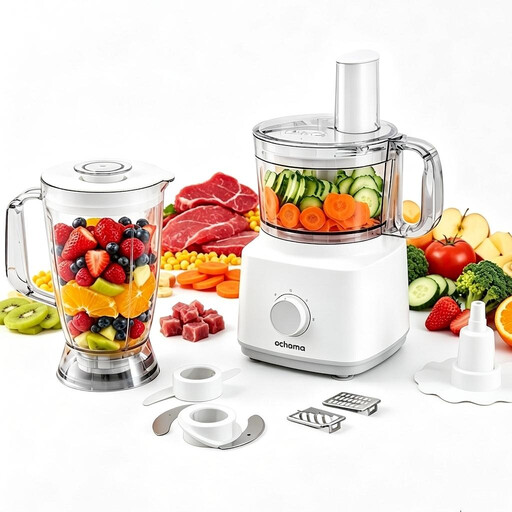
Why this choice suits this profile: Households that alternate between chopping, blending, grating and grinding can consolidate all these tasks into a single food processor.
The stated functions each correspond to a dedicated accessory: mincer, blender, juicer and slicing discs.
Stated 750 W power, 1.8 L bowl and removable parts designed to simplify washing.
We've put together a comprehensive list, updated in real time, of products that meet these strict selection criteria and the requirements of European safety regulations.
The more versatile an appliance is, the more space and cleaning time it generally requires. To make your life easier:
The running cost depends mainly on how often you use it, the electricity consumption and the eventual replacement of accessories. A powerful appliance isn't necessarily more expensive per use: the operating time and the quantity processed also come into play.
A hand blender is practical for preparing a soup directly in a saucepan or blending small quantities. For smoothies in multiple portions, a blender with a sealed jug will be more suitable. Always check the instructions regarding hot liquids and allow the preparation to cool if the manual recommends it.
For a family, a 1.5 to 1.8 L bowl is generally suitable for liquid preparations and everyday chopping. For baking or kneading, a 5 to 6 L bowl offers more margin, provided you take into account the usable capacity and the maximum quantity of dough permitted.
The lifespan depends on maintenance, adherence to the operating cycles and the nature of the preparations. Avoid overloading, let the motor cool down when the instructions require it and only use compatible accessories. The availability of spare parts, where specified by the manufacturer, is also a point to check before buying.