
Livraison le jour même ou le lendemain

Qualité garantie

Débloquez vos offres de bienvenue: Livraison GRATUITE | Jusqu'à -80 % | 30 jours d'essai gratuits à JoyPlus
Téléchargez l'application
A multi-function blender can make smoothies, soups, sauces, compotes, doughs and even chopped ingredients. The trouble is that product listings often blur the lines between maximum power, theoretical capacity and accessories you'll never actually use. To avoid unpleasant surprises, it's far better to start with your real-life needs, the usable capacity and how easy it is to clean, rather than fixating on a single number.
A motor with a high wattage doesn't guarantee a perfectly smooth texture on its own. The shape of the jug, the blade design, the quantity of ingredients and whether there's a Pulse function all affect the final result.
For everyday use, make sure you check:
A powerful blender will handle fibrous foods or ice cubes more easily, but you still need to stick to the manufacturer's limits.
The stated capacity of the jug rarely matches the volume you can actually work with. A 2-litre container might have a much lower maximum capacity for liquids, while a small personal cup is really designed for a single serving.
For a family, a blender with a jug offering at least 1.5 litres of usable capacity can be a sensible choice. For one person, a personal blender of 475 to 700 ml saves you getting out and cleaning a large container. With hot preparations, always follow the temperature and fill-level instructions.
A blender with accessories or a 4-in-1 blender can replace several appliances, but every extra part takes up space and adds a step to cleaning. Before you decide, ask yourself whether you'll really use the whisk, chopper, potato masher or dough hook.
A removable accessory that's dishwasher-safe and easy to store will generally be more useful day-to-day than a long list of items that will sit at the back of a cupboard.
For smoothies, sauces and soups, a power rating between 450 and 700 W is enough for most household tasks. Models from 900 to 1,300 W give you more headroom for thick mixtures, hard ingredients or larger quantities. That said, you still need to follow the recommended running times.
The Pulse function works in short bursts. It gives you better control over texture, lets you start a blend gently, or process certain ingredients without turning them straight into a purée. Multiple speeds are useful if you switch between emulsions, chopping and making dough.
A glass jug resists odours and staining well, but it's heavier. Plastic or Tritan is lighter – just check the food-safety rating stated by the manufacturer. The term stainless steel blender can refer to the base, the blades or the outer casing: look closely at which part is actually made of stainless steel.
Things to look for include:
Always unplug the appliance before changing an accessory or handling the blades. The motor base must never be submerged.
A jug of 1.2 to 1.5 litres suits most everyday family preparations. For someone on the go, a smoothie maker with a personal cup cuts down on washing up. A portable blender that recharges via USB is handy at the office, the gym or when travelling, but its power and battery life will naturally be lower than a mains-powered model.
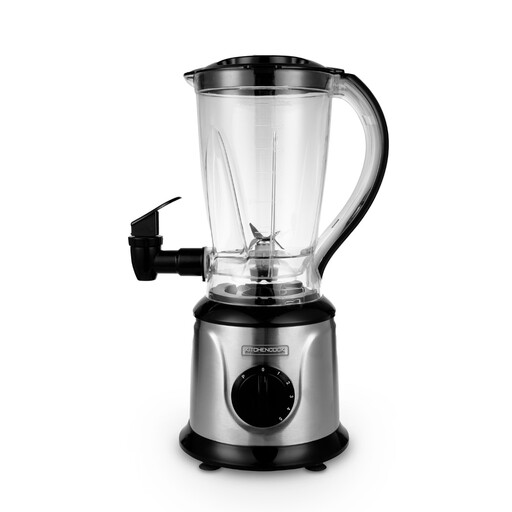
Why this choice suits this profile: its 1.5-litre jug and multiple speeds are ideal for smoothies, sauces, soups and juices made regularly at home.
The listing states a power of 500 W, a Pulse function and a clearly defined capacity. This makes it easier to compare appliances without being swayed by maximum power alone.
Stainless steel blades, non-slip feet, Pulse function and a multilingual manual including English.
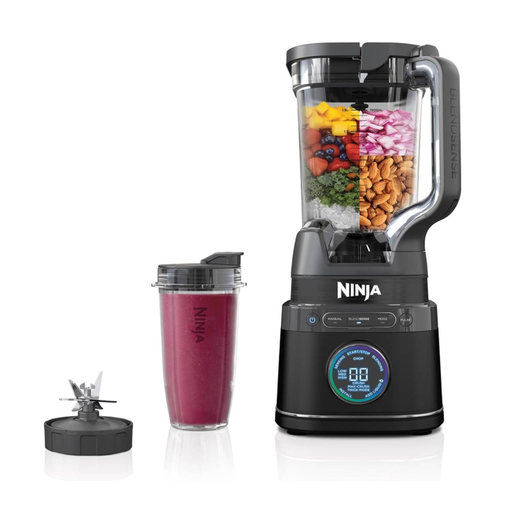
Why this choice suits this profile: this model combines a large pitcher with two personal cups, making it easy to switch from family-sized batches to on-the-go portions.
The maximum capacities are listed separately: 1.9 litres for the pitcher and 650 ml for the cups. So you know in advance exactly how much you can actually prepare.
1,200 W motor, 10 speeds, 15 stated modes, timer and removable parts that are dishwasher-safe on the top rack.
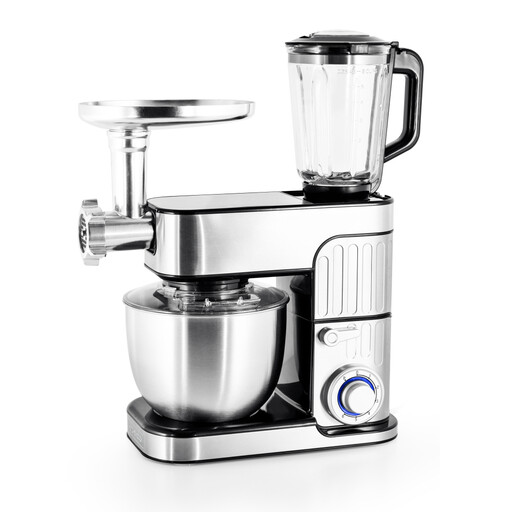
Why this choice suits this profile: this multi-function stand mixer is ideal for families and anyone who regularly makes doughs, cake mixtures, blends, drinks or minced meat.
The accessories are listed in detail: whisk, beater, dough hook, 1.5-litre glass blender and mincer with three grinding plates. So you can check their usefulness before buying.
1,300 W motor, six speeds with Pulse, 5.5-litre stainless steel bowl, planetary mixing action and overheat protection.
For making a single drink at the office or after a workout, a USB-rechargeable blender is more practical than a mains-powered model. The nutribullet Portable NBP003B has a 475 ml Tritan cup and a USB-C recharge that's stated to take 90 minutes, giving you more than 15 cycles of 20 seconds each. Just don't expect the same performance as a countertop blender.
A portable blender of 500 to 590 ml is fine for simple drinks. For ice cubes, frozen fruit or thick mixtures, check the limits stated in the manual before you order.
We've put together a full list, updated in real time, of products that fully meet these strict selection criteria as well as European safety regulations.
Between 450 and 700 W, an appliance will handle most everyday smoothies, sauces, soups and compotes. For larger quantities, hard ingredients or thick mixtures, a higher power gives you more leeway. Also remember to check the continuous running time and whether there's overheat protection.
No. Some jugs have a maximum temperature limit, sometimes set at 60 °C, while others require you to let the mixture cool down before blending. Steam can build up pressure under the lid or damage the jug. Always check the manual for the specific model.
That depends on how often you use it, whether you stick to the recommended quantities, and how well you look after it. Avoid running it for too long, don't force it on an overly thick mixture, and let the motor cool down when the manual advises it. It's also worth checking the availability of spare parts and the length of the warranty before you buy.