
Livraison le jour même ou le lendemain

Qualité garantie

Débloquez vos offres de bienvenue: Livraison GRATUITE | Jusqu'à -80 % | 30 jours d'essai gratuits à JoyPlus
Téléchargez l'application
A multi-function blender can prepare smoothies, soups, sauces, purées, juices and even baby food. But not all models are equal depending on how you plan to use them. A compact design works well for a single portion, while an appliance with a 1.5 to 2 litre bowl is better suited to a family. Some kits even include a whisk, a chopper or a dough hook.
Before comparing prices, it's worth knowing the most common pitfalls.
A 1200 W blender or a 1300 W blender offers a useful power reserve for thick mixtures and crushed ice. However, this figure alone won't predict the final result. The shape of the bowl, the blade profile, the available speeds and the amount of liquid all play a decisive role.
Conversely, a 600 W blender can be perfectly adequate for soups, sauces, soft fruits and everyday smoothies, as long as you follow the quantities and cycles stated in the instruction manual. A small portable blender of 100 to 300 W is better suited to single-serve drinks and easy-to-blend ingredients.
A 1.5 litre bowl cannot necessarily be filled to the brim. You must respect the maximum fill line, especially with liquids. For a family, a 1.5 L blender can prepare several glasses in one go, while a personal blender of 475 to 680 ml is more aimed at drinks to take away.
For hot liquids, always check the instruction manual. Several models require you to let the mixture cool down or limit the temperature to 60 °C, to reduce the risks associated with pressure, splashing or thermal shock.
An appliance supplied with lots of accessories can be very versatile, but it also takes up more space. Check whether the removable parts are dishwasher-safe, whether the blades can be removed and whether the motor unit can be cleaned easily without being submerged.
An easy-to-clean blender isn't just a marketing claim: it's a criterion that genuinely determines how often you'll use the appliance. A stable base, a removable bowl and non-slip feet also make daily use more enjoyable.
For smoothies and sauces, multiple speeds allow you to adjust the texture gradually. The Pulse function delivers short bursts of power, handy for chopping or starting to blend a dense mixture. It doesn't replace an automatic programme, but it gives you direct control over the result.
The crushed ice function must be explicitly stated in the product specification and used according to the instructions. High power does not give you permission to blend just any ingredient: the limits on duration and quantity remain essential.
A blender with a glass bowl generally resists stains and odours well. On the downside, it is heavier and can be sensitive to thermal shock. A plastic or Tritan bowl is often lighter, making it easier to handle and store.
For family preparations, choose a capacity between 1.2 and 2 litres, always distinguishing the total volume from the usable capacity. For an active individual, a 475 to 680 ml cup can prove more practical than a large bowl.
A countertop blender does not automatically replace an immersion blender, a chopper or a multi-function stand mixer. If you regularly make bread, creams and doughs, an appliance with a planetary mixing action and baking accessories will be more suitable. If you mainly cook soups directly in a saucepan, the immersion blender will be more convenient and save you having to transfer the mixture.
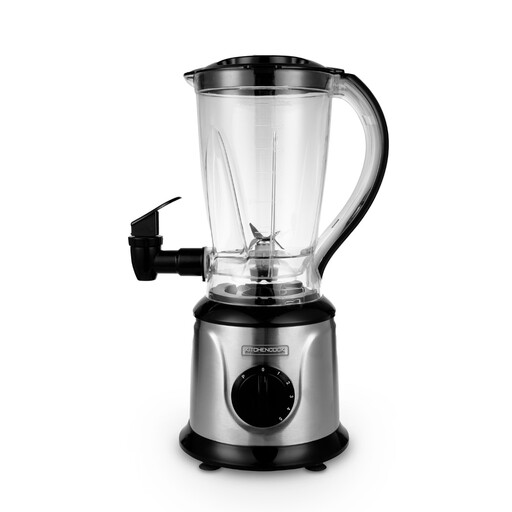
Why this choice suits this profile: its 1.5 L bowl and multiple speeds are enough to prepare smoothies, sauces, juices and soups at home.
The specification states 500 W, a Pulse button and a clearly defined capacity, without making power the sole guarantee of performance.
Stainless steel blades, multiple speeds, Pulse function and a compact base with non-slip feet.
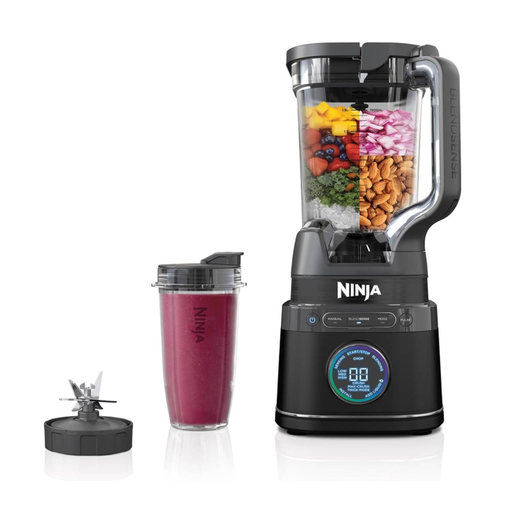
Why this choice suits this profile: its large bowl and two individual cups let you switch between family preparations and drinks to take away.
The maximum capacities are stated separately: 1.9 L of liquid for the bowl and 650 ml for the cups.
1200 W, 10 speeds, 15 stated modes, timer, two 680 ml cups and removable parts compatible with the top rack of the dishwasher.
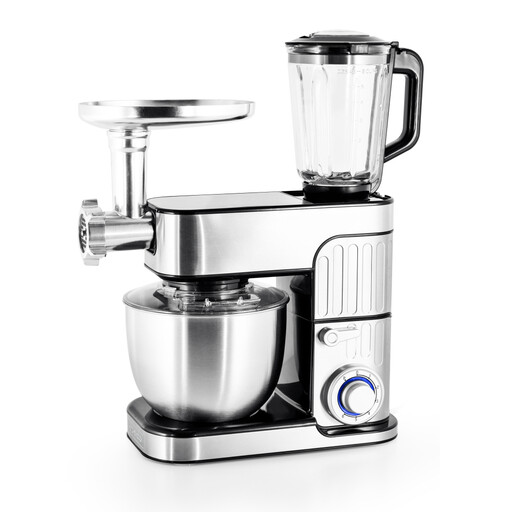
Why this choice suits this profile: this appliance combines baking, blending and meat preparation for households that cook in large quantities.
The versatility is based on clearly identified accessories: a 5.5 L baking bowl, a 1.5 L glass blender and a meat grinder.
1300 W motor, six speeds plus Pulse, planetary mixing action, baking kit and overheat protection.
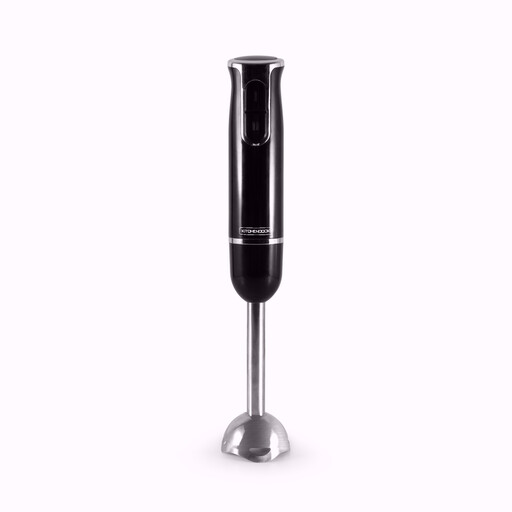
Why this choice suits this profile: the immersion format is ideal for soups, sauces, purées and baby food, without having to transfer the mixture into a large bowl.
The specification states a maximum usage time of one minute, followed by two minutes of cooling between cycles.
600 W motor, variable speed with Turbo mode, removable stainless steel shaft and 600 ml beaker.
We've put together a comprehensive, real-time updated selection of products that meet these strict criteria as well as European safety regulations.
For smoothies, sauces and simple soups, 500 to 600 W can be enough. For crushing ice, blending thick mixtures or processing large quantities, a stated power of 900 to 1500 W offers more headroom. However, remember to check the maximum usage time and the usable capacity of the bowl.
It depends on the model. Some appliances limit the temperature of liquids to 60 °C, while a heating blender follows specific instructions. Never pour boiling liquid without confirming it in the instruction manual, close the lid properly and respect the maximum fill level.
The consumption depends on the power and the running time. A 600 W appliance used for one minute consumes approximately 0.01 kWh. In practice, the cost therefore depends mainly on how often you use it, cleaning and the possible replacement of accessories, rather than a few seconds of blending.