Choose a multi-cooker if your main aim is to cook a variety of meals in one pot with less supervision, while preparing ingredients separately. A cooking food processor is better suited to regularly chopping, blending or kneading ingredients before cooking. If your recipes are limited to rice, steaming or the cookware you already own, you may not need another versatile appliance. In any case, compare usable capacity, cleaning requirements and the space it takes up with the meals you actually make.
Who are these appliances for?
Anyone who wants to slow-cook meals without constant supervision
You prepare complete meals, rice or vegetables and would like to leave some dishes cooking without having to stay by the hob. Just make sure the appliance has a mode suited to your recipes.
Households cooking several portions
You cook for several people or prepare meals in advance. The amount you can actually fit in the pot matters more than its stated capacity or a portion estimate based on different types of food.
Anyone who also wants to prepare ingredients
You want to chop, blend, grate, knead or weigh ingredients using the same appliance that cooks the meal. In that case, compare a cooking food processor with a multi-cooker, bearing in mind the accessories you’ll need to wash and store.
What should you consider before choosing?
Start with the tasks you do most often: cooking with less supervision, preparing ingredients or simply using a dedicated cooking method. Then compare usable capacity and cleaning requirements, rather than focusing only on the number of programmes.
Programmable multi-cooker
Worth considering if: your meals call for several cooking modes in one pot, with less supervision for recipes the appliance can handle.
Bear in mind: you’ll still need to chop or blend ingredients separately, and filling limits vary depending on what you’re cooking.
Cooking food processor
Worth considering if: you regularly prepare ingredients in the appliance before or during cooking.
Bear in mind: bowls and accessories may take more cleaning and storage space, and what’s included depends on the model.
Dedicated rice cooker or steamer
Worth considering if: you mainly cook rice or steam food and don’t regularly need other modes.
Bear in mind: you’ll still need your existing cookware or another appliance for other recipes.
Your usual cookware
Stick with it if: your saucepan, frying pan or oven already meets your needs, especially when you need to cook several dishes at once.
Bear in mind: some dishes may need more attention or several pots and pans, but you won’t have another appliance to store.
| What matters |
What to check |
Who might prioritise it? |
| Supervision while cooking |
Look for modes that suit the dishes you usually cook, and check which steps still need your attention. |
When I start a slow-cooked dish or rice, I want to get on with something else instead of staying by the cooker. Around 36% of consumers might make reduced supervision their top priority. |
| Usable capacity |
Check the usable capacity and filling limits of the exact model for your recipes, especially when pressure cooking. |
If I’m cooking several portions or preparing meals in advance, I need to know how much of my usual dishes will fit in the pot. Around 29% of consumers might prioritise capacity. |
| Ingredient preparation |
Check that it has the chopping, blending or kneading functions you need, and see which accessories are actually included. |
If chopping or blending takes up time almost every day, I want to decide whether the appliance should handle those tasks too. Around 21% of consumers might put built-in food preparation first. |
| Space and cleaning |
Measure the space you have available and check which parts need to be taken apart, washed and stored after each use. |
In a kitchen where space is tight, I don’t want to replace a few pots and pans with a set of accessories that are difficult to store. For around 14% of consumers, size and cleaning could be the main concern. |
What mistakes should you avoid?
-
Confusing a multi-cooker with a cooking food processor
A multi-cooker designed for cooking won’t replace a food processor’s chopping, cutting or blending functions. Que Choisir, for example, distinguishes food processors by the tools they offer for preparing ingredients.
Make a note of the tasks you do before cooking. If you do them often, compare the functions and accessories of cooking food processors rather than just their cooking programmes.
With a multi-cooker, you’ll still need separate utensils or an appliance for these tasks.
-
Assuming the stated capacity is the usable capacity
The pot’s capacity doesn’t necessarily tell you how much you can cook for every recipe. For its original Cook Expert, for instance, Magimix lists a total capacity of 3,5 L and a usable capacity of 2,5 L.
Before choosing based on portion numbers, check the manual for the exact model, its fill markings and the limits for the dishes you make most often.
If you put too much in the pot, you may have to cook in several batches.
-
Choosing based on the number of programmes
A long list of programmes doesn’t tell you whether they suit your recipes or which steps you’ll still need to do by hand.
First, check that it has the cooking modes you actually need, such as slow cooking, steaming or pressure cooking for your usual dishes. Then consider guided recipes as a separate feature.
-
Overlooking the instructions for a pressure cooker
Filling the pot, closing the lid and releasing steam all require you to follow the instructions for the model you’re using.
Before cooking for the first time, read the manual and follow its fill markings, as well as the manufacturer’s instructions for opening the lid and releasing steam.
Brands to know
These product ranges show different ways of combining cooking and food preparation. A feature listed for one model doesn’t automatically apply to every model from the same brand.
Moulinex
Cookeo is a range of multi-cookers with guided cooking, while Companion models are food processors that prepare ingredients and cook.
- Moulinex lists six modes and a 6 L pot for the Cookeo+, while the Companion Pro has a 4,5 L bowl, weighing functions and food-preparation accessories.
- Check the capacity that suits your recipes and the accessories included with your chosen model. Don’t assume the bowl’s stated capacity is its usable capacity.
Instant Pot
The range combines several cooking modes in one pot, with features varying by model.
- Instant Pot describes the Classic 5,7 L as a 7-in-1 appliance and says its parts are dishwasher-safe.
- This type of multi-cooker won’t prepare ingredients like a cooking food processor. Check the manual for filling limits.
Magimix
The Cook Expert combines cooking with food-preparation functions, using bowls and accessories.
- For the original Cook Expert, Magimix lists a total capacity of 3,5 L and a usable capacity of 2,5 L separately.
- Remember to factor the different bowls and accessories into your cleaning routine and storage space.
Vorwerk
The Thermomix TM7 is a cooking food processor designed for food preparation and guided cooking.
- Vorwerk lists 24 modes and a maximum bowl capacity of 2,2 L for the TM7.
- Compare this capacity with your portion sizes, and check the terms for accessing Cookidoo recipes if you plan to use them.
Appliances for these needs on Joybuy
These models let you compare the two main options: a cooking food processor if preparing ingredients matters, or a multi-cooker if cooking in one pot is your priority. For each one, compare the model’s specifications with your portion sizes and cleaning habits.
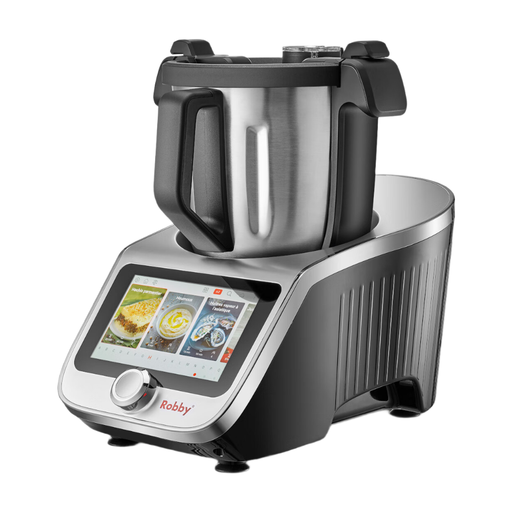 Image unavailable
Robby Smart cooking food processor with XL bowl and built-in scales
Worth considering if you want to prepare ingredients and cook with the same appliance. The product name mentions an XL bowl, built-in scales, a large touchscreen and 750 recipes. Check which accessories are included, the usable capacity for your dishes and the care instructions for the blades.
View on Joybuy
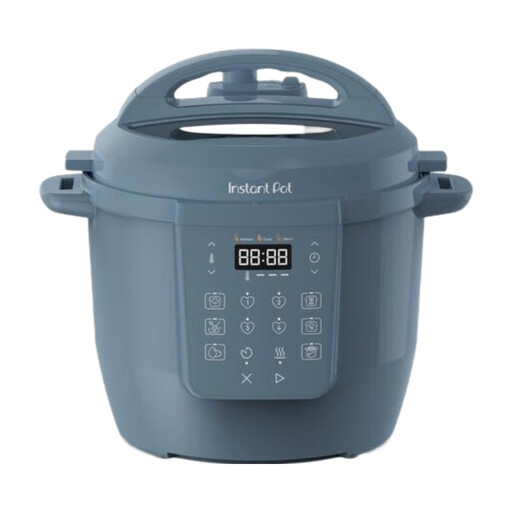 Image unavailable
Instant Pot Classic 5,7 L, Daydream Blue
Worth considering if your priority is a range of cooking methods rather than chopping or blending ingredients in the appliance. This version is listed as a 7-in-1, 5,7 L multi-cooker, with slow-cooking and steaming among its functions. Check the filling limits for your recipes and follow the manual whenever you use the pressure-cooking function.
View on Joybuy
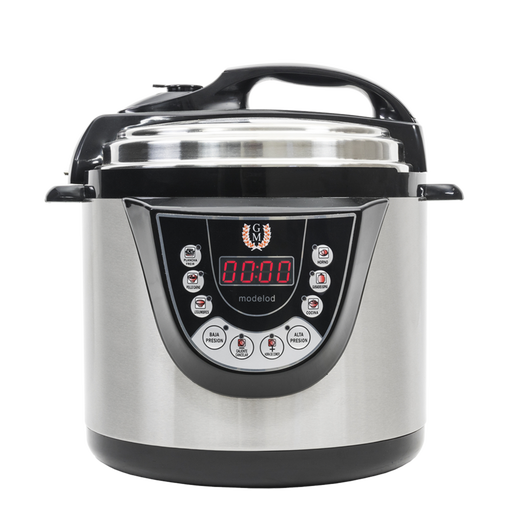 Image unavailable
Cecotec Model D, 6 L programmable multi-cooker
Worth considering if you’re looking for a programmable cooker with several pressure settings. The product name lists 9 menus, two pressure levels and a 24-hour timer. Check the manual for the quantities allowed for each recipe, and make sure the appliance comes with instructions in French.
View on Joybuy
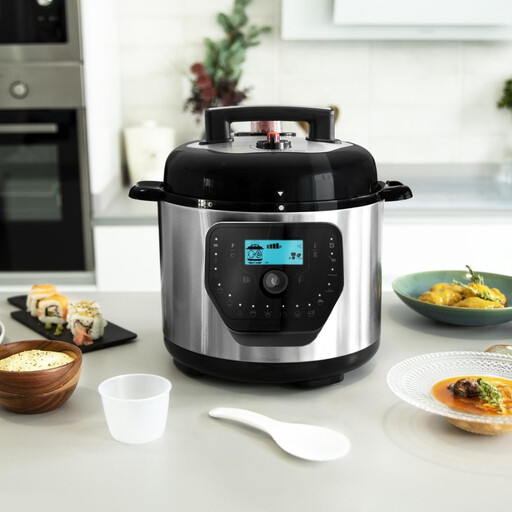 Image unavailable
Cecotec GM H Deluxe Fry 6 L, with air fryer lid and scales
Worth considering if you want to combine programmable cooking and weighing in the same appliance. The name of this version lists a 6 L pot, an air fryer lid and built-in scales. Check what’s included, the filling limits for each mode and which parts need cleaning.
View on Joybuy
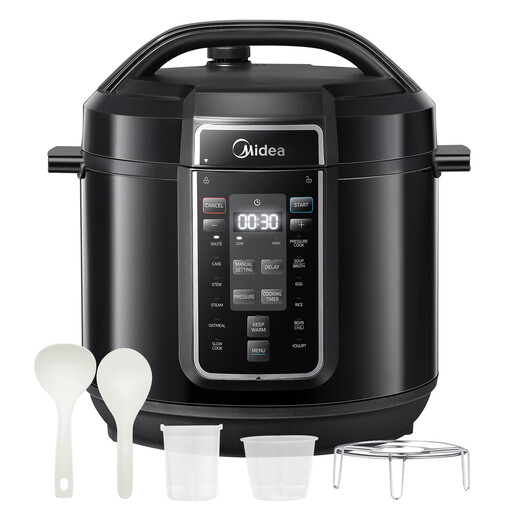 Image unavailable
Midea 9-in-1, 8 L electric multi-cooker
Worth considering if you plan to use several cooking methods and want to compare pots of different capacities. The product name lists 8 L, 1 200 W and 12 preset programmes. This stated capacity alone doesn’t determine how much you can cook for your recipes. Before buying, check the manual and fill markings, and make sure the appliance is electrically compatible with your home.
View on Joybuy
Frequently asked questions
Will two pots with capacities of 5,7 L and 6 L necessarily hold similar amounts?
No. The stated capacity alone isn’t enough to determine how much you can cook for a particular recipe. Fill markings and the cooking mode matter too, so check each model’s manual for the dishes and portion sizes you prepare.
Can a multi-cooker replace a cooking food processor?
A multi-cooker may meet your cooking needs, but it won’t handle regular chopping, cutting or blending as part of the process. If these steps matter to you, check the functions and accessories of the specific cooking food processor you’re considering.
What should you clean after pressure cooking?
Follow your model’s manual for cleaning the pot, lid, sealing ring and steam-related parts. Check separately which parts are dishwasher-safe: this may not apply to the whole appliance.
What should you check on an electrical appliance intended for use in France?
Check the electrical specifications, instructions and warnings for the model on offer so you can use it in accordance with its manual. The DGCCRF states that the CE marking, where applicable, is not a quality label, so don’t treat it as proof of performance or ease of use.


