
Livraison le jour même ou le lendemain

Qualité garantie

Débloquez vos offres de bienvenue: Livraison GRATUITE | Jusqu'à -80 % | 30 jours d'essai gratuits à JoyPlus
Téléchargez l'application
With electronics now ubiquitous in our cars, a good diagnostic tool is no longer a luxury—it's a necessity, whether you're a professional mechanic or a dedicated enthusiast. A top-tier multi-brand automotive diagnostic scan tool does more than just find a fault in minutes; it also unlocks the world of advanced maintenance. This guide breaks down the key factors to consider and presents our top picks to help you invest in the tool that truly fits your needs.
The market is flooded with models offering a wide range of features. To help you see clearly and sort through the options, here are the crucial points to examine.
The first and most obvious criterion is, of course, compatibility. A good automotive diagnostic tool must cover a wide range of European, Asian, and American brands. Ensure that the models and model years you work on most frequently are fully supported, especially for the most advanced functions. While compatibility with OBD2/EOBD protocols is the bare minimum, it's the extensive multi-brand coverage that truly makes a difference.
Modern scan tools go far beyond simply reading fault codes. The most sophisticated models offer a much more comprehensive arsenal of functions:
Today, most tools are going wireless. A Bluetooth OBD2 scanner offers welcome freedom of movement around the vehicle by communicating with a tablet or smartphone. Another often-underestimated point is the update subscription model. Some devices include free lifetime updates, while others require an annual subscription after an initial free period. This is a criterion that heavily impacts the total cost of ownership over the long term.
We have selected three tools that cater to various needs and budgets, from the skilled DIYer to the professional workshop.
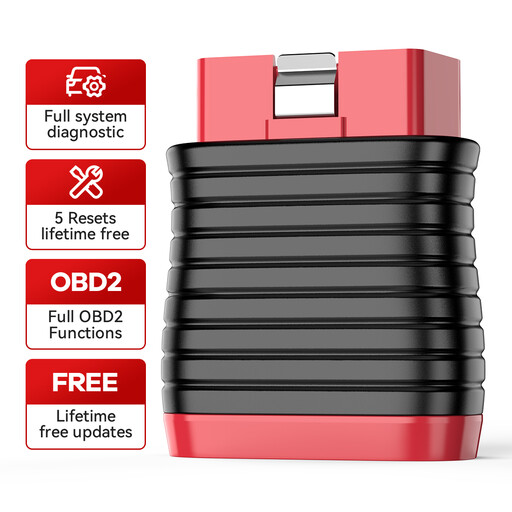
Why It Stands Out: It's an ultra-compact and affordable solution, perfect for getting started with comprehensive diagnostics without breaking the bank, thanks to its free lifetime updates for essential functions.
Pros:
Who Is It For? For car owners and DIYers who want to take control of basic diagnostics and maintenance for their vehicle.

Why It Stands Out: It offers an unbeatable price-to-feature ratio, packing pro-level functions like bi-directional control and ECU coding, with the huge advantage of free lifetime updates.
Pros:
Who Is It For? For advanced enthusiasts and small workshops looking for a versatile and powerful tool without the burden of a subscription.
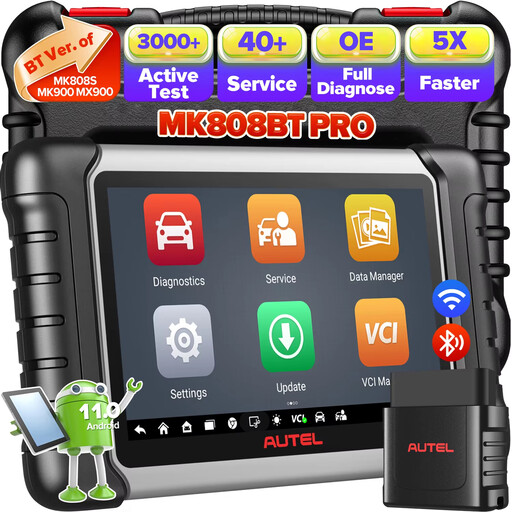
Why It Stands Out: It's a benchmark tool from a brand highly acclaimed by professionals. It combines very broad system coverage, OE-level diagnostics, and rock-solid reliability for intensive use.
Pros:
Who Is It For? For mechanics and workshops seeking a primary diagnostic tool that is robust, reliable, and comprehensive for daily use. Note: only the first year of updates is included.
Choosing a diagnostic tool is, above all, a matter of use case. If our selection doesn't check all your boxes, don't worry—other options are available. Feel free to explore our full range of repair tools to find the perfect gem for your workshop.
A simple fault code reader is limited to reading and clearing errors from the engine control unit (OBD2 standard). In contrast, a comprehensive diagnostic scan tool communicates with all of the vehicle's modules (ABS, airbags, transmission, etc.), displays live data, performs resets, and, for the most advanced models, carries out active tests and coding.
Absolutely. Manufacturers are constantly releasing new models, control units, and procedures. Regular updates are the only way to ensure your tool remains compatible with recent cars and that bugs are fixed. This guarantees reliable diagnostics over the long term.
Completely! Bi-directional control shifts diagnostics from a passive mode (reading data) to an active mode (giving commands). It allows you to command a component to see if it responds. For example, instead of assuming a fuel pump is dead due to low pressure, you can activate it manually with the tool. If it starts, the problem lies elsewhere (relay, wiring harness, etc.). It's a phenomenal time-saver that prevents you from replacing parts unnecessarily.