
Livraison le jour même ou le lendemain

Qualité garantie

Débloquez vos offres de bienvenue: Livraison GRATUITE | Jusqu'à -80 % | 30 jours d'essai gratuits à JoyPlus
Téléchargez l'application
A warning light comes on your dashboard? This is often the start of anxiety and the fear of a hefty garage bill. However, whether it's for a simple engine light, a reset after an oil change, or a more complex issue, getting your own diagnostic tool is now within reach for every car owner. A multi-brand diagnostic tool gives you the power to understand what's going on under the hood, perform certain maintenance tasks yourself, and, most importantly, take back control of your vehicle's maintenance.
This guide is here to help you choose the car diagnostic tool that truly fits your needs, whether you're a weekend mechanic or a passionate expert. We'll break down the essential features to help you make the right choice.
The market is flooded with options, from simple code readers to highly sophisticated devices. To see things more clearly, let's focus on three essential selection criteria.
This is the absolute starting point: compatibility. Most vehicles intended for the European market after 2001 (petrol) and 2004 (diesel) are equipped with a standard OBD2 port. But be careful, compatibility doesn't stop at the plug. A simple fault code reader will most often only read information from the engine control unit (ECU). For a truly comprehensive diagnosis, you'll need an "all-system" car diagnostic tool. This type of tool can communicate with all of the vehicle's control units: ABS (braking), SRS (airbags), transmission, air conditioning, etc. This is the essential prerequisite for accurately identifying the source of a fault.
It all depends on what you plan to do with it. For routine maintenance, service functions (also called "resets") are essential. The most useful ones are:
For more advanced users, bi-directional control is a game-changer. It allows you to send commands to a component to test its response in real-time (for example, activating a fan, controlling an EGR valve, testing an injector). This is a powerful feature, typical of a professional diagnostic tool.
Modern tools often take the form of a Bluetooth OBD2 scanner. This small dongle connects to the vehicle's port and communicates wirelessly with an app on your smartphone or tablet (iOS/Android). It's an ultra-convenient and portable solution.
A crucial point not to be overlooked is the update subscription model. Some manufacturers include lifetime software updates, a major advantage for ensuring compatibility with future car models. Others, however, operate on an annual subscription basis, a recurring cost to factor in.
Based on these criteria, we have selected three tools that stand out, each for a specific user profile.
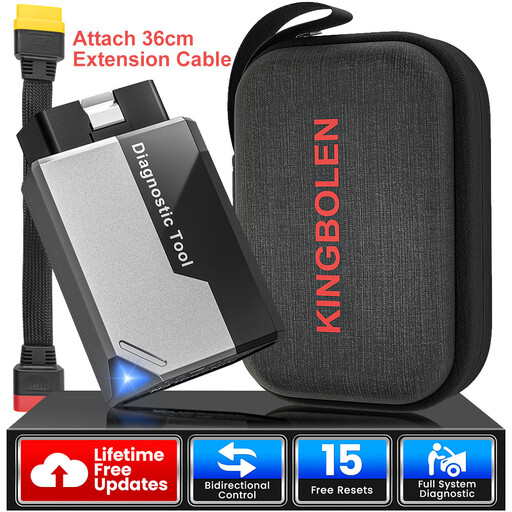
Its standout feature: The KINGBOLEN Ediag Elite checks almost all the boxes, with bi-directional control and lifetime updates, all in a compact Bluetooth format. It offers an unbeatable performance-to-price ratio for advanced use.
Pros:
Who is it for?: For the mechanics enthusiast who wants to go far beyond simple code reading to perform in-depth diagnostics and active tests, without ever worrying about a subscription.
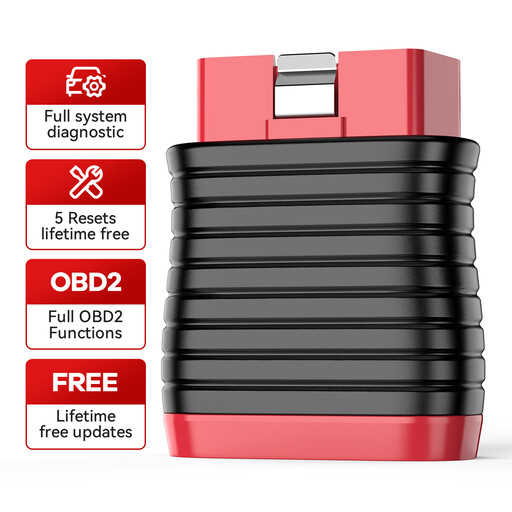
Its standout feature: The THINKDIAG BD6 gets straight to the point, and does it well. Its ultra-compact design and intuitive app make it an excellent first car diagnostic tool for the most common maintenance tasks.
Pros:
Who is it for?: Perfect for the savvy car owner who wants to handle basic maintenance (oil changes, brake pads) and diagnose faults on their personal vehicles, without investing in unnecessary advanced features.
See the THINKCAR THINKDIAG BD6
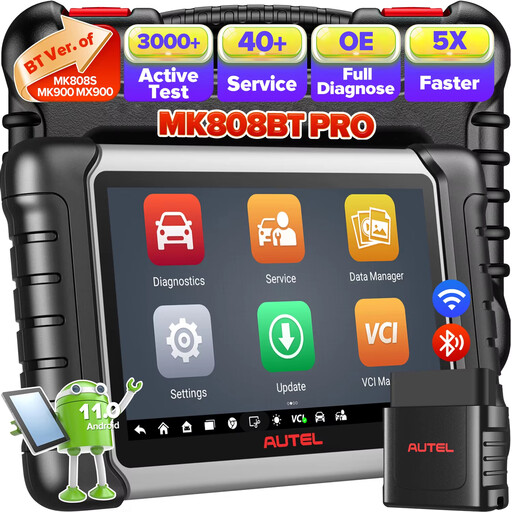
Its standout feature: We're moving into a different league with the Autel MK808BT PRO, a semi-professional solution that comes with its own ruggedized tablet. With over 38 services and extensive brand coverage, it's aimed at those seeking the power and versatility of garage-grade equipment.
Pros:
Who is it for?: For the expert DIY mechanic, collector, or small workshop looking for a versatile and high-performance professional diagnostic tool without breaking the bank.
See the Autel MaxiCOM MK808BT PRO
Our selection focuses on three well-defined profiles. If your needs are different, whether you're looking for a simpler model or one with very specific functions, many alternatives exist.
Explore our full category of car scanner tools to find the device that's right for you.
To put it simply, a basic fault code reader only reads and clears error codes related to the engine (EOBD/OBD2 standard). A diagnostic tool, or OBD2 scanner, goes much further: it can query all the electronic systems of the vehicle (ABS, airbags, transmission, etc.), display real-time data, and offer service functions for maintenance.
No, not for the basic functions. Consumer-grade tools are designed with intuitive interfaces for reading and clearing codes. However, interpreting the data and using advanced functions like bi-directional control require good mechanical knowledge to avoid any mistakes. If you're a beginner, we recommend getting familiar with the reading functions before touching the more complex settings.
The automotive world is constantly evolving. Manufacturers release new models every year and deploy software updates to existing vehicles. Updating your multi-brand diagnostic tool ensures its compatibility with these new cars, adds service functions, and fixes potential bugs. A tool that isn't updated will quickly lose its effectiveness on recent models.