
Livraison le jour même ou le lendemain

Qualité garantie

Débloquez vos offres de bienvenue: Livraison GRATUITE | Jusqu'à -80 % | 30 jours d'essai gratuits à JoyPlus
Téléchargez l'application
Whether you're a professional mechanic or a passionate DIYer, investing in a multi-brand diagnostic tool is an essential step. However, the market is a jungle of promises that too often turn into costly disappointments. A tool that looks appealing on paper can quickly become an expensive paperweight if you don't pay attention to a few crucial points. Before you pull out your credit card, it's vital to know how to avoid the most common pitfalls.
The 3 traps to avoid when buying a car diagnostic tool:
To choose a high-performing and future-proof tool, you need to look beyond marketing slogans. Here are the technical specifications to scrutinize.
A simple OBD2 fault code reader is no longer enough. Vehicles released after 2019 increasingly rely on faster and more secure communication protocols.
Verifying the presence of these protocols is the assurance that your investment won't be obsolete tomorrow.
This is what separates a simple code reader from a true professional car diagnostic tool.
A good tool should simplify routine maintenance. Don't just settle for reading codes; examine the number and relevance of the service functions. The service indicator reset (oil change) is the bare minimum. Aim for tools offering over 25 to 40 services to cover tasks like DPF regeneration, steering angle sensor (SAS) calibration, ABS brake bleeding, or new battery registration.
The last point, and not the least: the update policy. A tool with 3 years of included updates or genuinely free lifetime updates will always be more cost-effective than an entry-level model requiring an expensive annual subscription.
Rather than a random laundry list, here are options we recommend, each tailored for a specific user profile, to perform effective all-brand car diagnostics.
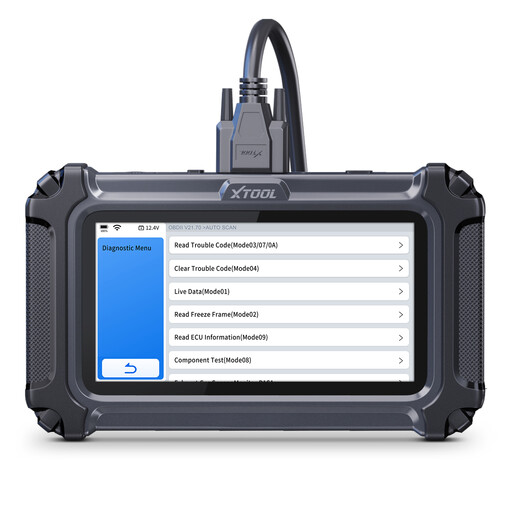
Why this tool fits the profile: It represents the perfect balance between features and price. With its all-system diagnostics, over 15 essential maintenance services, and CAN FD/FCA compatibility, it covers the vast majority of needs, whether for maintaining the family's vehicles or for a small startup garage. A smart choice to get a handle on common repairs without breaking the bank.
Its software updates are free for life, which immediately eliminates the spectre of a surprise annual subscription. The tool is a one-time purchase, while still benefiting from future enhancements.
Full all-system diagnostics and compatibility with modern protocols (CAN FD, FCA) at a very competitive price point.
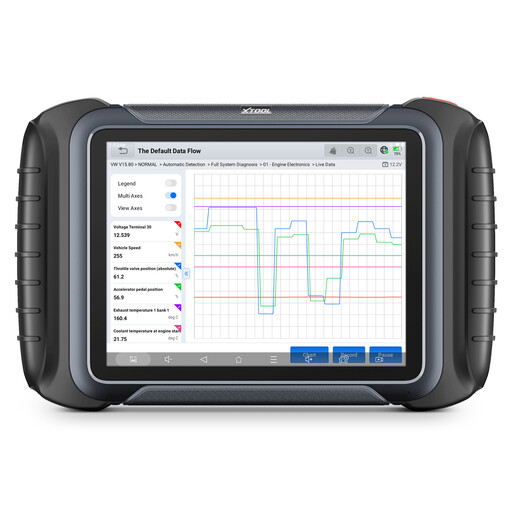
Why this tool fits the profile: Here, we step things up a notch. This tool is built for productivity. With its extensive bi-directional control, over 42 service functions, and especially its topology mapping, it allows a mechanic to visualize the status of all ECUs at a glance. A phenomenal time-saver for diagnosing complex faults on a diverse vehicle fleet.
It offers true advanced functions like topology and ECU coding, which aren't just for show on the spec sheet. Its native DoIP/CAN FD/FCA compatibility protects it from planned obsolescence.
The module topology mapping, coupled with AI assistance, is a game-changer for diagnosing network faults. The 3 years of included updates are a guarantee of peace of mind.
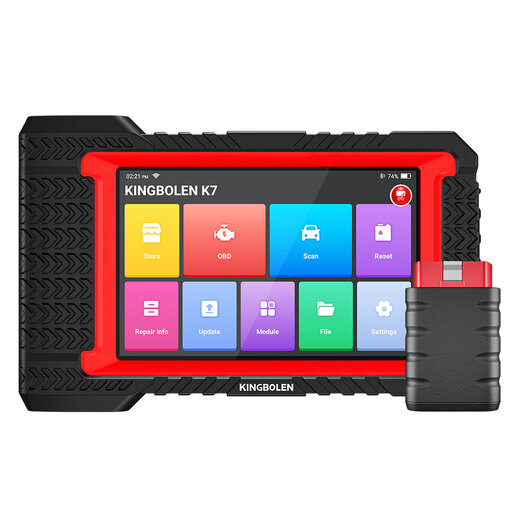
Why this tool fits the profile: This model is aimed at experts. It stands out for its advanced ECU coding capabilities, including online and offline coding, as well as the PMI (Programmable Module Installation) function for Ford, Lincoln, and Mazda vehicles. It's the tool of choice for specialists who perform module replacements or advanced customizations. The icing on the cake, the lifetime updates are a major selling point for a device of this calibre.
It doesn't just make empty promises: it offers real online coding and PMI functions, where the competition often limits itself to the bare minimum. The free lifetime updates ensure permanent access to the very latest coding data.
Its ECU coding capabilities (online/offline) and PMI function, combined with free lifetime updates, make it a professional OBD2 scanner with exceptional longevity.
We have selected a full range of products that meet our strict requirements and current standards.
It all depends on the manufacturer, and caution is advised. With reputable brands, "lifetime" means that as long as you own the device, you will receive all updates (software, vehicle coverage) without paying a cent more. With others, who are more cunning, the free part is limited to bug fixes, while adding new functions or vehicles becomes a paid service. It is therefore crucial to read the fine print or, more simply, to trust brands with a transparent policy, like those in our selection.
The answer is a resounding yes. It has even become indispensable. The modern vehicle fleet is modernizing at high speed. A huge number of models from American, German, and other brands have been using these protocols since 2020. Investing today in a non-compatible tool means risking being stuck when faced with your customers' vehicles in a year or two.
A fault code reader is a passive tool. It only reads the error codes and data transmitted by the vehicle. In short, it tells you "what" the problem is. In contrast, a bi-directional diagnostic tool is an active tool. It communicates with the vehicle, sending commands to test specific components (an injector, a fan...). It helps you find "why" there is a problem by letting you verify the proper functioning of each actuator. It's the difference between noticing a fever and being able to ask the patient where it hurts.