
Livraison le jour même ou le lendemain

Qualité garantie

Débloquez vos offres de bienvenue: Livraison GRATUITE | Jusqu'à -80 % | 30 jours d'essai gratuits à JoyPlus
Téléchargez l'application
A warning light illuminates on your dashboard, and uncertainty sets in. Should you rush to the garage for a costly diagnosis, or invest in your own tool? Opting for a multi-brand diagnostic scan tool is a smart choice for both the DIY mechanic and the independent technician. However, the market is saturated with marketing promises that can lead to purchases you'll quickly regret.
As a product expert for Joybuy, my mission is to help you cut through the noise. Let's analyze the common pitfalls and essential criteria together to make an informed decision that's tailored to your real needs, not the siren song of marketing.
Technical jargon and endless feature lists can be misleading. Here are the three most common traps that cost unwary car owners dearly.
To avoid these traps, it's crucial to focus on a few non-negotiable technical specifications.
The OBD2 port has been standard on all vehicles since the 2000s, but it's the communication protocols that make all the difference.
You must distinguish between a simple fault code reader, which only reads and clears engine codes, and an all-system diagnostic tool. The latter can query all of the vehicle's control units: ABS, airbags (SRS), transmission, air conditioning, etc.
It's the service functions that provide true independence. The most important ones include:
This is the feature that separates a simple reader from a true automotive diagnostic tool. The ability to send a command to a component to check its operation without removing it is a phenomenal time and money saver. For example, if your wipers stop working, an active test can trigger them from the scan tool. If they activate, the problem isn't the motor itself but likely the switch or wiring.
Rather than an endless list, here are three recommended options for three typical user profiles, each meeting our quality criteria and avoiding the common pitfalls.
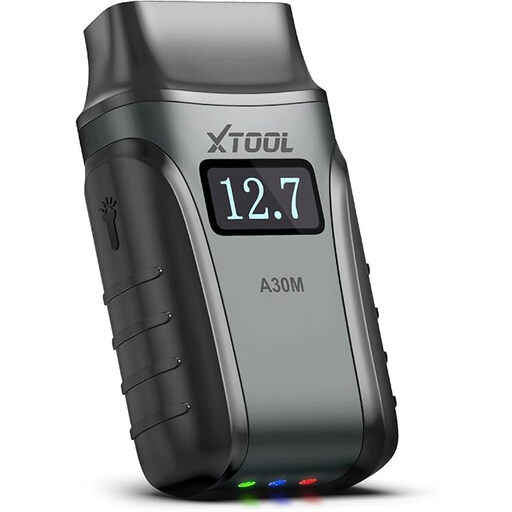
WHY IT'S A GREAT CHOICE: Ideal for the DIYer who wants to go beyond simple code reading. This Bluetooth diagnostic scanner connects to a smartphone or tablet, offering great flexibility. It includes pro-level functions like bi-directional control and over 26 maintenance services, all with genuinely free lifetime updates.
It offers true bi-directional control and free lifetime updates with no hidden fees, thus avoiding two of the most common traps of entry-level tools.
An unbeatable features-to-price ratio. Support for the CAN FD protocol and FCA AutoAuth access makes it a future-proof investment, ready for the vehicles of today and tomorrow.
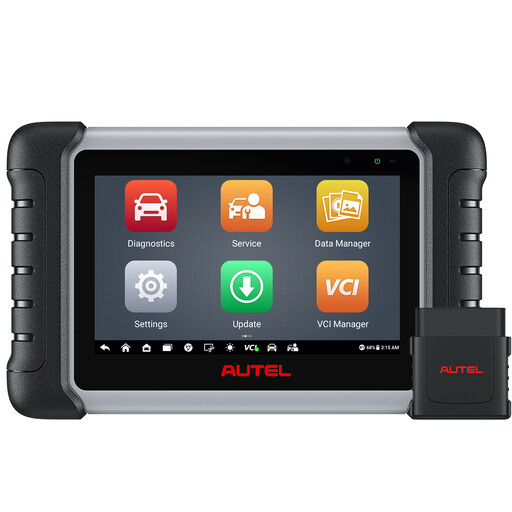
WHY IT'S A GREAT CHOICE: For managing the maintenance of a family fleet or a small professional one, a dedicated tablet is far more practical. This Autel model offers a stable Bluetooth connection, extensive compatibility, and over 38 service functions to adapt to a wide variety of makes and models.
It provides a clear list of its 38+ functions and FCA AutoAuth support, ensuring extensive and transparent compatibility, a far cry from the vague promises of some competitors.
Its dedicated tablet interface and OE-level diagnostics for all systems. Full bi-directional control allows for in-depth diagnostics on a very large number of vehicles.
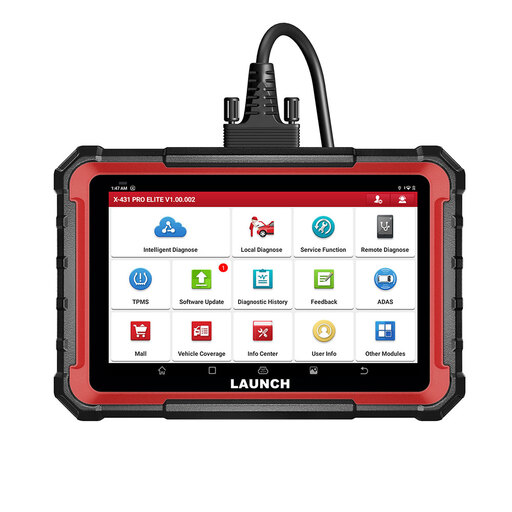
WHY IT'S A GREAT CHOICE: This professional-grade tool is for those who demand the best. It supports CAN FD and DoIP protocols, offers advanced ECU coding functions, and provides guided procedures for the VAG group, making it a powerful ally for complex repairs.
It goes far beyond the "bi-directional bluff" by offering full ECU coding and explicit support for the latest protocols. Its update policy (2 years free) is clearly stated, with no nasty surprises.
Its advanced coding capabilities and compatibility with add-on modules (endoscope, battery tester, etc.), which make it a scalable solution for demanding professionals.
We've compiled a complete, up-to-date selection of tools that meet these strict selection criteria and current standards.
For subscription-based tools, an update is required to maintain access to advanced functions and new vehicle coverage. For models with free lifetime updates, the tool will continue to function without them, but it is highly recommended to install them regularly via Wi-Fi to ensure compatibility with the latest models and benefit from bug fixes.
The key is to check for support of recent protocols. Look for CAN FD if you own a GM, Ford, or other recent vehicle brand. For Stellantis group models (Fiat, Jeep, etc.), ensure FCA AutoAuth compatibility. The safest bet is to contact the seller with your vehicle's identification number (VIN) before purchasing to get confirmation.
An entry-level $30 reader is generally limited to reading and clearing error codes from the engine system (ECU). It's useful for a first check of the engine light. A more comprehensive diagnostic scan tool, around $300 and up, offers all-system diagnostics (ABS, airbags, transmission, etc.), dozens of maintenance functions (oil reset, brakes, etc.), and, for quality models, bi-directional control to actively test components. This is the difference between a simple reading tool and a true repair and maintenance assistant.