
Livraison le jour même ou le lendemain

Qualité garantie

Débloquez vos offres de bienvenue: Livraison GRATUITE | Jusqu'à -80 % | 30 jours d'essai gratuits à JoyPlus
Téléchargez l'application
Whether you're a professional mechanic or an enthusiast who spends weekends getting their hands dirty, the multi-brand car diagnostic tool has become indispensable. With on-board electronics growing ever more complex, a simple fault code reader no longer cuts it. The challenge? Finding a tool that is powerful, versatile, and, above all, cost-effective in the long run.
That's because annual software update subscriptions can quickly turn a good deal into a financial black hole. This is why our guide focuses exclusively on models offering free lifetime updates, ensuring unlimited access to the latest features and vehicle compatibility without any nasty surprises on your bill. Our goal is to help you make the right choice by breaking down the features that truly make a difference for accurate diagnostics and cutting-edge maintenance.
Before diving into our selection, let's review the key criteria to ensure you're making the right investment, both for today and for the future.
A multi-brand tool implies compatibility with a maximum number of manufacturers. But be careful, compatibility is more than just a list of logos. Recent vehicles (post-2019) use new communication protocols. Support for the CAN FD protocol is now a must-have to correctly diagnose recent models from General Motors, Ford, and others. Similarly, FCA AutoAuth access is mandatory to work on vehicles from the Stellantis group (formerly FCA: Fiat, Jeep, Alfa Romeo...) produced after 2017. This is the key to bypassing their security gateway (SGW) and being able to run active tests or clear fault codes.
The features of a professional auto scanner can vary dramatically. Beyond simply reading/clearing fault codes, it's the advanced functions that make all the difference:
This is the bottom line, and the common thread of our selection. A diagnostic tool loses all its value if it isn't updated to keep pace with new models and procedures. Opting for a model with free lifetime updates means choosing peace of mind: a one-time payment for a service that evolves with the automotive landscape. It's a winning formula for both pros and budget-conscious enthusiasts.
Here are three models that stand out from the crowd for their features-to-price ratio and, of course, their promise of subscription-free updates.
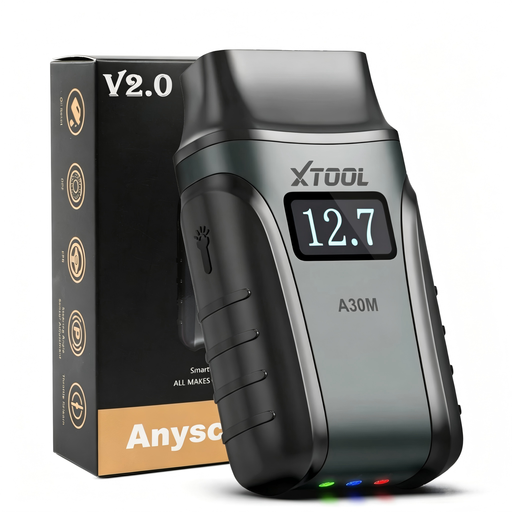
Why we love it
The XTOOL A30M transforms any smartphone or tablet (Android & iOS) into a powerful OBD2 diagnostic tool. Its Bluetooth connection makes it incredibly convenient for quick diagnostics without getting tangled in cables. Don't let its compact size fool you: it packs professional features usually reserved for much more expensive scanners.
Key Features
Who is it for?
Perfect for the demanding DIYer looking for a powerful first tool, or for the pro in search of a fast and mobile secondary diagnostic device.
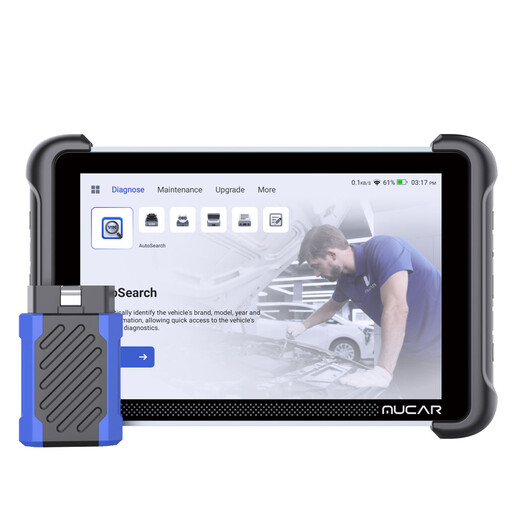
Why we love it
The MUCAR 892BT is an all-in-one solution tailor-made for the workshop. With its 8-inch touchscreen tablet, it offers a clear and responsive interface. Its magnetic VCI (Vehicle Communication Interface) sticks to the vehicle, while its extensive compatibility (CAN-FD, DoIP) makes it a future-proof investment.
Key Features
Who is it for?
It is clearly aimed at independent garages and technicians looking for a primary professional auto scanner capable of tackling a wide variety of vehicles and complex faults.
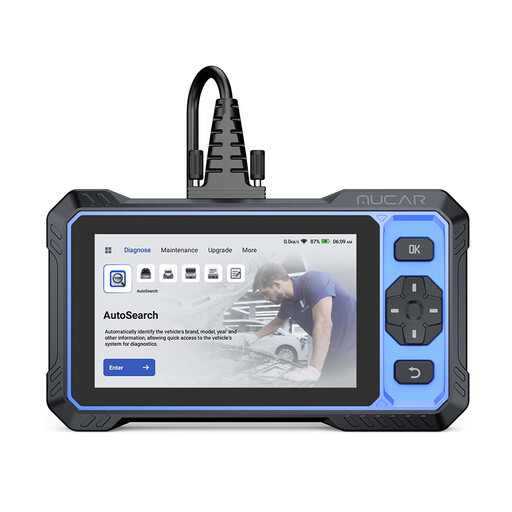
Why we love it
The MUCAR 682 is the smart compromise. It comes in the form of a compact, easy-to-handle 6-inch tablet that doesn't sacrifice performance: OE-level diagnostics and bidirectional control are included. It's a real step up from smartphone-based solutions, without reaching the budget of the most comprehensive workshop scanners.
Key Features
Who is it for?
The smart choice for small garages, independent mechanics, or highly demanding enthusiasts who want a dedicated, powerful, and future-proof device.
Our selection highlights tools that combine advanced functions with a subscription-free business model. Of course, every vehicle and every user has specific needs, and the market is full of other solutions.
To explore a wider range, from simple code readers to complete workshop solutions, take a look at our dedicated category: Vehicle OBD Diagnostic Coding Tool.
A simple OBD2 reader is read-only: it just reads information transmitted by the vehicle, such as fault codes or live data. In contrast, a tool with bidirectional diagnostics is interactive: it can send commands to the vehicle. For example, you can command it to activate the cooling fan to test its operation, without waiting for the engine to heat up. This allows you to test each component one by one and make a much more accurate diagnosis.
Absolutely, and it's crucial. Manufacturers release new models every year and deploy software updates to existing vehicles. Without updates, your diagnostic scanner will quickly become a brick, unable to communicate with recent cars or apply new repair procedures. A model with free lifetime updates is the guarantee that your investment will remain relevant and effective for years to come.
Not necessarily, but a solid knowledge of auto mechanics is highly recommended. While reading fault codes is within everyone's reach, interpreting live data and using advanced functions (bidirectional control, ECU coding...) requires real expertise to avoid the risk of damaging the vehicle. For beginners, it's best to master the reading and reset functions before venturing into more complex tests.