
Livraison le jour même ou le lendemain

Qualité garantie

Débloquez vos offres de bienvenue: Livraison GRATUITE | Jusqu'à -80 % | 30 jours d'essai gratuits à JoyPlus
Téléchargez l'application
A warning light just came on your dashboard?? This is often the start of anxiety and the fear of a hefty garage bill. To take back control, the first step is to determine if the problem is minor or serious. This is precisely where the multi-brand car diagnostic scanner comes in?: a tool that communicates with your vehicle's onboard computer to pinpoint the exact source of the fault.
This guide is designed to help you choose the device that truly meets your needs. Whether you're simply looking to clear a stubborn check engine light or want to tackle more advanced maintenance procedures, we've analysed several models to help you make the right choice.
The market is flooded with devices, from simple code readers to all-in-one professional units. To navigate your options, here are the essential criteria to consider.
The number one criterion?: compatibility with your vehicle(s). A good multi-brand auto scanner must support a wide range of European, Asian, and American makes. Pay close attention to the supported communication protocols (OBD2, EOBD, CAN, and newer ones like CAN FD or DoIP for modern cars). The essential step before you buy?: check the compatibility list provided by the manufacturer.
Your needs determine the type of tool required?:
A wireless car diagnostic tool (Bluetooth or Wi-Fi) is much more convenient to use than a wired model. The interface, whether built into the device or on a smartphone app (Android/iOS), must be intuitive. Lastly, a crucial point not to be overlooked?: the update model. Some manufacturers offer free lifetime updates, while others require an annual subscription.
Here is our selection of diagnostic tools, designed to suit all profiles, from the weekend DIYer to the passionate mechanic.
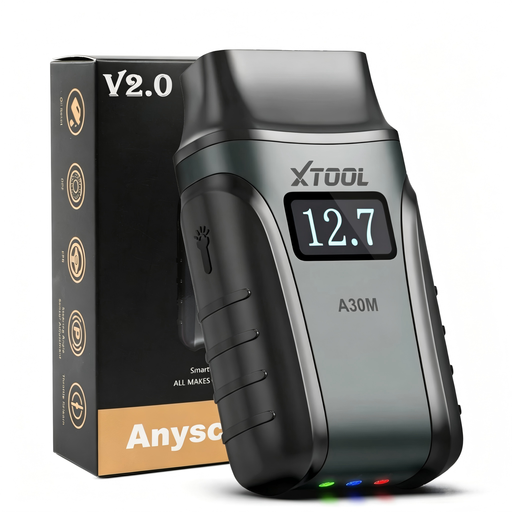
Why it stands out?: The XTOOL A30M is a dongle that connects wirelessly to your smartphone or tablet (Android and iOS). It combines the simplicity of a mobile app with powerful features, such as full-system diagnostics and the renowned bi-directional control. Its real advantage lies in its economic model?: updates are free for life, making it a particularly future-proof investment.
Highlights?:
Who is it for?? Ideal for the DIY mechanic who wants to go beyond simple code reading. It allows you to perform routine maintenance and advanced diagnostics on the family's cars yourself.

Why it stands out?: The VDIAGTOOL VD10 is a fault code reader that gets straight to the point?: simple, rugged, and effective. No app, no battery, no fuss. You plug it into the vehicle's OBD2 port, and it instantly lets you read engine codes, display some real-time data, and check if the car is ready for its emissions test (I/M Readiness function).
Highlights?:
Pour qui?? Perfect for the car owner looking for an affordable and ultra-simple tool to understand why their check engine light is on, and potentially avoid a costly diagnostic visit to the garage.
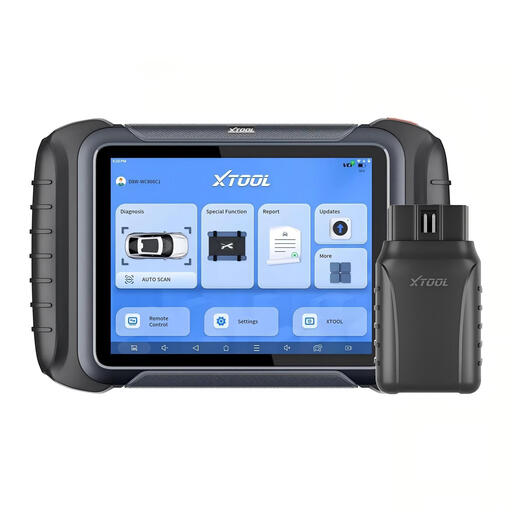
Why it stands out?: We're stepping up a level with the XTOOL D8W, a professional diagnostic scanner with workshop-level power. Housed in an 8-inch tablet, it communicates via Wi-Fi for greater stability and range. Its topology mapping feature is a real bonus?: it displays a visual diagram of the electronic modules and their status, radically simplifying fault identification. It packs high-end features like ECU coding and over 42 maintenance services.
Highlights?:
Who is it for?? For expert mechanics, semi-professionals, or small workshops looking for an ultra-powerful, fast tool capable of handling complex diagnostics on a wide range of vehicles, including the very latest models.
Our selection covers the most common needs, but the auto diagnostic market is vast. If you don't find what you're looking for here or if you need a very specific function, feel free to browse our complete category of car diagnostic tools to discover our entire catalogue.
To put it simply, a basic OBD2 reader only communicates with the engine control unit (ECU). It reads and clears fault codes related to the engine and emissions. A multi-brand car diagnostic scanner, on the other hand, goes much further?: it can communicate with most, if not all, of the vehicle's electronic modules (ABS, airbags, transmission, air conditioning, etc.) and also offers maintenance functions (resets, etc.).
Yes, absolutely. All the tools in our selection allow you to read the corresponding fault code and turn off the check engine light. Be careful, though?: clearing the code does not fix the fault! If the underlying problem is not resolved, the light will inevitably come back on. The scanner is used to make an accurate diagnosis in order to perform the correct repair.
No, 100% universal compatibility does not exist. Even though "multi-brand" tools cover thousands of models, there are always exceptions, especially with very new, very old, or rarer vehicles. That's why it is imperative to always check the manufacturer's compatibility list before buying to ensure your car is supported.