
Livraison le jour même ou le lendemain

Qualité garantie

Débloquez vos offres de bienvenue: Livraison GRATUITE | Jusqu'à -80 % | 30 jours d'essai gratuits à JoyPlus
Téléchargez l'application
By the Joybuy Team, Product Experts – August 26, 2026
Equipping yourself with a multi-brand car diagnostic scanner is an essential step for any mechanic, garage owner, or enthusiast who wants to stay in control of their vehicle maintenance. The problem? The market is a jungle of marketing promises that can quickly turn a good investment into a real headache. Between hidden fees, questionable compatibility, and limited features, making a poor choice is all too easy. This guide is here to cut through the noise and help you choose the tool that truly fits your needs.
Navigating the myriad of diagnostic tools is no easy task. Here are the three most common traps that prove costly for uninformed buyers.
To make an informed decision, focus on these three technical aspects. They are the true measure of your investment's performance and long-term value.
This is arguably the most critical financial factor.
These communication protocols are no longer an option but a necessity for working on recent vehicles.
A diagnostic tool worthy of the name must go far beyond simple code reading.
Rather than searching for a non-existent "one-size-fits-all" tool, it's better to choose one that perfectly matches your use case. Here are our recommendations for three typical profiles.
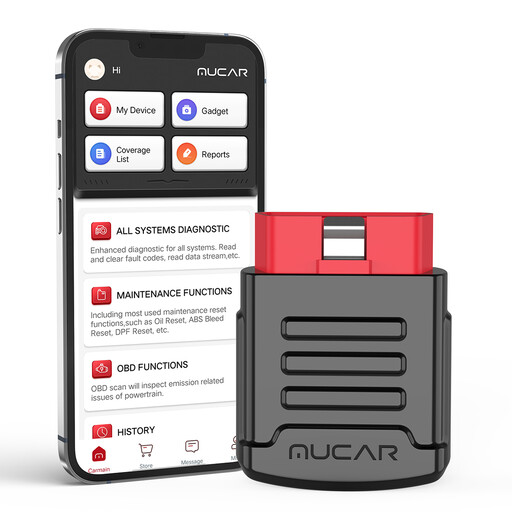
Why we recommend it: Perfect for maintaining your own vehicles. This Bluetooth dongle for Android and iOS turns your smartphone into a powerful diagnostic tool. It's compact, easy to use, and covers all the essentials at a very budget-friendly price point.
Full all-system diagnostics are free for life. Only the 15 advanced service (reset) functions become paid after one year, but the core diagnostic features remain yours forever.
Unbeatable value for money, offering lifetime all-system diagnostics for over 128 brands—a rare find in this price range.
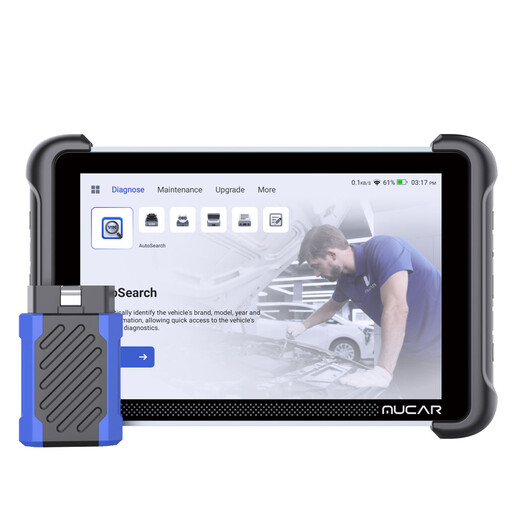
Why we recommend it: A complete tablet-based solution for pros seeking the best balance of features and cost. It packs advanced capabilities normally reserved for much more expensive tools, all in a rugged format built for the workshop.
Its main advantage is the lifetime free updates policy. Zero annual fees make it a one-time, highly profitable investment. It natively supports CAN FD and DoIP protocols.
It includes bidirectional control, ECU coding, and over 34 service functions (oil reset, EPB, SAS, etc.), delivering professional-grade functional coverage.
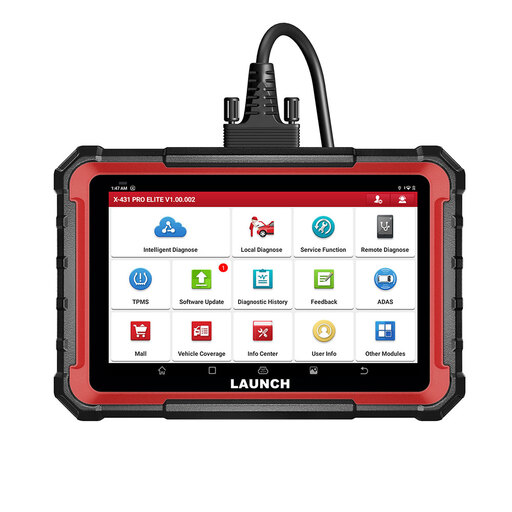
Why we recommend it: For garages and technicians aiming for OE-level (Original Equipment) diagnostic coverage and depth. This tool is a market leader, renowned for its power, speed, and ability to handle the most complex cases across a vast range of vehicles.
Transparency is key: 2 years of free updates are included. After this period, the tool remains 100% functional. The subscription is a deliberate choice for pros who need to stay on the cutting edge of compatibility.
Native support for CAN FD and DoIP protocols, guided diagnostic functions for the VAG group, and compatibility with expansion modules (key programmer, oscilloscope, etc.) make it a truly scalable diagnostic platform.
We have curated a complete range of products that meet these demanding selection criteria and current standards.
1. Is a scanner with "lifetime updates" really free forever? Yes, for the functions clearly specified by the manufacturer. This generally means that the diagnostic software and the addition of new vehicles will continue to be updated at no cost. However, always read the fine print: the "lifetime" offer may sometimes exclude certain highly advanced or new features, which might be offered as paid add-ons.
2. Do I really need CAN FD and DoIP protocols? If you plan to work on vehicles produced after 2019-2020, the answer is a resounding yes. More and more manufacturers (especially General Motors, Ford, BMW, Volvo, JLR) are requiring them in their new electronic architectures. Without this compatibility, your tool will be unable to communicate with many ECUs on these cars, quickly limiting its usefulness.
3. What's the difference between a simple code reader and a bidirectional diagnostic scanner? A basic fault code reader simply reads and clears error codes, most often only from the engine. A scanner with bidirectional control can not only read data from all ECUs but also send them commands. For example, you can force a DPF regeneration, command the windshield wipers, or test the responsiveness of a transmission solenoid. It's an essential function for making a fast and accurate diagnosis.