
Livraison le jour même ou le lendemain

Qualité garantie

Débloquez vos offres de bienvenue: Livraison GRATUITE | Jusqu'à -80 % | 30 jours d'essai gratuits à JoyPlus
Téléchargez l'application
Electronics have taken over our cars, bringing with them a host of complex failures. Today, diagnosing a problem without the right tool is next to impossible. For professional mechanics and savvy enthusiasts alike, the multi-brand car diagnostic scanner is no longer a luxury but an essential piece of equipment for identifying the root of a problem, performing targeted repairs, and carrying out advanced maintenance.
But with an overwhelming number of options on the market, how do you find the right one? This guide breaks down the key features and presents a selection of tools that truly make a difference, whether you're running a workshop or just getting your hands dirty on your own vehicles.
Before you take the plunge, several technical criteria should be weighed to ensure your investment is effective and relevant for the long term.
Where a simple OBD2 reader is limited to reading and clearing engine-related fault codes, a professional auto scanner must offer all-system diagnostics: engine, transmission, ABS, airbags (SRS), air conditioning, and much more.
Also, look closely at the list of service functions (or "reset functions"). The most common and essential ones are:
Bidirectional control is a game-changing feature. It allows you to send commands directly to a component (e.g., activate a fan, control an EGR valve) to test its real-time response without having to dismantle it. An invaluable time and accuracy saver.
The automotive world is evolving at breakneck speed. The latest vehicles (generally post-2020) use new, faster, and more secure communication protocols.
Choosing a tool with native CAN FD and DoIP compatibility ensures you can work on the most modern cars without relying on expensive adapters or risky workarounds.
The update business model is a point not to be overlooked. Some manufacturers offer free lifetime updates, a huge advantage for keeping your budget under control in the long run. Others operate on an annual subscription basis, which often means cutting-edge features and more responsive technical support. It's up to you to weigh the pros and cons based on your needs and frequency of use.
We have selected three models that cater to distinct needs and budgets, from the expert enthusiast to the professional garage.
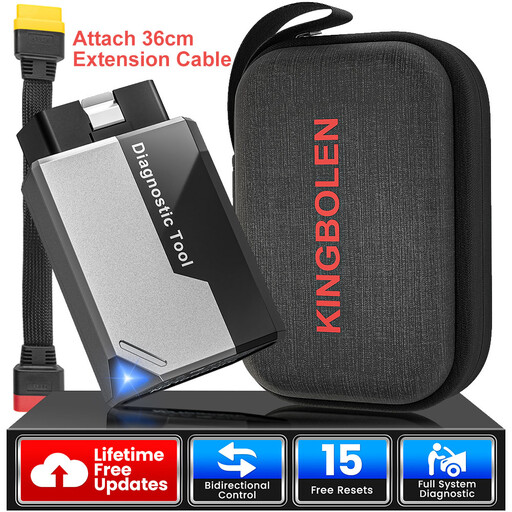
What sets it apart
The concept behind the KINGBOLEN Ediag Elite? An ultra-compact Bluetooth dongle that transforms your smartphone (Android or iOS) into a powerful OBD2 diagnostic tool. Its masterstroke lies in its business model: software updates for all brands and its 15 service functions are free for life.
Advantages
Who is it for? For savvy mechanics (the famous DIYers) who want more than a simple code reader, or for pros looking for a secondary, quick, and mobile diagnostic tool.
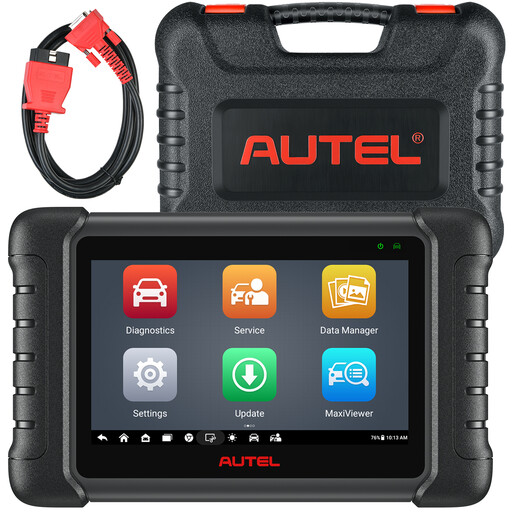
What sets it apart
A benchmark in its class, the Autel MX808S is a 7-inch diagnostic tablet offering a complete and fluid experience. Running on Android 11, it packs an arsenal of professional features, including advanced bidirectional control and over 38 service functions. A formidable and versatile tool for workshops.
Advantages
Who is it for? The tool of choice for independent mechanics and small to medium-sized garages looking for a reliable, fast primary device that covers a very wide range of vehicles.
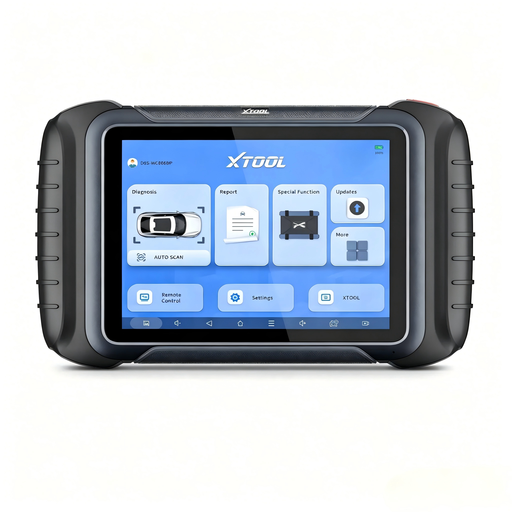
What sets it apart
The XTOOL D8S plays in the big leagues. This professional auto scanner is packed with high-end features often reserved for much more expensive equipment. Its flagship function? Topology mapping, which visually displays the health status of all vehicle modules and their interconnections. Ideal for pinpointing a network fault at a glance.
Advantages
Who is it for? For workshops and expert technicians dealing with complex failures. A powerful, fast tool with dealership-level functions to get straight to the point.
Every vehicle and every fault is unique. If the models in our selection don't check all your boxes, or if you simply want to explore other avenues, feel free to browse our complete category. You'll find a wide range of tools for all needs and budgets.
Discover Our Full Range of OBD Diagnostic Scanners
A basic OBD2 reader plugs into the port of the same name and is limited to reading generic fault codes related to the engine and emissions (the well-known "P0xxx" codes). A multi-brand car diagnostic scanner, on the other hand, communicates with all of the vehicle's ECUs (ABS, airbags, transmission, A/C...), reads manufacturer-specific codes, displays live data, and, most importantly, provides access to service and coding functions.
Yes, but not constantly. An internet connection is essential for activating the device, downloading software packs for each brand, and performing updates. However, for daily diagnostic tasks (reading codes, running tests...), most tools work perfectly offline once they are set up.
Bidirectional control (or active test) is a function that allows the scanner to not just listen to the car, but also to talk to it. In practice, the tool can send a command to an ECU to force the activation of a component: trigger the fuel pump, roll a window up and down, engage the A/C compressor clutch... This is crucial for verifying whether a fault lies with the component itself, its wiring, or the ECU, all without dismantling anything. It's a phenomenal time and accuracy saver for any professional.