
Livraison le jour même ou le lendemain

Qualité garantie

Débloquez vos offres de bienvenue: Livraison GRATUITE | Jusqu'à -80 % | 30 jours d'essai gratuits à JoyPlus
Téléchargez l'application
Buying mugs and drinking glasses seems simple… until you find the handle uncomfortable, the glass too fragile or its capacity unsuitable for your usual drinks. From your morning coffee and tea to desserts, family meals and professional settings, a few well-chosen criteria can help you avoid impractical purchases.
A trendy colour or textured finish doesn’t guarantee an enjoyable experience. A mug may look lovely, but be too small for a longer drink, difficult to stack or sensitive to sudden temperature changes. Always check its capacity, dimensions and care instructions.
A 120 ml cup is suitable for espresso, a small tasting or an individual dessert. It won’t replace a 280 ml ceramic mug for a milky coffee or hot chocolate. Similarly, a 250 ml glass is practical for everyday use, but may not be right if you usually pour yourself a large drink.
Check the product description for the words ‘dishwasher-safe’. Some items can go in the dishwasher, but hand-washing may be recommended to protect the glaze, textured exterior or colour. Avoid sudden temperature changes too, especially when moving an item from the freezer to the oven or microwave.
Ceramic mugs and porcelain cups generally retain heat well and are suitable for hot drinks. A glazed or enamelled interior makes cleaning easier. For a Japanese tea cup, a textured exterior can improve grip, while a smooth interior makes it easier to appreciate the colour of your tea and helps limit residue.
Clear glass makes it easy to see how much is left and suits many tableware styles. However, it’s more sensitive to knocks and sudden temperature changes. Don’t use a glass designed for water, juice or wine with a hot drink unless the product description says it’s suitable.
Here are a few useful guidelines:
These capacities are a guide and should be considered alongside your usual habits. If you mainly drink long coffee, a larger coffee cup will be more comfortable than a model designed for espresso.
Before you buy, check the guidance on use in the microwave, dishwasher, oven and freezer. Instructions for one model won’t necessarily apply to an entire collection.
Check ceramic and glass items regularly for chips and cracks. Set aside any damaged pieces. Use a soft sponge and avoid abrasive products or accessories if the product description recommends protecting the glaze or clarity of the glass.
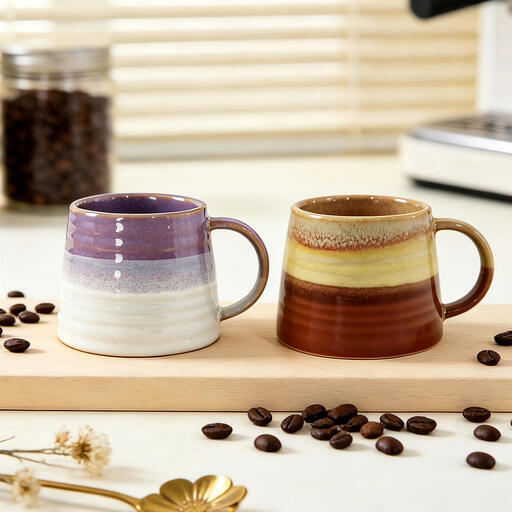
Why this is a good choice for you: With a capacity of around 282 ml, this mug is ideal for coffee, hot chocolate and everyday drinks, at home or at work.
Its capacity is clearly stated, and the integrated handle provides a secure grip. The product description also confirms that it’s suitable for the microwave and dishwasher.
High-fired ceramic, gradient glaze, ergonomic handle and dishwasher-safe for easy care.
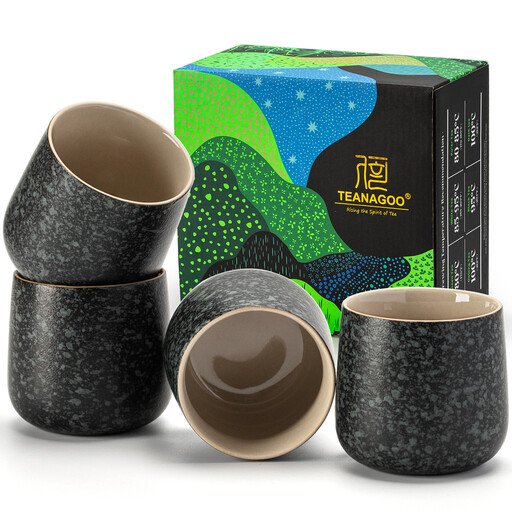
Why this is a good choice for you: This set of four cups creates a coordinated tea, coffee or drinks service for your table.
The 205 ml capacity is clearly stated, along with the smooth interior and textured exterior. The care instructions recommend handling the cups gently to preserve their appearance.
Set of four, textured two-tone finish, flat base and stated compatibility with the microwave, dishwasher, oven and freezer.
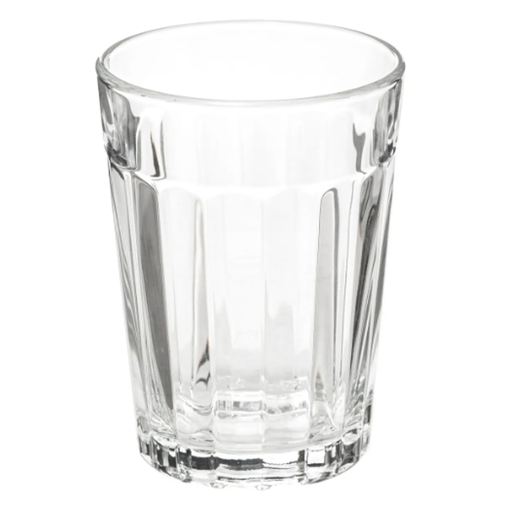
Why this is a good choice for you: This compact water glass is ideal for everyday meals, cafés, restaurants and reception areas looking for an easy-to-handle size.
Its 25 cl capacity is clearly stated, and its dimensions make it easy to store. The product description says it’s suitable for commercial premises open to the public.
Clear 250 ml glass, compact dimensions and described as European-made.
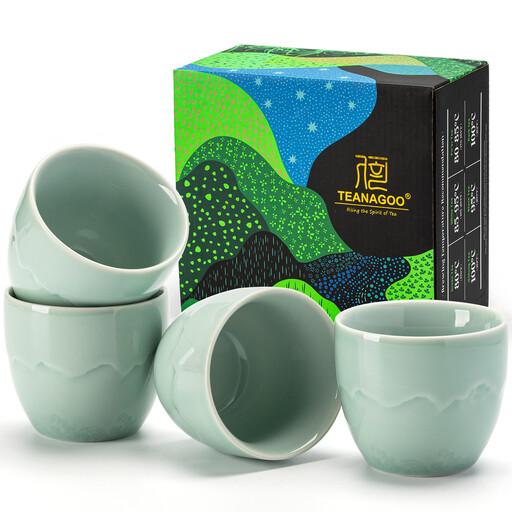
Why this is a good choice for you: The handle-free design and 160 ml capacity make these cups suitable for tea tastings, Asian-inspired tea services and smaller drinks.
The capacity, handle-free design and textured exterior are all stated in the product description, so you can check whether they suit your serving ritual.
Set of four, celadon-blue glaze, smooth interior and stated compatibility with the microwave, dishwasher, oven and freezer.
We’ve put together a comprehensive selection, updated in real time, of products that meet these exacting selection criteria and European safety standards.
A 27 cl glass verrine is ideal for appetisers, tapas and individual desserts. For a sociable table, a set of wide-based wine glasses can also be used for water, juice or iced tea, as long as you follow the stated usage guidelines. Professionals should also check the number of pieces, storage options and washing recommendations before building up their stock.
For espresso, allow for around 60 to 120 ml. A 160 to 205 ml cup is suitable for a short coffee, tea or a small cappuccino. For a milky coffee or hot chocolate, a capacity of around 280 ml gives you more room.
Dishwasher compatibility makes care easier, but it doesn’t eliminate the risk of knocks or wear. Follow the recommended programme, avoid abrasive products and space items out to stop them knocking against each other. If the finish is textured or coloured, hand-washing can help preserve its appearance for longer.
Avoid sudden temperature changes, knocks against the sink and using an item that’s already chipped. Don’t put a glass in the microwave unless it’s designed for hot drinks, and don’t pour boiling liquid into a mug straight from the fridge.