
Livraison le jour même ou le lendemain

Qualité garantie

Débloquez vos offres de bienvenue: Livraison GRATUITE | Jusqu'à -80 % | 30 jours d'essai gratuits à JoyPlus
Téléchargez l'application
Buying mugs, cups and glasses seems straightforward… until the day a lid leaks coffee into your bag, a cup becomes too hot to hold, or a set of glasses doesn’t fit in the dishwasher. The expectations are different at home, in the office, on the go, or in a professional setting.
Before you focus on colours and deals, take a moment to avoid three common mistakes.
A 350 ml mug isn’t necessarily suitable for every drink. This size can work well for a large coffee, tea or hot chocolate, but it’s far too big for an espresso. Conversely, a 120 ml cup is fine for a small serving, but quickly becomes frustrating for a drink you want to sip over a longer period.
Measure your usual container and also check its outer dimensions. A tall or particularly wide cup may not fit in your car’s cup holder or on a narrow shelf.
A travel mug can reduce spills without being completely leak-proof in every position. The quality of the closure, the condition of the silicone seal and the lid’s locking mechanism all play a key role. Fizzy drinks, filling to the brim, or very hot liquid also increase the risk of leaks and splashes.
For an on-the-go model, choose one with a clearly described closure and check the manufacturer’s recommendations before slipping it into a bag.
In daily use, a container that’s easy to clean will always be more practical than one you have to take apart completely. Seals, straws and lids must be rinseable properly to prevent residue build-up and unpleasant odours.
Glass and ceramic cope well with everyday use, but can crack after a knock. Stainless steel generally withstands drops better, though it’s not immune to dents.
Here are some useful guidelines:
A mug with a handle offers a stable grip for hot drinks. For a travel mug, check above all that it fits your car’s cup holder and has a comfortable gripping area.
A ceramic cup keeps a classic look and works well both at home and in the office. Only put it in the dishwasher or microwave if the product page explicitly says so. Printed decorations can sometimes be damaged by abrasive products.
Clear glass lets you see the drink immediately. A double-wall glass creates an insulating layer between the two walls and can reduce the heat felt on the outside. Borosilicate glass withstands temperature changes better than standard glass, but sudden thermal shocks should still be avoided.
Stainless steel is particularly well suited to on-the-go containers. For a stainless steel children’s bottle, check the recommended age, the type of spout, whether it has a handle, and any supervision instructions. For children from 18 months, the product page remains the reference, especially for hot drinks and cleaning.
Before ordering, check:
In a café, hotel or restaurant, durability, consistent sizing, stackability and availability of replacements matter just as much as the tableware’s appearance.
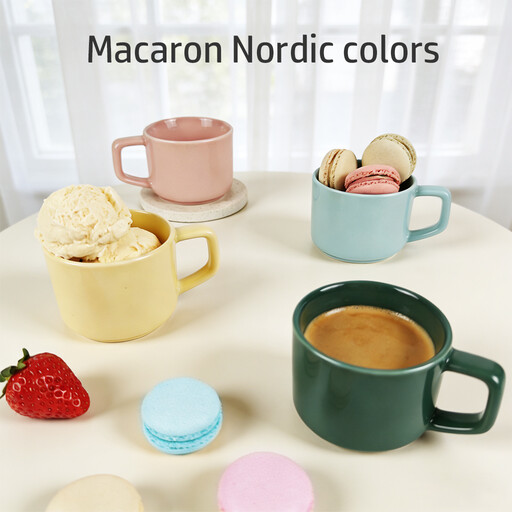
Why this suits this profile: This set of four 120ml ceramic cups lets you equip yourself at a low price with matching containers, ideal for espresso, tea, desserts or sauces.
The capacity is clearly stated and the compact size takes up little cupboard space. Hand washing is recommended to preserve the colours.
A set of four food-safe ceramic pieces, suitable for everything from espresso to dessert.
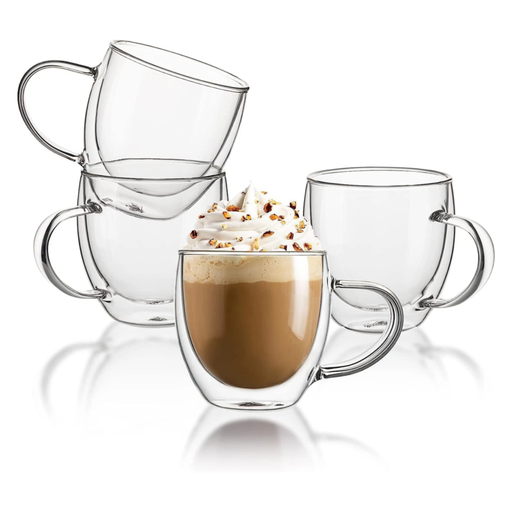
Why this suits this profile: These two 250ml clear mugs combine a comfortable handle with borosilicate double-wall glass. They showcase a cappuccino, latte or tea beautifully.
The capacity, material and double-wall design are clearly specified. However, the glass should be handled with care and protected from major thermal shocks.
Lead-free clear glass according to the product page, integrated handle, 250ml capacity and stated dishwasher compatibility.
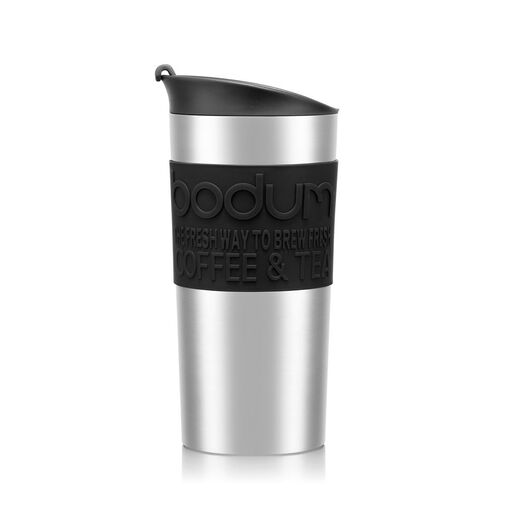
Why this suits this profile: This double-wall vacuum-insulated stainless steel travel mug is ideal for commutes, office days and car journeys.
The flip-open lid and silicone seal are presented as features that help reduce leaks. However, you must close it properly, avoid filling it to the brim, and check the seal regularly.
350ml capacity, double-wall vacuum-insulated stainless steel, and a design that fits standard cup holders.
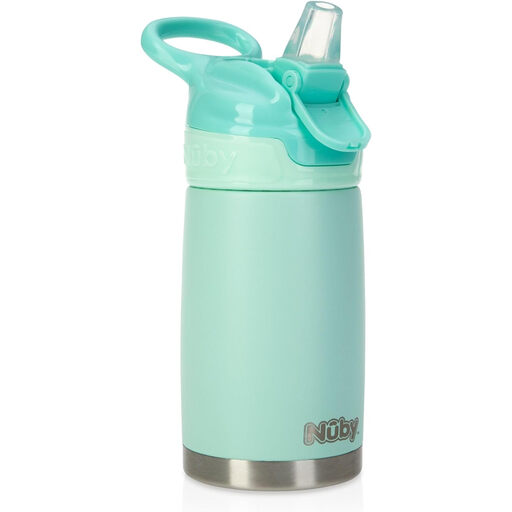
Why this suits this profile: This stainless steel children’s cup is recommended from 18 months. It features an integrated handle and a soft silicone spout.
The Flip-It closure is described as helping to reduce drips when the hygienic lid is flipped down. The child should always use the cup under adult supervision and nearby.
Stainless steel, integrated handle, soft spout and recommended use from 18 months according to the product page.
We’ve selected a complete and up-to-date range of products that meet these selection criteria as well as European safety requirements.
For an espresso, a cup of 80 to 150 ml is usually enough. For a long coffee, tea or cappuccino, go for 250 to 350 ml. If you add milk or ice cubes, leave enough room to avoid spills.
As a general rule, a stainless steel insulated cup should never be placed in the microwave. Plastic or glass models should also be checked on a case-by-case basis. Always consult the product page and care symbols before using it.
There’s no universal lifespan. Replace a container as soon as it shows a crack, chip, deformation, persistent leak or damaged seal. For children’s models, follow the manufacturer’s instructions and stop using them immediately at the first sign of wear or damage.