
Livraison le jour même ou le lendemain

Qualité garantie

Débloquez vos offres de bienvenue: Livraison GRATUITE | Jusqu'à -80 % | 30 jours d'essai gratuits à JoyPlus
Téléchargez l'application
A mug that is too large may go cold before your break is over, an elegant cup may turn out to be fragile, and a lid sold as ‘leak-proof’ may not withstand being carried in a bag. So, when replacing your tableware for hot and cold drinks, it is better to look beyond colour and marketing claims.
Here are the three most common pitfalls:
The capacity should match your habits:
A coffee cup set is practical for equipping a household or entertaining guests. For daily journeys, a thermal mug will generally be more suitable. Also remember to check the external dimensions if the container needs to fit in a car’s cup holder.
Ceramic mugs offer a traditional feel and come in a wide variety of finishes. They are perfectly suited to use at home, but their weight and fragility make them less practical to carry around.
Coffee glasses made from borosilicate glass allow you to enjoy the different layers of a latte or the colour of a tea. A double wall creates a separation between the drink and the outer surface. This can reduce condensation and make the glass more comfortable to hold. Glass is still breakable, however, and should be checked before every use.
Stainless steel is particularly well suited to transportation. In a double-walled vacuum model, such as some Bodum mugs, this design helps keep drinks at the right temperature for longer. However, these products must not be used in a microwave.
When choosing an insulated travel mug, pay particular attention to the following:
A splash-proof lid does not remove the need to close it properly before placing the mug in a bag. With a very hot drink, always check the temperature before taking the first sip to avoid burns.
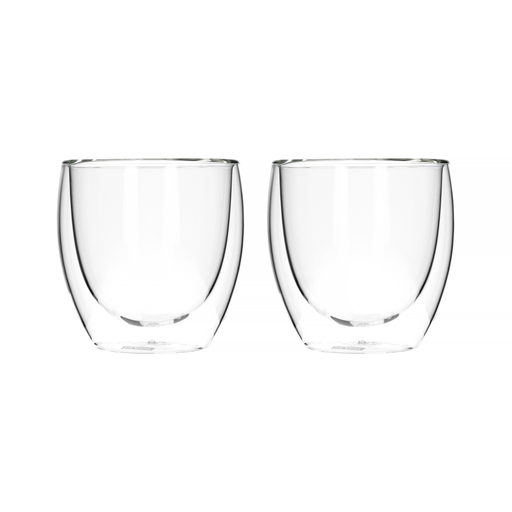
Why this choice suits this profile : This set of two 250 ml glasses is suitable for everyday use at home or in the office, for coffee, tea, milk or a cold drink.
The capacity is clearly stated, while the twin-pack means you do not have to buy several pieces separately. However, the double wall should not be exposed to sudden thermal shock.
Borosilicate glass, double wall, suitable for hot or cold drinks, and care stated as dishwasher-compatible.
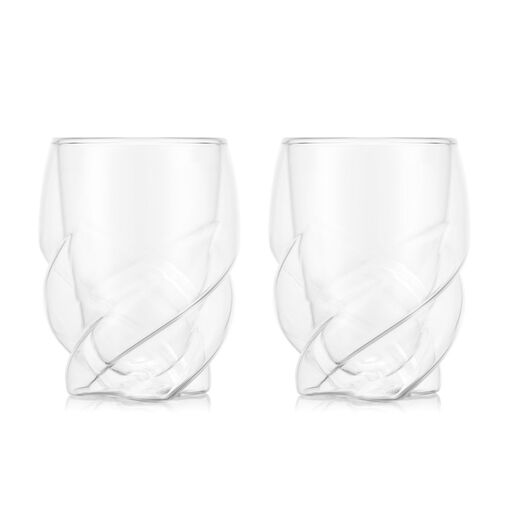
Why this choice suits this profile : With a capacity of 270 ml and mouth-blown glass, these glasses are aimed at those who care about how their coffee, tea or cold drink is presented.
The product details specify the material, capacity, double wall and dishwasher compatibility. The glass must nevertheless be handled with care and protected from extreme temperature changes.
Mouth-blown borosilicate glass, 270 ml per glass, double wall and advertised absence of external condensation.
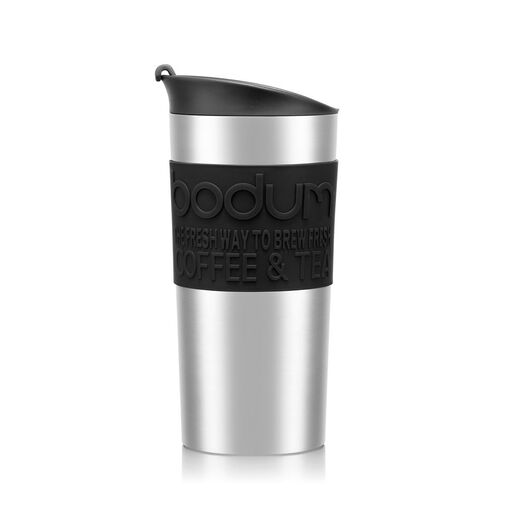
Why this choice suits this profile : This 350 ml insulated travel mug is ideal for commuting, car journeys and breaks at the office.
The product details distinguish the vacuum construction in stainless steel from the plastic lid with a silicone seal. This is useful information when monitoring parts that may wear over time.
350 ml capacity, double-walled vacuum-insulated stainless steel, folding flap and a format designed for transport.
We have brought together a complete, real-time updated selection of products that meet these demanding criteria and European safety standards.
A mug’s lifespan depends as much on its design as on how it is used every day. To keep your mugs and coffee cups in good condition:
For espresso, De’Longhi 90 ml thermal glasses are ideal for those looking for a small format sold as a pair. For cappuccino, the 270 ml De’Longhi model is better suited to a milky drink. TEANAGOO Japanese tea cups in 160 or 205 ml offer an intermediate capacity, without a handle, with a textured outer surface.
A capacity of 250 to 350 ml is generally suitable for filter coffee, tea, cappuccino or latte. With an espresso machine, a size of 80 to 100 ml avoids serving a small drink in a cup that is far too large.
No, if it contains stainless steel or a vacuum-insulated structure. The microwave may cause electrical arcing and damage the container. Always check the manufacturer’s instructions before reheating your drink.
Depending on the product specifications, borosilicate glass is designed to withstand certain temperature changes better than ordinary glass. It is still breakable, however, so knocks, drops and sudden thermal changes should be avoided.