
Livraison le jour même ou le lendemain

Qualité garantie

Débloquez vos offres de bienvenue: Livraison GRATUITE | Jusqu'à -80 % | 30 jours d'essai gratuits à JoyPlus
Téléchargez l'application
A mug that is too small for your morning coffee, a cup that becomes scorching hot after a few minutes, or a travel cup that leaks inside your bag: unpleasant surprises are all too common when buying mugs and coffee cups. An attractive product photo is not enough to properly assess a model’s capacity, care requirements or safety.
Whether you are looking for a ceramic cup, an insulated mug or a travel cup suited to your everyday life in France, focus on tangible features rather than marketing promises.
A 120 ml cup is suitable for an espresso or short coffee, but it will not replace a 325–415 ml mug for a long coffee, tea or hot chocolate. Conversely, a large 1.2-litre container can quickly become cumbersome at the office or in the car.
Capacity should therefore match your usual drink:
A double-wall mug or a stainless-steel vacuum-insulated model slows down cooling, but that does not necessarily mean it will never leak. The lid, silicone seal and locking mechanism are just as important as the material of the container.
Before placing a travel cup in your bag, check for:
A dishwasher-safe cup is convenient, but this label does not necessarily apply to every component. Some insulated mugs must be hand-washed to preserve their finish or seal. A decorated model may also lose its shine after repeated washing with abrasive products.
The product listing should specify whether the item is suitable for the dishwasher, oven and microwave. If in doubt, never heat a metal container and avoid sudden temperature changes with glass.
A ceramic cup offers a timeless look and works equally well at home, in the office or when serving several guests. It can, however, be relatively heavy and may break if dropped. Some models are microwave- and dishwasher-safe, but always verify this information on the product page.
A borosilicate glass cup beautifully showcases the colour and distinct layers of a latte or tea. A double-wall mug is generally more comfortable to hold than a single-wall glass when filled with a hot drink. Glass is nevertheless fragile and should not be exposed to extreme temperature changes.
A stainless-steel mug is better able to withstand the knocks of everyday use and is especially well suited to travel. It must not be used in the microwave. For hot drinks, also make sure that the lid cannot open accidentally and check the temperature before drinking.
A cup with a handle makes it easier to hold, particularly when it contains a hot drink. On a travel cup, a silicone grip band or handle can provide a more secure hold. Also remember to measure the available space in your bag, cup holder and cupboard.
A child’s bottle should be easy for small hands to grip, fitted with a comfortable spout and equipped with a simple closure. For children aged 18 months and over, adult supervision remains essential, especially with hot drinks.
Prioritise product listings that clearly state the material, capacity, usage precautions and contact details of the responsible person in the European Union. The BPA-free designation may be useful for products containing plastic components, but it does not replace reading the usage instructions.
Never use a container that is cracked, chipped or fitted with a damaged seal. Very hot liquid can cause burns, even when the outside of the mug feels only warm to the touch.
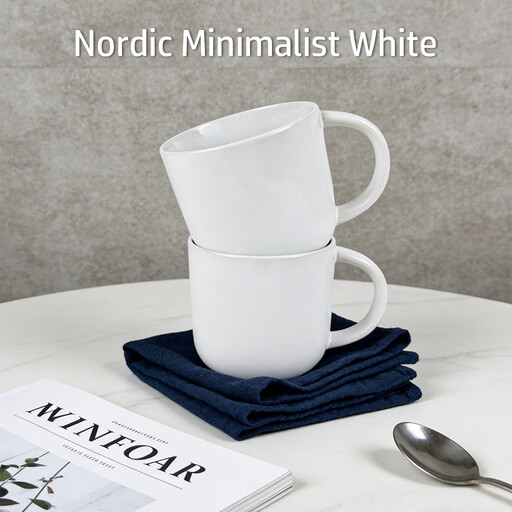
Why choose it: a practical set for equipping a kitchen, shared office or hosting several guests.
The 415 ml capacity is clearly stated, while the set eliminates the need to buy multiple mugs individually.
Lead-free ceramic according to the product listing, microwave- and dishwasher-safe.
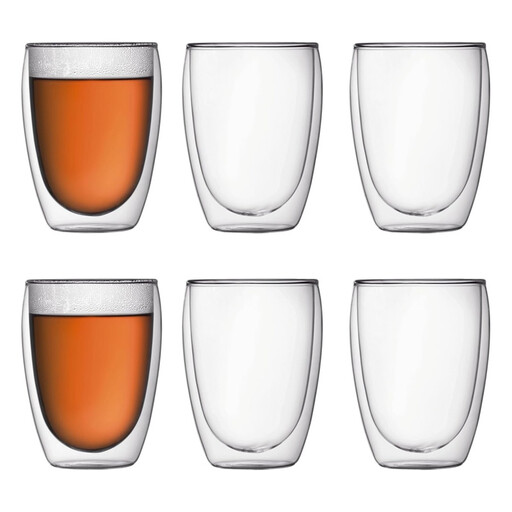
Why choose it: the transparent design showcases lattes, iced coffees, teas and desserts served at home.
The double-wall construction is paired with a clearly stated capacity rather than relying on vague insulation claims.
Borosilicate glass, mouth-blown construction according to the product listing, with dishwasher washing indicated.
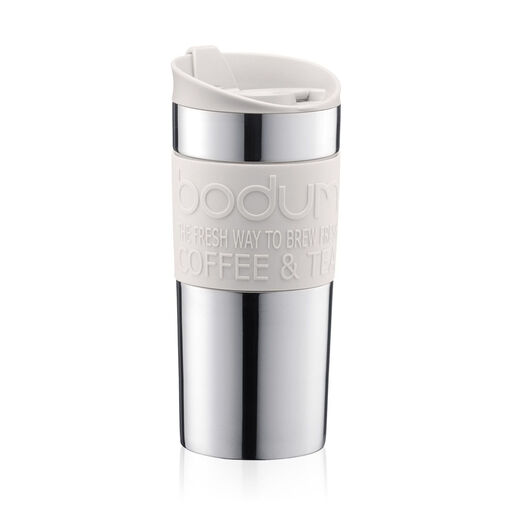
Why choose it: its compact format slips easily into commutes, public transport journeys and outdoor coffee breaks.
The flip-top lid and silicone seal are described separately; however, the mug must still be closed correctly before transport.
Double-wall stainless steel, vacuum insulation and a format advertised as compatible with standard cup holders.
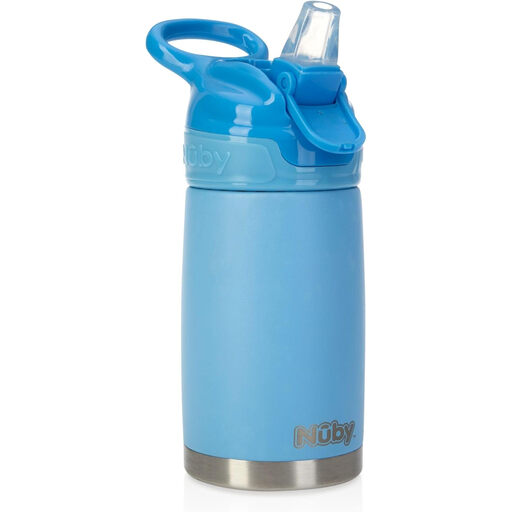
Why choose it: this child’s bottle, presented as leakproof, is designed for children aged 18 months and over and includes a practical handle for outings.
The Flip-It closure and hygienic cap are designed to minimise drips when the lid is properly closed.
Stainless steel, BPA-free designation and freshness maintained for up to 10 hours according to the product listing.
Explore a regularly updated selection of mugs, cups, travel tumblers and accessories suited to different uses and purchasing criteria.
For an espresso, 80 to 120 ml is sufficient. A 250 to 350 ml cup is better suited to filter coffee, tea or a latte. If you add a generous amount of milk or prefer larger drinks, choose a mug of 400 ml or more.
It depends on the model and its individual components. Some cups state that the body, lid and straw are dishwasher-safe. Others recommend hand-washing, particularly to preserve the finish or seal. Always consult the instructions and remove detachable parts before cleaning them.
Its lifespan depends on the condition of the steel, lid and seal. A mug remains usable as long as it has no cracks, deformation or leaks. Inspect the silicone seal regularly and replace the product if the closure no longer keeps the drink securely contained.