
Livraison le jour même ou le lendemain

Qualité garantie

Débloquez vos offres de bienvenue: Livraison GRATUITE | Jusqu'à -80 % | 30 jours d'essai gratuits à JoyPlus
Téléchargez l'application
A mug may seem simple to choose… until the day its lid leaks in your bag, its capacity turns out to be too small for your favourite drink or its design disappears after a few trips through the dishwasher. Between advertised insulation, sometimes misleading capacities and licensed designs, certain details are worth checking before you place your order.
This guide from the Joybuy Product Recommendation Officer helps you compare sizes and materials without relying on looks alone.
A 350 ml mug cannot be filled to the brim, especially when it has a lid. You need to leave a little room to prevent splashes and allow the lid to close properly. If you enjoy generous drinks, a 415 ml large coffee cup will be more comfortable than a 250 or 300 ml model.
Conversely, a 120 ml espresso cup is suitable for a small serving, but it will not replace a breakfast mug.
A travel mug with a flip-top lid can help limit leaks, but everything depends on the closure, the condition of the silicone seal and how full it is. Check for a removable seal and inspect its condition regularly.
Even a well-designed insulated mug is not intended to be carried open or filled to the brim inside a bag.
A product advertised as dishwasher-safe does not necessarily have a design that can withstand intensive cycles indefinitely. Plastic components, seals and decorative prints may need to be washed by hand.
Before buying, check in particular whether the model is dishwasher-, oven- or microwave-safe. A stainless steel container, such as some insulated mugs, must never be placed in the microwave.
A 350 ml mug will generally fit more easily in a cup holder and is suitable for a standard serving. In the office, a café or a restaurant, a set of several matching cups makes serving and storage easier.
The ceramic cup has a classic look and naturally fits in at home or in the office. However, it can crack or break if dropped. Porcelain offers a different finish, while a glass cup lets you admire the colour and different layers of a latte.
Double-walled glass reduces direct contact with a hot drink, but you should still avoid thermal shock. A well-sized handle makes a noticeable difference to comfort: choose a mug with a handle wide enough for your fingers to fit through without being squeezed.
For use on the go, a double wall is a good starting point. Vacuum insulation can also slow down cooling or warming, but it does not eliminate the risk of burns entirely. Always check the temperature before drinking.
A lid with a simple opening is practical when travelling, provided you check its locking mechanism. Carbonated drinks are generally not recommended in closed containers: the pressure can compromise the seal.
For any item intended to come into contact with food, consult the manufacturer’s information and care instructions. In France and the European Union, compliance with food-contact requirements must be documented by those responsible for placing the product on the market. The CE marking, on the other hand, is not a general indicator applicable to every cup and mug.
Do not use a container that is cracked, chipped or fitted with a damaged seal. You should also avoid pouring a very hot drink directly into a cold cup, particularly when it is made of glass or ceramic.
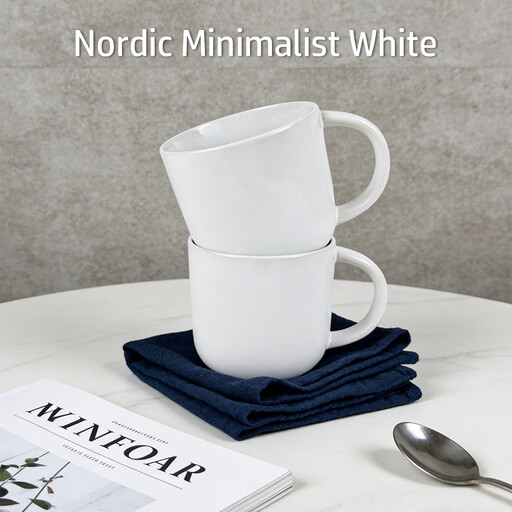
Why this choice suits this profile: This set of four white ceramic cups is ideal for a household, office or small catering space looking to create a coordinated service without buying each piece separately. With a 415 ml capacity, it comfortably holds generous drinks.
The multipack format prevents you from underestimating your everyday needs. The listing states that it is microwave- and dishwasher-safe; confirm this with the care instructions provided.
Set of four, 415 ml capacity, easy-to-match white finish and suitable for use at home, in the office, at a café or in a restaurant.
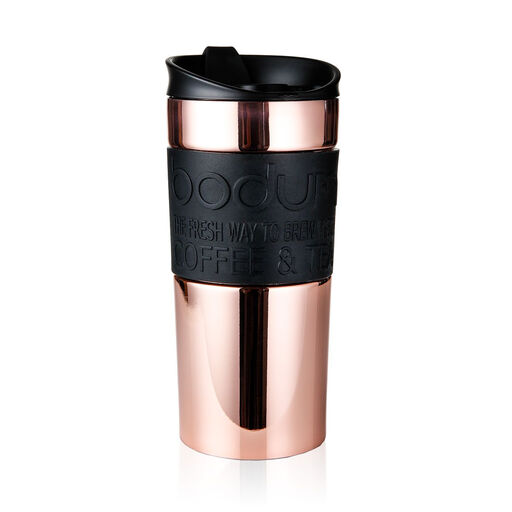
Why this choice suits this profile: With its double-walled stainless steel construction and copper-coloured finish, this travel mug is aimed at users looking for a stylish model for commuting, travelling or days out.
Its 350 ml capacity suits a standard serving, while the flip-top lid and silicone seal help reduce the risk of leaks when the closure is properly secured.
Double-walled stainless steel, vacuum insulation, 350 ml capacity and flip-top lid. The listing recommends hand washing.
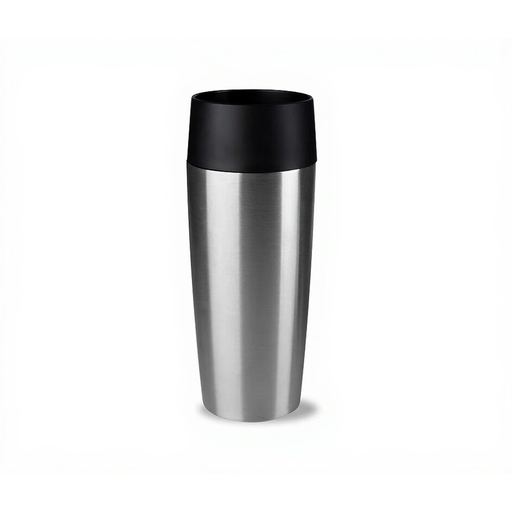
Why this choice suits this profile: This 360 ml insulated mug is designed for regular travel. Its opening can be operated with one hand, while the removable lid makes cleaning easier.
The two-part lid allows you to clean areas that could otherwise trap residue more thoroughly. The listing states that it is dishwasher-safe.
Double-walled stainless steel, 360 ml capacity, removable lid and dishwasher care indicated on the product listing.
We have brought together a complete, real-time updated selection of products that meet these demanding criteria and European safety regulations.
For a gift mug, the design can sometimes matter just as much as the capacity. A 325 ml One Piece model is sure to delight manga fans, while a 415 ml Marvel Avengers mug is better suited to fans who enjoy large drinks at breakfast. However, remember to check the washing instructions to help preserve the print.
A colourful cup sold in a set, a double-walled glass model or a cup with a handle can also make a gift that is both practical and enjoyable. The right choice mainly depends on the recipient’s habits: daily journeys, coffee at home, days in the office or simply the pleasure of collecting.
Between 300 and 415 ml, you have a versatile size for filter coffee, tea, hot chocolate and milk-based drinks. For espresso, 80 to 120 ml is generally enough.
There is no universal lifespan. Replace your mug as soon as it develops a crack, a sharp chip, a persistent leak or a damaged seal. A steel model may last longer than a ceramic cup exposed to knocks, but its longevity mainly depends on how it is used and maintained.
It can make it easier to take coffee prepared at home with you and reduce the purchase of disposable containers. However, the saving depends on the cost of the ingredients, how often you use it and the time spent cleaning and maintaining it. The most important thing is to choose a capacity that suits how much you drink, so you do not prepare more than you need.