Fans of fruity breakfasts
You want to enjoy the taste of dried fruit in your bowl, while distinguishing between no added sugar and the total amount of sugar.


To enjoy a fruity taste without choosing a recipe with added sugar, start by looking for the words ‘no added sugar’, then compare the ‘of which sugars’ figure per 100 g: dried fruit also contains naturally occurring sugars. If protein or fibre matters more to you, compare those figures too, and don’t overlook the ingredients and allergens in each recipe.
You want to enjoy the taste of dried fruit in your bowl, while distinguishing between no added sugar and the total amount of sugar.
You’re comparing several mueslis for the same breakfast and want to look at protein and fibre as well as the sugar figures on the label.
You need to read the ingredients list and allergen information for the product you choose, particularly for cereals containing gluten, soya, nuts, sesame or milk.
For a sweet breakfast, ‘no added sugar’ is a good starting point. The figures per 100 g then let you compare recipes on a like-for-like basis, before choosing the ingredients that suit you.
| Criterion | What to check | Who is it for? |
|---|---|---|
| Total sugars | Compare the ‘of which sugars’ figure per 100 g across the mueslis you’re considering. | If I want to limit the sugar in my bowl, the words ‘no added sugar’ alone don’t answer my question. Around 36% of consumers put comparing total sugars first. |
| Fruity taste | Check which fruits are included and their proportion, where stated, then look at the sugar content. | I want the taste of dried fruit in my breakfast, even if I choose a recipe with no added sugar. This fruity flavour is the main priority for around 29% of consumers. |
| Protein and fibre | Check the protein and fibre figures per 100 g, as well as the ingredients in the recipe. | When choosing between two recipes, I’m more interested in their protein or fibre content than just the sugar claim. Around 21% of consumers make this their top criterion. |
| Ingredients to avoid | Check the ingredients list, declared allergens and any ‘may contain’ warnings for the exact product. | If I need to avoid an ingredient, whether it’s present matters more than the taste or nutritional values. Recipe suitability comes first for around 14% of consumers. |
The National Consumer Institute points out that the declared sugar content includes naturally occurring sugars. The product information for Bjorg’s 750 g muesli with no added sugar lists 14 g of sugars per 100 g.
Compare the ‘of which sugars’ figure per 100 g and take into account the portion you serve.
A sugar claim doesn’t tell you whether the product contains cereals with gluten, soya, nuts or other ingredients you need to avoid.
Read the ingredients list and allergen information on the pack of the specific variant you buy.
Auchan’s product information for Happy Bio red berry protein muesli lists 24 g of protein per 100 g, but the recipe also contains 49% soya flakes, as well as wheat and oats.
Compare the other nutritional values and check that the ingredients suit your needs.
A figure per portion depends on the portion size used, so it doesn’t provide a like-for-like basis for comparing two packs.
Start with the nutritional information per 100 g, then work out the figures for the amount you plan to serve.
Several no-added-sugar organic mueslis combine cereals and fruit; their ingredients and nutritional values vary by recipe.
A classic muesli and a red berry protein recipe give you two no-added-sugar options to compare.
The range includes a 375 g pack of organic fruit muesli with no added sugar.
The 500 g organic fruit and nut muesli combines ingredients including wholemeal wheat, wholegrain oats, raisins, hazelnuts and coconut.
Cruesli Apple, Pecan & Cinnamon is a crunchy recipe with no added sugar.
This selection features a fruit muesli with no added sugar, for a breakfast where fruity flavour matters. Compare its sugar content and ingredients with your other options before choosing.
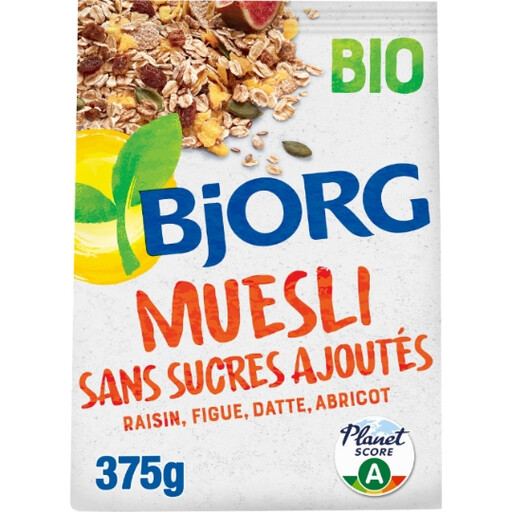 Image unavailable
This recipe with no added sugar is a good choice if you’re after a fruity breakfast, but the fruit doesn’t make it sugar-free. The product information lists 23% fruit and, per 100 g, 14 g of sugars, 10 g of fibre and 11 g of protein. It contains gluten and may contain traces of milk, nuts, sesame and soya. Check the label if you need to avoid any of these ingredients.
No. As the National Consumer Institute explains, the ‘of which sugars’ figure includes naturally occurring sugars as well as added sugars. So a dried-fruit muesli with no added sugar can still list sugars in its nutritional information.
First compare the ‘of which sugars’ figure per 100 g, then compare fibre, protein and fat on the same basis. Next, check the ingredients and the amount you plan to serve. The DGCCRF points out that the nutritional declarations on prepacked foods include figures for sugars, fat and protein.
It depends on the exact recipe: the products featured may contain cereals with gluten, soya or nuts, and some warn that they may contain traces of milk or sesame. Check the ingredients list and allergen information on the pack you choose, even if you’re already familiar with another recipe from the same brand.
Follow the instructions on the pack. Auchan’s product information for a Jardin Bio étic muesli advises sealing the bag securely and storing it away from moisture and heat. Check the instructions for the specific product you buy.