
Livraison le jour même ou le lendemain

Qualité garantie

Débloquez vos offres de bienvenue: Livraison GRATUITE | Jusqu'à -80 % | 30 jours d'essai gratuits à JoyPlus
Téléchargez l'application
Hanging a picture, putting up a decorative panel or making a step safer without drilling may seem straightforward. But choose the wrong mounting adhesive and it could peel away, leave marks or damage the surface. Tenants, DIY enthusiasts and interior design professionals all need to know the difference between double-sided tape, mounting adhesive, adhesive putty and repositionable wall adhesive.
Before you place your order, watch out for these three common pitfalls.
Check the stated load capacity carefully. Make sure you know whether it applies to one pad, one strip, a length of tape or the whole roll. Weight distribution, vibration and temperature can also affect how well it holds.
For a lightweight item, adhesive pads or mounting putty may be enough. For a heavier picture frame, hanging strips are a better option when the manufacturer clearly states a load capacity, for example 5.4 kg or 7.2 kg, depending on the Command format. For a more demanding job, mounting adhesive or heavy-duty tape may be suitable, provided you follow the curing time and check the surface limitations.
A wall adhesive designed for a smooth surface won’t work in the same way on a porous or textured wall. Before applying it, check:
For glass and glazed surfaces, also browse our selection of glass adhesives. Freshly painted, damp or crumbly surfaces generally need extra time before you apply any adhesive.
A no-nails, no-screws fixing isn’t always easy to remove. Strips designed to come off often need to be stretched slowly in a specific direction. Reusable nano gel tape can be washed and air-dried, but whether it can be reused depends on how clean the gel is and the condition of the surfaces.
For outdoor use, your chosen solution also needs to withstand moisture, temperature changes and friction. Anti-slip tape, for example, serves a very different purpose from mounting adhesive: it improves grip for shoes or hands rather than fixing two objects together.
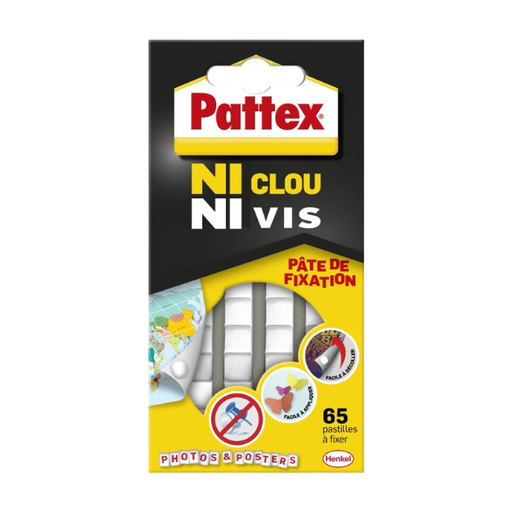
Why it suits this profile : These pre-cut adhesive pads are ideal for posters, photos, cards and small indoor decorations that need a temporary fix.
Its repositionable formula means you won’t need to use permanent tape for a lightweight fixing that may need to change.
65 pre-cut squares, a mouldable format and residue-free removal, according to the product details. Best for lightweight items.
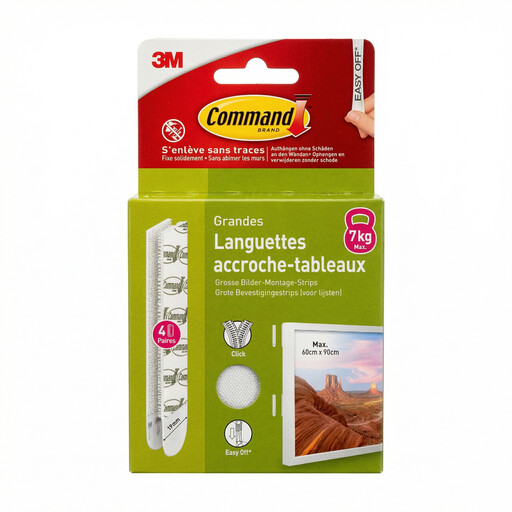
Why it suits this profile : These strips make it easy to hang large picture frames neatly at home, in an office or in a gallery.
The stated 7.2 kg capacity lets you match the size you choose to the actual weight of your frame, rather than relying on a vague claim.
The frame sits flush against the wall and the strips come off by stretching. Don’t use on wallpaper, vinyl, rough surfaces or freshly painted walls.
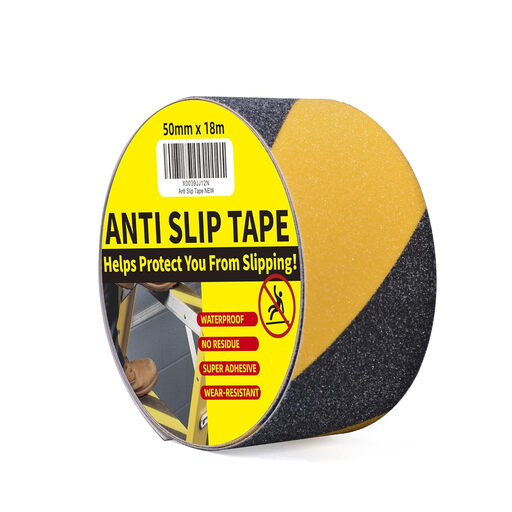
Why it suits this profile : This anti-slip tape is suitable for stairs, ramps, ladders and walkways, both indoors and out.
It serves a completely different purpose from mounting adhesive: it creates a visible, textured surface but isn’t designed to hang an object.
An 18 m roll, 50 mm wide, with a stated 80-grit texture, a black and yellow pattern and water resistance according to the manufacturer.
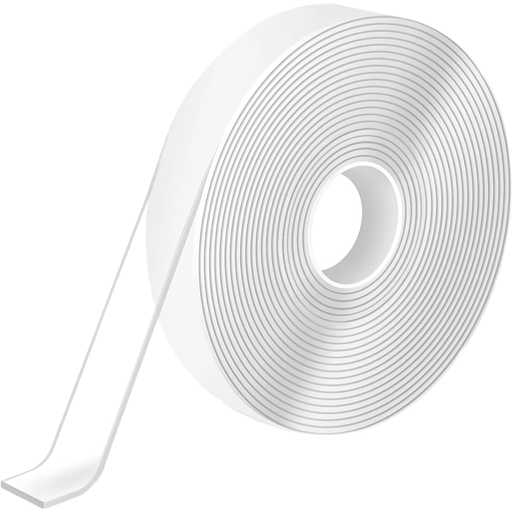
Why it suits this profile : This reusable nano gel tape is handy for small decorating projects, cable management or temporarily securing accessories.
Its transparent, washable design is ideal for setups you change often. Always test the surface before using it to hold anything heavy.
A 3 m roll, 1.3 cm wide, washable and reusable according to the product details. Avoid using it on fragile, dusty or freshly painted walls.
We’ve put together a complete, up-to-date selection of products that meet these strict criteria and European safety requirements.
For panels, decorative panel adhesive is generally applied in dots or beads using a suitable gun. For thick wallpaper or vinyl, choose a wallpaper adhesive formulated for that type of finish rather than universal double-sided tape.
Repositionable adhesive pads may be enough for a lightweight frame. For a heavier frame, choose hanging strips with a clearly stated load capacity. Weigh the item and check the condition of the wall before applying them.
Not always. Tape is suitable for quick, even application, while mounting adhesive is better for fixing larger areas or when you need a long-lasting hold. Compatibility with the material is still key.
Start by checking the manufacturer’s instructions. Repositionable products can generally be removed gradually, without jerking. Test on an inconspicuous area first, especially on matt paint, wallpaper or a recently refurbished surface.