
Livraison le jour même ou le lendemain

Qualité garantie

Débloquez vos offres de bienvenue: Livraison GRATUITE | Jusqu'à -80 % | 30 jours d'essai gratuits à JoyPlus
Téléchargez l'application
Whether you're hanging a picture frame, installing a shelf, or making a delicate repair, finding the right mounting adhesive can quickly become a headache. The shelves are overflowing with promises: "extra strong," "instant," "all materials"... Yet, the wrong choice often results in failed bonds, damaged surfaces, and a healthy dose of frustration. Our mission is to help you see things more clearly. Let's break down how to outsmart marketing traps and select the perfect product for your project.
Before diving in headfirst, it's essential to know the pitfalls that lead to regrettable purchases.
To avoid making a mistake, focus on these three technical parameters before any purchase.
This is the number one criterion. Materials are generally classified into two categories:
A word of caution on plastics: polyethylene (PE), polypropylene (PP), and Teflon (PTFE) are notoriously difficult to bond and almost always require a special plastic adhesive, often accompanied by a primer or adhesion promoter.
Is your project indoors or outdoors? In a dry or humid room?
Do you need a permanent or temporary bond? Is the object to be mounted heavy?
Rather than a generic list, here are solutions designed for specific profiles and needs.
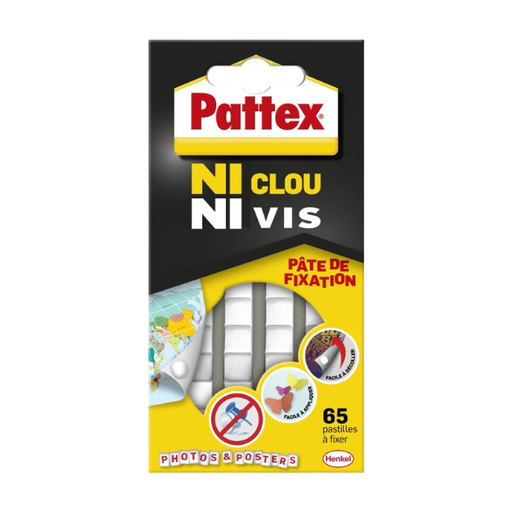
Why it's a match: Perfect for renters or decor enthusiasts who like to switch things up with the seasons. It allows you to mount posters, photos, and lightweight objects without drilling or damaging walls.
It precisely targets the need for lightweight, removable mounting. There's no need to use an overpowered adhesive that could rip off paint just for a simple poster.
Infinitely repositionable, it can be removed without leaving a trace, preserving the integrity of painted walls or wallpaper.
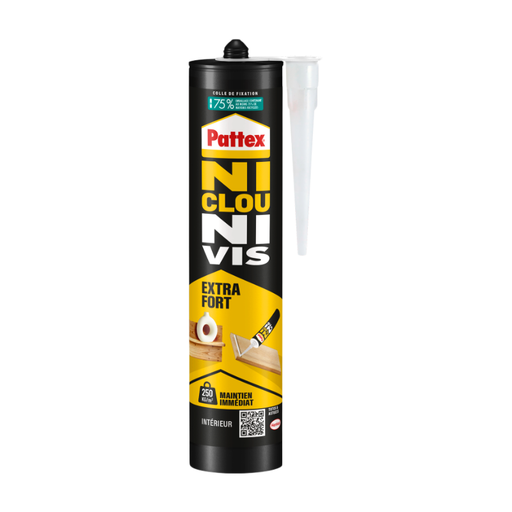
Why it's a match: This is THE solution for drill-free mounting on classic interior projects: skirting boards, battens, wall shelves, etc. It's the clean and incredibly effective alternative to a drill.
Its technical sheet is clear: one of the two surfaces must be porous. This prevents the common mistake of trying to bond two non-porous materials together, which would compromise the bond.
Its initial grab is so strong that you don't need to support heavy objects for hours. Solvent-free formula.
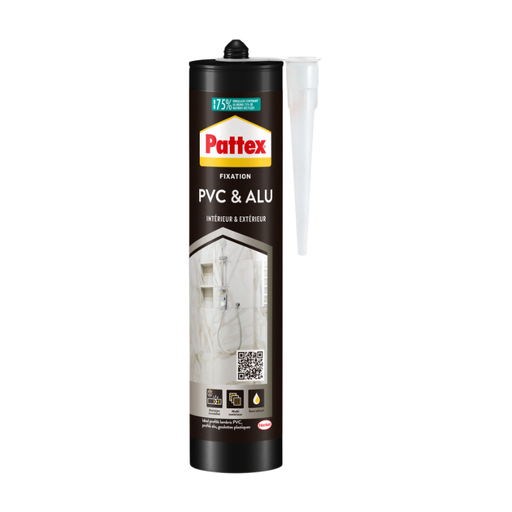
Why it's a match: Engineered for extreme bonding, both indoors and outdoors. Perfect for mounting PVC cable trunking, aluminium elements, or an adhesive backsplash in a kitchen.
Its formula resists moisture and extreme temperatures (-30°C to +90°C), preventing the premature bond failure so common with standard adhesives outdoors or near a heat source.
Its FlexTec polymer technology ensures a bond that is both flexible and durable, capable of absorbing material expansion without ever breaking. Bonus: it adheres to both porous and non-porous substrates.
Explore our complete selection of products, all rigorously chosen for their performance and compliance with current standards.
1. What adhesive should I use to mount a heavy object without drilling? For drill-free mounting of heavy objects (shelves, mirrors, etc.), a construction adhesive in a cartridge is the ideal solution. Products like the Pattex No More Nails range are designed for this. Always check the maximum load capacity of the adhesive and ensure your surfaces are compatible (often, one of the two must be porous). Thoroughly cleaning and degreasing the surfaces before application is the key to maximum adhesion.
2. How can I bond plastic effectively? Bonding plastic is a real challenge, as not all plastics are the same. For common plastics (PVC, ABS), an epoxy or a super glue for plastic works well. For difficult plastics like polyethylene (PE) and polypropylene (PP), you must use a specific plastic adhesive, such as Loctite Super Glue Plastics. It often comes with a primer (or activator) that prepares the surface to ensure adhesion.
3. Can I use a mounting adhesive in a bathroom? Absolutely, provided you choose an adhesive specifically formulated for humid environments. Look for labels like "water-resistant," "bathroom," or a polymer technology (like Flextec) that guarantees a strong hold against moisture and water splashes. For example, Pattex No More Nails Waterproof is perfectly suited for this type of use, whether for mounting shower accessories or wall panels.