
Livraison le jour même ou le lendemain

Qualité garantie

Débloquez vos offres de bienvenue: Livraison GRATUITE | Jusqu'à -80 % | 30 jours d'essai gratuits à JoyPlus
Téléchargez l'application
Choosing a new mountain bike can quickly become a headache. Between the technical jargon, the siren song of marketing, and the jungle of available models, it's easy to feel overwhelmed... and end up regretting your purchase. Our mission? To help you see things more clearly.
Let's forget the endless spec sheets. Instead, let's focus on the pitfalls to avoid and the real criteria that will make your mountain bike a successful and lasting investment.
The MTB market is full of ideas that seem good on paper but often disappoint in practice, especially on entry-level models.
To avoid falling into these traps, here are the essential technical points on which you must be uncompromising.
This is the non-negotiable point. Being able to stop on a dime and with complete confidence is fundamental.
The frame is the skeleton of your bike. Its material and geometry, coupled with the suspension, determine its handling.
The tyres are your only point of contact with the ground. Their width and tread pattern make all the difference. For all-around riding, tyres from 2.1 to 2.4 inches wide offer a good balance between efficiency and grip. For extreme conditions (sand, snow), the fat bike with its oversized tyres (4 inches and up) is a prime option, offering unmatched float and traction.
Here are a few models that cater to distinct user profiles, keeping in mind the objective selection criteria we've just discussed.
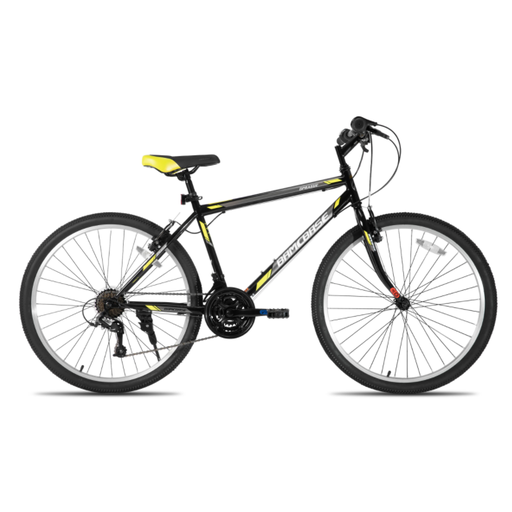
Why it stands out: This is the smart choice for anyone looking for a simple and effective MTB for weekend rides on towpaths or daily commutes, without breaking the bank.
It gets straight to the point. Its V-Brake system is simple to adjust and maintain, perfect for a beginner. No false promises: this isn't a downhill bike, but a reliable foundation to get started.
Its Hi-ten steel frame is robust and durable, capable of withstanding the rigours of regular use. The 21-speed drivetrain offers enough versatility for small hills and flat sections.

Why it stands out: Ideal for those who want to leave the tarmac for real forest trails and rough paths. It offers the right balance of lightness, comfort, and safety to progress with confidence.
It ticks the right boxes on critical points. Its dual disc brakes ensure reliable braking, even in the mud. Its front fork is there to absorb the shock of roots and rocks, not just for show.
The aluminium frame makes it lighter and more agile in tight corners and on climbs. It's a true hardtail MTB, versatile enough for a wide variety of terrains.
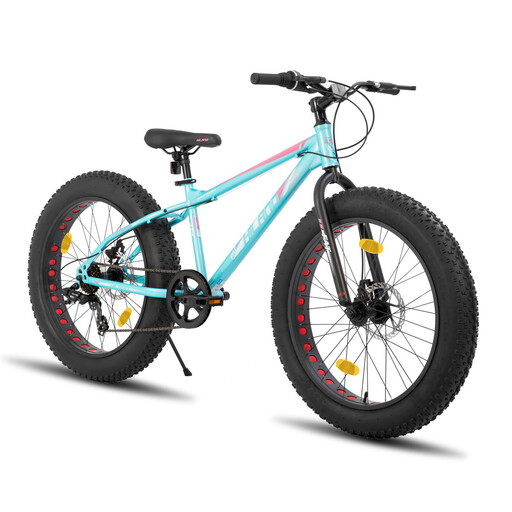
Why it stands out: This fat bike is built for those who want to go where others stop: sand, snow, waterlogged trails... It's a niche bike for extraordinary adventures.
This isn't just for show. Its extra-large 4.0-inch tyres aren't for looks: they provide incredible float and grip on soft terrain where a classic MTB would sink.
Stability and traction are its strong suits. Equipped with mechanical disc brakes, it guarantees reliable control even when conditions worsen. The 7-speed Shimano drivetrain is simple and robust.
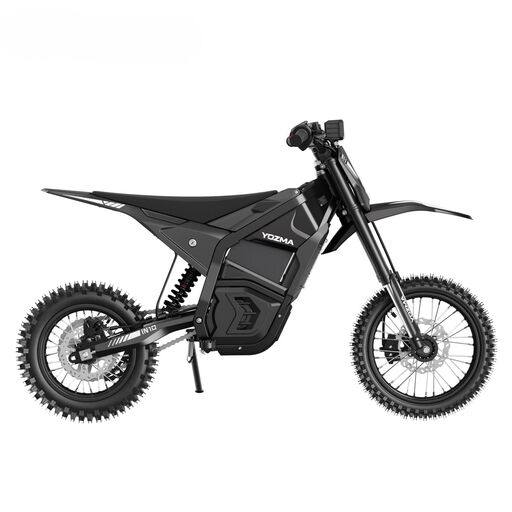
Why it stands out: Be aware, we're changing categories here. This is not an MTB, but an electric dirt bike designed for the pure fun of riding on private land. Perfect for teens (and big kids) seeking an adrenaline rush on a track or dedicated path.
Its purpose is crystal clear: it's a pure recreational vehicle for strictly for off-road use. It doesn't pretend to be something it's not. Please note: it is not street-legal (lacks a Certificate of Conformity - COC) and its use on public roads is prohibited.
Its 2600W brushless motor and full hydraulic suspension deliver high performance and thrills. Hydraulic brakes ensure total control, even at high speeds.
Our complete selection of mountain bikes meets strict quality and safety criteria, ensuring a purchase with no unpleasant surprises.
A hardtail MTB has a suspension fork at the front but a rigid frame at the rear. It is generally lighter, more efficient to pedal (especially uphill), and cheaper to buy and maintain. A full-suspension MTB has both front and rear suspension, offering superior comfort and control on technical descents, at the cost of increased weight and complexity. For the majority of riders, a good hardtail remains the most versatile and smartest choice.
Basic maintenance is within everyone's reach. Keep your discs spotless by cleaning them with a specific brake degreaser or isopropyl alcohol. The golden rule: never touch them with your fingers and don't let a single drop of lubricant reach them! Also, remember to check your brake pads for wear and replace them before they are completely worn out (when metal starts grinding on metal).
The law is very clear on this point. A standard electric-assist mountain bike (E-MTB) is allowed on public roads, provided its motor does not exceed 250W and the assistance cuts out at 25 km/h (15.5 mph). On the other hand, a powerful electric dirt bike like the models shown here is not street-legal. Its use is strictly reserved for private property. A word of advice: always check the current legislation before you buy, as ignorance of the law is no excuse.