
Livraison le jour même ou le lendemain

Qualité garantie

Débloquez vos offres de bienvenue: Livraison GRATUITE | Jusqu'à -80 % | 30 jours d'essai gratuits à JoyPlus
Téléchargez l'application
For any motorcycle, motocross, or MTB enthusiast, one thing is clear: safety is non-negotiable. Choosing a motorcycle protective vest is a crucial step, but the market is saturated with options and often-confusing claims. Between marketing jargon and complex technical sheets, it's easy to make the wrong purchase. This guide is here to separate fact from fiction and help you find the perfect vest for your riding style and budget.
Before we break down the technical features, let's review the most common mistakes that lead to disappointment or, worse, a false sense of security.
To avoid these pitfalls, focus on a few objective parameters that define the quality and suitability of motorcycle protective equipment.
European standards are your primary benchmark for trust. They guarantee that a protector has undergone standardised impact tests. Here are the main ones to know:
For each standard, there are two performance levels:
A vest's quality lies in the intelligent assembly of its materials. The outer shells, often made of polyethylene (PE) or polypropylene, are designed to resist abrasion and distribute the force of an impact. Beneath these shells, foams (like EVA) absorb the residual energy.
The textile chassis is just as important. A highly ventilated mesh fabric is essential for wicking away sweat and preventing overheating, especially for enduro or MTB use. An effective full chest protector must combine these elements without creating uncomfortable bulk.
A protector that moves is a protector that doesn't work. Your vest's effectiveness depends on its ability to stay perfectly in place. Check the presence and quality of the adjustment systems:
A good men's motorcycle protective vest (or women's, as models are often unisex) should conform to the body's shape and allow for complete freedom of movement.
Here are a few options that meet these criteria, categorised by user profile to help you find the model that's right for you.
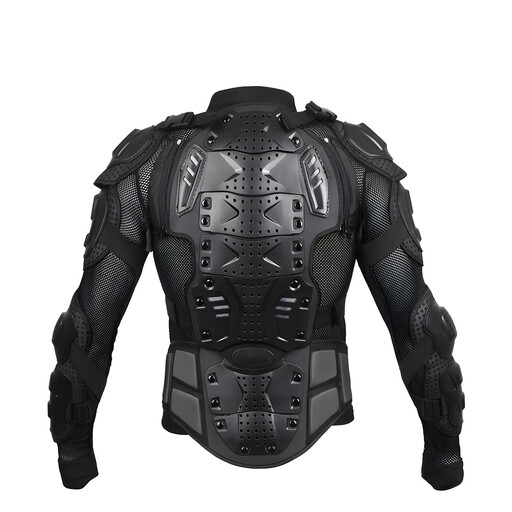
Why it stands out: In both enduro and motocross, full coverage is not an option. This model integrates protection for the shoulders, elbows, chest, and a segmented back protector that follows the body's movements on rough terrain.
It counters the "false full protection" trap by using wear-resistant nylon shells on key impact zones and a removable, scale-like back protector that ensures continuous coverage of the spine.
Flexibility: The waist design and articulated back protector allow you to bend and pivot without restriction.
Secure Fit: Multiple adjustable straps and a wide belt ensure optimal stability.
Why it stands out: For downhill MTB or BMX, breathability and low weight are as crucial as protection. This vest is built on a mesh fabric base that promotes airflow during intense exertion.
It avoids the "sacrificed comfort" trap. The main fabric is a highly elastic and breathable mesh, and vents on the chest optimise airflow, preventing overheating during long sessions.
Breathability: The combination of PE shells, EVA foam, and mesh fabric offers robust protection without trapping heat.
Versatility: Removable protectors allow you to adapt the level of safety according to the activity.
Why it stands out: For the daily commuter, this vest offers a level of protection far superior to that of a standard jacket. Its slim fit and breathability allow it to be worn under a rain jacket or a casual jacket for more discretion.
It solves the dilemma between protection and practicality. Thanks to its removable protectors (back, chest), it can be lightened for short trips or hot days, while still retaining essential elbow and shoulder protection.
Modularity: The ability to remove certain elements makes it adaptable to different needs and types of clothing.
Long-lasting Comfort: The elastic sleeves with thumb loops and the adjustable belt ensure an excellent fit without pressure points.
We have selected a full range of products that meet these quality criteria and current safety standards.
Yes, this is entirely possible and even recommended if your jacket lacks integrated protectors or if they are only Level 1. Choose a form-fitting vest built on a thin, breathable textile base. It's advisable to wear a technical base layer (like a sports t-shirt) between your skin and the vest to optimise comfort and moisture-wicking.
Most manufacturers recommend replacing a back protector (and other shells) after any impact, even if no damage is visible. The shock-absorbing materials can lose their properties. In the absence of an impact, it is advisable to check the condition of the straps and shells annually and consider a replacement every 5 to 7 years, as materials can degrade over time with exposure to UV rays and temperature changes.
No, wearing a full protective vest is not mandatory in France, unlike a helmet and CE-certified gloves. However, it remains a highly recommended piece of passive safety equipment, especially for off-road riding (motocross, enduro) and for long road trips where the risk of a high-speed fall is greater. It effectively complements the protection offered by a standard jacket.