
Livraison le jour même ou le lendemain

Qualité garantie

Débloquez vos offres de bienvenue: Livraison GRATUITE | Jusqu'à -80 % | 30 jours d'essai gratuits à JoyPlus
Téléchargez l'application
Whether you're a long-distance rider, a motocross enthusiast, or an avid mountain biker, lower body protection isn't an option—it's a necessity. A good pair of motorcycle protective pants is your essential shield against impact and abrasion in the event of a fall. The problem?: the market is flooded with products backed by vague, or even misleading, marketing claims. This guide is here to help you cut through the noise, identify the criteria that truly matter, and avoid the pitfalls that could compromise your safety.
Navigating the jungle of protective gear can be a real headache. Too many buyers fall for a certain look or a rock-bottom price, only to end up with an ineffective, or even dangerous, product. Here are the two most common mistakes you should never make.
Some pants may have a rugged look or use biker jargon, but in reality, they offer no certified protection. Let's be clear?: a simple pair of jeans or heavy-duty canvas trousers, no matter how comfortable, won't last a second against the abrasion of asphalt and will absorb zero impact. Never trust the design alone. Genuine MTB protective gear or motorcycle equipment incorporates technical materials and reinforcements specifically designed for this purpose.
Impact-resistant motorcycle armour might sound reassuring on paper, but if it's built into a non-breathable fabric, it will quickly turn into a sauna, especially during physical exertion (in enduro, for example) or in hot weather. Poor sweat wicking isn't just unpleasant?: it can impair your concentration. Effective gear must strike the right balance between durability and ventilation to ensure you can ride in the best possible conditions.
To be certain that your pants will do their job, scrutinise these three fundamental technical characteristics.
The heart of the matter for armoured motorcycle pants is the protection itself. It must cover the most vulnerable areas in a fall?: the hips, thighs, and knees.
The pants themselves serve as the chassis for the armour, making their design just as crucial. Motorcycle protection base layer pants are typically built on a highly ventilated mesh fabric base. This architecture kills two birds with one stone?: it guarantees excellent air circulation and keeps the shells held snugly against the body, without ever restricting your movement. This type of construction is particularly well-suited for enduro protection shorts or motocross pants, disciplines where freedom of movement and heat management are critical.
To help you better understand how to apply these criteria, here are a few typical rider profiles and the products that match them.
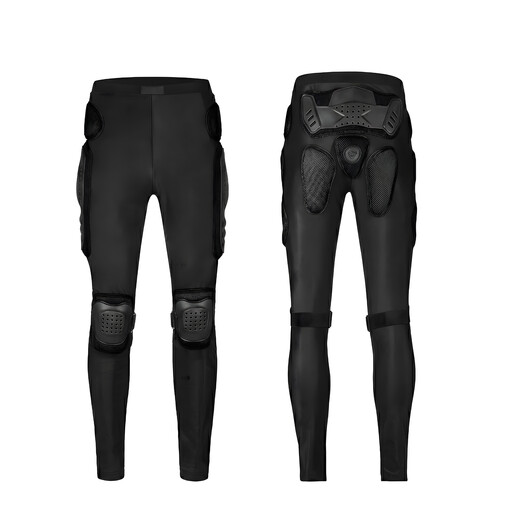
Why we chose it ? Perfect for off-road disciplines where falls are part of the ride. Its design covers all critical areas, and its mesh construction is built for intense exertion.
This model incorporates genuine rigid PE shells backed with EVA foam. It's nothing like simple fabric pants : the impact protection is on a completely different level.
Comprehensive protection for the hips, thighs, and knees. Its stretch-mesh fabric ensures maximum breathability and keeps the armour perfectly in place.
Why we chose it ? This is the perfect solution for those looking for effective protection to wear under everyday clothes (jeans, casual trousers, etc.) for scooter or motorcycle commutes.
Its lightweight and breathable mesh construction prevents overheating, even when worn as a base layer. It remains comfortable all day long.
Designed as a technical undergarment, it offers discreet protection without sacrificing flexibility or comfort when worn under regular pants.
Explore our full selection of products that meet our safety criteria and current standards.
Absolutely. It's the ideal solution for urban and daily use. Models like motorcycle protection base layer pants are designed specifically for this. Thin, lightweight, and made from breathable stretch fabrics, they are virtually unnoticeable under a pair of jeans or casual trousers, all while protecting vital areas.
The vast majority of current models have removable armour. Before any washing, it is imperative to remove all shells and foam pads from their pockets. Then, wash the textile portion by hand or in a machine on a low temperature (30?°C, delicate cycle). Most importantly, do not use a tumble dryer! Let it air dry away from direct sunlight to avoid damaging the properties of the technical fabrics.
Although they look similar, they have their own specific features. Motocross pants are generally lighter and ultra-ventilated, designed for short, intense efforts on a track. Enduro pants, on the other hand, may use more durable materials and include pockets, as the discipline is practiced over longer distances and in more varied conditions. In both cases, the level of protection (armour at the knees, hips) remains fundamentally the same. Your choice will mainly depend on the intensity and duration of your riding.