
Livraison le jour même ou le lendemain

Qualité garantie

Débloquez vos offres de bienvenue: Livraison GRATUITE | Jusqu'à -80 % | 30 jours d'essai gratuits à JoyPlus
Téléchargez l'application
Navigating the jungle of motorcycle safety gear can feel like an uphill battle. Faced with a multitude of models, technical terms, and marketing promises, choosing the right motorcycle protection vest becomes a real headache. A poor choice isn't just a waste of money; it can seriously compromise your safety. To help you see things more clearly, we've broken down the most common pitfalls and the essential criteria to check before you buy.
To avoid these traps, you need to focus on objective features. Here are the three non-negotiable points to scrutinize for your future motorcycle armor jacket.
Effective gear must cover all critical areas of the upper body. Check for the presence of rigid or semi-rigid protection for:
Modularity is a major plus. Removable protectors (back, chest) allow you to adapt the vest for different uses (for example, wearing only the back protector under a jacket) and make cleaning much easier.
The composition of your vest determines its protective capability and everyday comfort. A good design typically combines:
Your vest should feel like a second skin. To achieve this, the presence of multiple adjustment straps is fundamental. Pay close attention to:
A good fit not only ensures the protectors will do their job in a crash but also guarantees total freedom of movement, which is essential for piloting, whether on the road or in an enduro protection vest.
Rather than a long list, we have matched user profiles with products that meet the safety and functionality criteria described above.
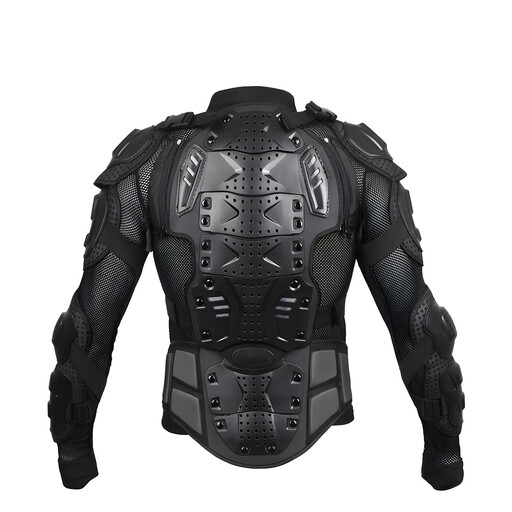
Why it's a match: This profile needs comprehensive protection and maximum flexibility for rough terrain. This vest's design, with its segmented back protector and mobile waist, allows for great freedom of movement during bending and twisting.
It bypasses the "decorative" protection trap with its PE shells and EVA foam, and the "sauna" effect thanks to its breathable mesh fabric and chest vents.
Full protection (shoulders, elbows, chest, back, waist) with removable elements for welcome modularity. Multiple adjustment points for a precise fit.
Why it's a match: For those who participate in multiple high-risk sports (motorcycle, MTB protection, skateboarding), this vest offers a single, cost-effective solution. Its unisex design and versatility make it a multi-purpose piece of equipment.
It avoids the poor-fit trap thanks to its fully adjustable shoulder straps, belt, and sleeves, adapting to different body types and ensuring the protectors stay in place regardless of the activity.
Excellent functionality-to-price ratio for multiple activities. Lightweight and low-profile, it can be worn easily for different disciplines without sacrificing protection.
Why it's a match: For riders of all builds, finding the right size is crucial. This model is available in a wide range of sizes (from S to XXXL), allowing everyone to find an optimal fit for maximum safety.
It directly combats the "one-size-fits-all" myth by offering a detailed sizing guide based on chest circumference, waist, height, and weight, ensuring a snug fit that prevents protectors from shifting.
The availability of a wide range of sizes, combined with adjustment straps, guarantees a fit for almost any body type, which is an often-underestimated safety factor.
We have compiled a complete, up-to-date list of products that meet these strict selection criteria and safety standards.
Most manufacturers provide a detailed sizing guide. Don't just rely on your usual t-shirt size. Take your precise measurements: chest circumference, waist circumference, and compare them with the manufacturer's chart. Full body armor should be worn close to the body, without being compressive, over a thin technical base layer.
Yes, and it's a common practice. Many vests are designed to be worn under a leather or textile motorcycle jacket. In this case, it may be wise to remove the jacket's original protectors (elbow, shoulder, back) to avoid uncomfortable layering and restricted movement. Make sure your jacket is loose enough to accommodate the vest underneath.
Maintenance is simple but essential for the longevity of your gear. Before any washing, remove all protective shells and removable foams. Wash the textile part (the mesh vest) by hand in cold water with a mild detergent. Let it air dry, away from direct sunlight or intense heat sources. Regularly inspect the shells for any cracks or deformities, especially after an impact.