
Livraison le jour même ou le lendemain

Qualité garantie

Débloquez vos offres de bienvenue: Livraison GRATUITE | Jusqu'à -80 % | 30 jours d'essai gratuits à JoyPlus
Téléchargez l'application
Whether you're an avid motocross, enduro, or downhill mountain biking enthusiast, one thing is certain: safety is non-negotiable. A quality motorcycle protection vest is essential to shield your upper body from falls or impacts. But with a vast array of models featuring different protection levels, materials, and designs, how do you make the right choice?
This guide is here to provide clear, practical advice and help you find the gear that checks all the boxes: safety, comfort, and ventilation.
Before we get to our top picks, let's review the key criteria for making an informed decision.
The first step is to check the gear's certification. In Europe, protective equipment must meet specific standards to guarantee its effectiveness. Look for the CE marking followed by the corresponding standard:
A full motorcycle armor suit will provide comprehensive coverage, while a motocross chest protector (or roost deflector) primarily shields the torso from debris and light impacts. Your choice will depend on the intensity of your riding and the associated risks.
A good protection vest should feel unnoticeable once you put it on. Several factors contribute to comfort:
Off-road riding is a physically demanding activity. Effective ventilation is therefore crucial to prevent overheating. Check for perforations on the protective shells and the use of breathable technical fabrics. A good MTB or motorcycle protection vest should keep you dry and comfortable, even during prolonged exertion.
After scrutinizing several models, we've selected a standout product that offers an excellent balance of full protection, comfort, and versatility for off-road riders.
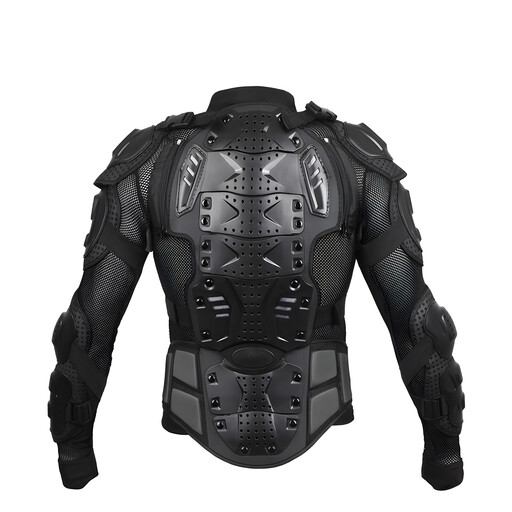
This motorcycle protection jacket stands out with a design tailored for the demands of off-road riding. It features a removable, articulated, "scale-like" back protector that covers the entire spine without hindering movement. The shoulder and elbow guards are made from high-resistance, abrasion-proof nylon.
The main structure is built on a highly breathable mesh fabric, combined with EVA foam pads for shock absorption. Perforations on the chest protector shell optimize airflow, a major advantage during long summer sessions. The adjustment system is comprehensive, with shoulder straps, a wide waist belt, and elasticated sleeves with thumb loops for a secure fit.
This vest is designed for adult riders (men and women) seeking comprehensive protection for regular off-road use. Its versatility also makes it an excellent choice for any extreme sport where the upper body is particularly exposed to impacts.
Choosing safety gear is a highly personal decision that depends on your riding style, body shape, and preferences. Is this model not quite right for you? Are you looking for a lighter chest protector or, conversely, an even more specialized full-body armor? Feel free to explore our complete selection to find your perfect match.
Discover Our Selection of Outdoor Sports Jackets
A motocross chest protector (or roost deflector) is primarily designed to shield the torso (chest and back) from flying rocks and light impacts. It is often lighter and offers less coverage than a full vest. A full motorcycle armor suit, or protection jacket, provides more comprehensive protection by including shells for the shoulders and elbows, in addition to the back and chest protectors. The choice therefore depends on the level of risk inherent in your discipline.
A protection vest must be worn very close to the body to be effective. If it's too loose, the protective pads may shift during a fall. Always rely on the manufacturer's size guide, which is typically based on your chest circumference, waist measurement, and height. If you are between two sizes, it's better to choose the smaller one to ensure an optimal fit.
Regular maintenance extends the lifespan of your gear. Most modern vests come with removable protectors. Remove all shells and foam pads before washing. For the textile part, opt for hand washing in cold water with a mild detergent. Let it air dry, away from direct sunlight and any heat sources. Remember to regularly inspect the shells for any potential cracks, especially after a significant impact.