
Livraison le jour même ou le lendemain

Qualité garantie

Débloquez vos offres de bienvenue: Livraison GRATUITE | Jusqu'à -80 % | 30 jours d'essai gratuits à JoyPlus
Téléchargez l'application
Choosing a new motorcycle helmet can quickly become a headache. Between safety standards, different shell types, and marketing jargon, it's easy to feel lost and worry you'll regret your purchase. As a product expert at Joybuy, my role is to help you make sense of it all. Let's skip the technical fluff and focus on the essential criteria for finding THE helmet that will protect you effectively without sacrificing comfort.
Before you start, watch out for these common pitfalls?:
To avoid these pitfalls, focus on a few non-negotiable technical features. This is the foundation of a smart purchase.
This is THE starting point. Since 2024, the ECE 22.06 standard has been the sole benchmark for any new motorcycle helmet sold in Europe. It replaces the old 22.05 standard with much stricter requirements.
An ECE 22.06-certified helmet has undergone a much more extensive battery of impact tests?:
Simply put, choosing an ECE 22.06-certified helmet means opting for a level of protection validated by the latest and most rigorous tests on the market.
Your choice will depend directly on your riding style and your two-wheeler.
Beyond the shell, certain details transform the daily experience.
To help you see things more clearly, here's how these criteria translate into practice with our selection for three typical rider profiles.
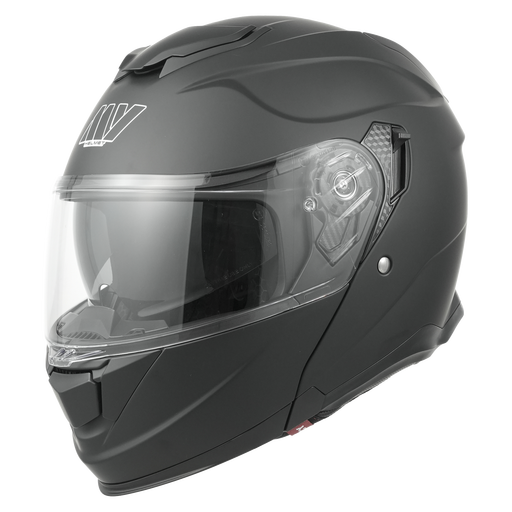
Why we chose it : Perfect for those who alternate between city commutes during the week and rides on the weekend. Its modular helmet design offers total flexibility, while its ECE 22.06 certification ensures flawless protection on the open road.
It offers the best of both worlds: the safety of a full-face on the road and the convenience of a jet helmet in the city. No more compromises.
The dual visor (main screen and internal sun shield) provides immediate visual comfort. No more struggling with sunglasses under your helmet.
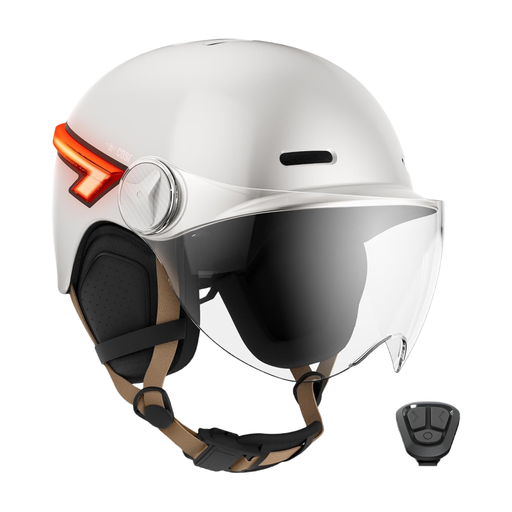
Why we chose it : Designed for new mobility (bikes, scooters), this helmet makes visibility its top priority. Its 360° active lighting is a game-changing advantage in traffic.
More than a fashion accessory, it integrates an active safety feature (the lighting) that meets a real need in the city. It's stylish AND smart.
Its integrated LED lighting system makes you visible from all angles, a crucial advantage at night or in low light in the urban jungle.
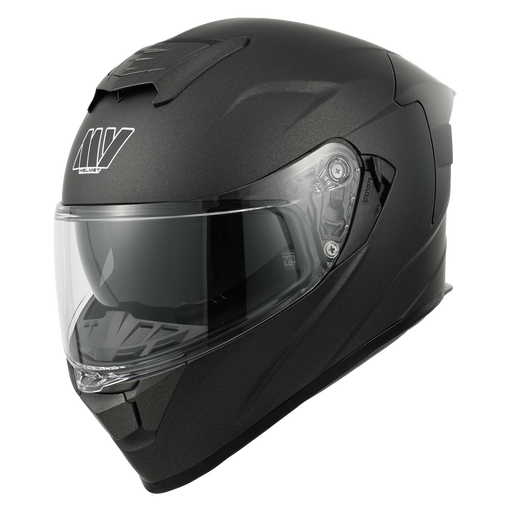
Why we chose it : For the rider who makes no compromises on protection. As a full-face helmet, it offers maximum coverage, and its ECE 22.06 certification attests to its compliance with the highest safety standards.
No frills here. The priority is the essential: structural protection. It avoids the "gimmick" helmet trap by focusing on what matters in a crash.
Its construction (high-resistance ABS shell, multi-density EPS liner) is entirely focused on maximum shock absorption. So you can ride with peace of mind.
Discover our complete selection of helmets that meet our rigorous selection criteria and the latest standards, with models for every type of use.
Generally, manufacturers agree on a lifespan of 5 years, even if your helmet has never been in a crash. Over time, the materials (foams, resins) lose their effectiveness due to UV rays, sweat, and temperature changes. Their ability to absorb impact diminishes. And of course, a helmet must be replaced after any fall, even if no damage is visible to the naked eye. Its internal structure could be compromised and may no longer protect you properly.
A correctly sized helmet is fundamental to safety and comfort. To find your size, use a measuring tape. Wrap it around your head, about 2?cm above your eyebrows, at the widest part of your skull. Once the helmet is on and the chin strap is fastened, check that there are no uncomfortable pressure points. Shake your head from side to side, then up and down: the helmet should follow your movements without wobbling.
Yes, it is still legal to ride with an ECE 22.05-certified helmet. However, since January 2024, the production of helmets under this old standard has been prohibited. For any new purchase, we can only recommend that you opt for an ECE 22.06-certified helmet. It guarantees a much higher level of protection, especially against rotational impacts, which is a major step forward for your safety.